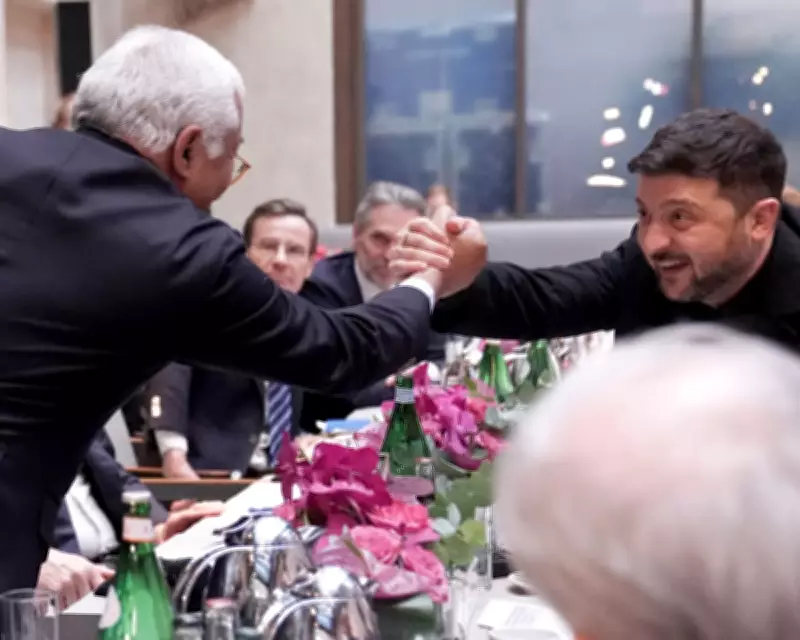
EU Leaders Emphasise Urgency in Ukraine Membership Negotiations
European Council President António Costa has declared the European Union's eagerness to commence Ukraine's EU membership talks "as soon as possible". Speaking during a visit to Oslo, Costa refrained from specifying a precise timeline but underscored the critical need to maintain momentum in the accession process. "I cannot say if it's in 2027 or even in 2026 or later, but what is important is we cannot lose the momentum," he told reporters. This statement comes against the backdrop of a US proposal aiming for Ukraine's EU accession by January 2027, a target widely regarded by experts as highly unrealistic given the ongoing conflict and complex integration requirements.
Zaporizhzhia Nuclear Plant Faces Heightened Safety Concerns
In a concerning development, the UN's nuclear watchdog, the International Atomic Energy Agency (IAEA), reported on Thursday that the Russian-held Zaporizhzhia nuclear power plant in south-eastern Ukraine is operating on its sole remaining external power line. Director General Rafael Grossi confirmed that the backup Ferrosplavna-1 electric line failed on 10 February, "reportedly as a result of military activity". Europe's largest nuclear facility, housing six reactors, now relies exclusively on the Dniprovska power line, raising alarms about potential safety risks and the vulnerability of critical infrastructure amid continued hostilities.
Kenyan Nationals Recruited for Russian War Effort
An intelligence report presented to the Kenyan parliament has revealed that more than 1,000 Kenyans have been recruited to fight for Russia in its war against Ukraine. This figure marks a significant escalation from the over 200 individuals cited by Kenya's foreign affairs ministry in November. Kimani Ichung'wah, the majority leader of Kenya's national assembly, attributed this surge to "rogue recruitment agencies and individuals in Kenya" who are persistently sending nationals to the frontline. The report highlights the expanding scope of Russian military recruitment operations across Africa, leveraging economic vulnerabilities to bolster its forces.

European Defence Spending Under Scrutiny
Poland's Defence Minister Wladyslaw Kosiniak-Kamysz has called on European allies, particularly Italy, France, and Spain, to increase their defence investments. In an interview with AFP, he argued that enhanced European spending would foster greater respect and serious engagement from the United States in security matters. "The more Europe invests, the more seriously and respectfully America will treat us in these areas," Kosiniak-Kamysz stated. Poland, which shares borders with Russia and Belarus, has substantially ramped up its defence budget since Russia's 2022 invasion of Ukraine, positioning itself as a frontline state in regional security efforts.
Sweden Announces Major Military Aid Package for Ukraine
Sweden has pledged 12.9 billion kronor (approximately $1.4 billion) in military assistance to Ukraine, with a primary focus on bolstering air defence capabilities. Defence Minister Pal Jonson described this package as "the third largest so far that Sweden has delivered to Ukraine", reflecting the Nordic nation's ongoing commitment to supporting Kyiv's defensive efforts against Russian aggression. This aid underscores the broader European solidarity with Ukraine, as nations contribute resources to enhance its military resilience.
Belarus Criticises Exclusion from Trump's Peace Board Meeting
Belarus, a staunch ally of Russia frequently sidelined in international forums, has expressed frustration over its inability to attend the inaugural meeting of Donald Trump's Board of Peace due to visa issues. The Belarusian foreign ministry stated that Foreign Minister Maxim Ryzhenkov had been scheduled to participate in the Washington gathering but was hindered by administrative formalities. In a pointed remark, the ministry questioned, "what kind of peace and what kind of sequence of steps are we talking about if the organisers cannot even complete basic formalities for us to take part?" Belarus remains under stringent Western sanctions, intensified after President Alexander Lukashenko permitted the use of Belarusian territory for Russia's 2022 invasion of Ukraine.