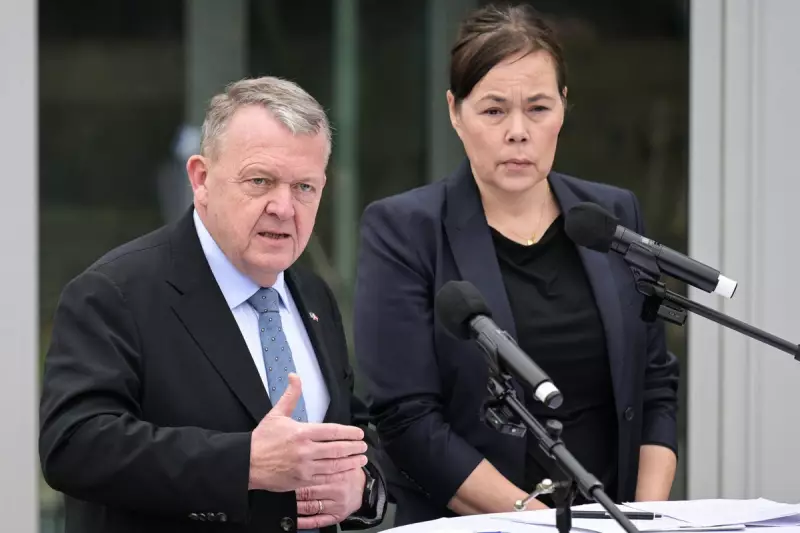
Former US President Donald Trump has once again sparked a major diplomatic row by insisting the United States should acquire Greenland, a demand met with an unequivocal and firm rejection from both Denmark and the Greenlandic government.
‘Absolutely Not Necessary’: A Firm Rejection
The renewed push for American sovereignty over the vast Arctic island was reportedly discussed during a meeting at the White House. The proposal was swiftly dismissed by Greenland’s Prime Minister and the Danish government, who stated that such a move was “absolutely not necessary” and a violation of their sovereignty.
In a characteristically blunt retort, Trump responded to the Greenlandic leader’s rejection by stating, “That’s gonna be a big problem for him.” The former president justified his longstanding ambition by citing national security concerns, specifically the need to prevent Russian or Chinese expansion in the strategically crucial Arctic region.

Arctic Tensions Prompt Military Buildup
The escalating rhetoric has accelerated geopolitical tensions in the High North. In direct response to the situation, Denmark and Greenland have announced plans to significantly increase their military presence on the island. This defensive bolstering is receiving support from NATO allies, including Sweden.
European leaders have rallied behind Copenhagen. Both the President of the European Commission and French President Emmanuel Macron have publicly expressed strong support for Denmark’s sovereign rights over Greenland, framing the issue as a matter of principle for European territorial integrity.
Diplomatic Channels Open Amid Clear ‘Red Lines’
In an attempt to manage the “fundamental disagreement” declared by Denmark, the two nations have agreed to establish a bilateral working group. This forum is intended to address the stark differences in perspective. However, Danish officials have made it explicitly clear that the Kingdom’s sovereignty remains a non-negotiable “red line.”
The working group, while a diplomatic tool for dialogue, is unlikely to shift Denmark’s core position. The confrontation underscores the growing strategic importance of the Arctic and the complex challenges it presents for Western alliances, even as member states coordinate to counter external threats from Russia and China.