The Undeclared War: Decades of Conflict Between Iran and the United States
Ibrahim Al-Marashi argues that an undeclared military conflict between Iran and the United States has been ongoing since the 1980s, with recent escalations representing merely the latest chapter in a long-standing confrontation. While many perceive current tensions as the start of another forever war, the reality is that this struggle has deep historical roots spanning over four decades.
Origins of the Conflict
For Americans, the war effectively began in 1979 when Iranian students seized the US embassy in Tehran, holding 52 diplomats hostage for 444 days. For Iranians, however, the conflict traces back to US support for the Shah and subsequent backing of Iraq throughout the devastating Iran-Iraq War from 1980 to 1988. These differing perspectives have created fundamentally opposing narratives that continue to fuel hostilities.
Tragic Civilian Casualties
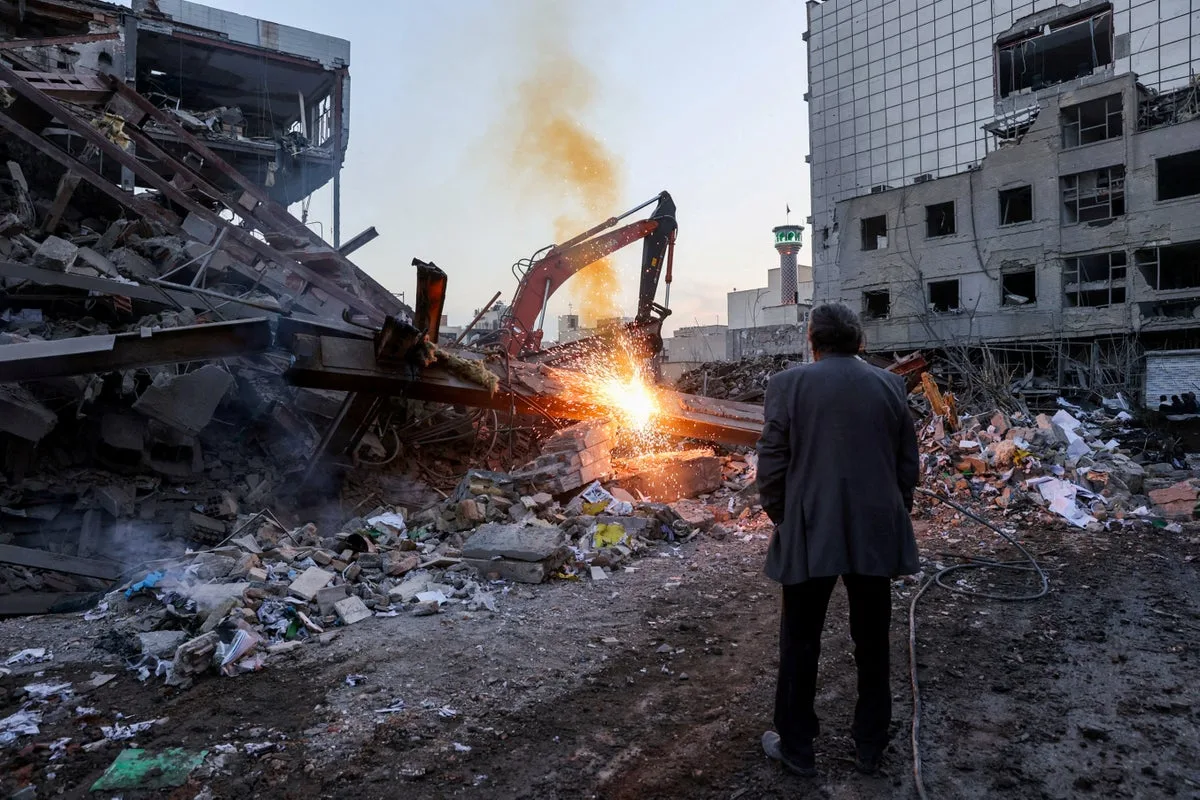
The conflict has claimed numerous civilian lives through catastrophic errors. On July 3, 1988, the US warship Vincennes misidentified Iran Air Flight 655 as a military aircraft and shot it down, killing all 290 people aboard. More recently, on February 28, 2026, a US-Israeli missile struck a girls' school in southern Iran, killing over 150 civilians, most of them children.
Iran has also committed tragic errors. On January 8, 2020, the Islamic Revolutionary Guard Corps mistakenly shot down Ukraine International Airlines Flight 752, killing all 176 passengers, mostly Iranian civilians. These incidents have reinforced institutional beliefs on both sides that genuine peace remains unattainable.
The 1980s: Naval Confrontation and the Tanker War
In 1984, Iraq initiated the "tanker war" by attacking oil tankers bound for Iranian ports. This conflict eventually drew in the US Navy after an Iraqi plane accidentally struck the American frigate Stark on May 17, 1987, killing 37 crew members. The United States shifted blame to Iran, arguing the Islamic Republic had failed to negotiate an end to the broader war.
The US then provided naval protection for Kuwaiti oil tankers by requiring them to hoist American flags. Iran targeted these reflagged ships, prompting US retaliation against Iranian offshore platforms and Revolutionary Guard speedboats. The US Navy sank two Iranian frigates, eliminating half of Iran's naval capacity.
It was during these hostilities that Iran Air Flight 655 was shot down. For Iranians, this attack confirmed they were in a de facto war with the United States, whom they perceived as seeking vengeance for the 1979 hostage crisis. The incident ultimately pressured Iran to accept the ceasefire ending the Iran-Iraq War, though conflict with America continued.
The 2000s: Proxy Conflicts and Ground Warfare
The second phase of this undeclared war shifted from naval engagements to proxy conflicts fought on the ground. After 2001, President George W. Bush included Iran in his "axis of evil" alongside Iraq and North Korea. Following the 2003 invasion of Iraq, Iran suddenly found US troops on two borders (Iraq and Afghanistan), raising fears of regime change or attacks on nuclear facilities.
Iran responded by supporting Iraqi insurgents targeting American forces. Proxy groups like Asa'ib Ahl al-Haq, formed in 2006, challenged US control using improvised explosive devices against military vehicles. This low-intensity conflict persisted until American forces withdrew from Iraq in 2011.
The 2010s and 2020s: Air Warfare and Direct Confrontation
During the 2010s, the Obama administration entered a de facto alliance with Iran to combat ISIS, with the US providing air cover while Iran fought alongside Iraqi Shi'a militias. This cooperation collapsed when President Donald Trump withdrew from the Iran nuclear deal in October 2017 and re-imposed sanctions.
Relations deteriorated rapidly as Tehran retaliated against US forces in Iraq, ushering in an air war. Violence escalated in December 2019 when Iran-allied militias attacked bases housing American personnel, killing a US contractor. The US responded with air raids, and on December 31, 2019, the US embassy in Baghdad's Green Zone was stormed.
Faced with optics reminiscent of the 1979 hostage crisis, Trump ordered a drone strike on January 3, 2020, killing General Qassem Soleimani, commander of Iran's Revolutionary Guards' Quds Force. This marked the first direct US targeting of a senior Iranian state official, crossing the threshold from proxy war to direct state-on-state conflict.
Current Escalation and Future Prospects
Iran's accidental shooting down of Ukraine International Airlines Flight 752 shortly after Soleimani's death tragically echoed the Vincennes incident. During subsequent years, Iran generally showed restraint in air attacks against US forces, but that restraint has now evaporated. Recent months have witnessed widespread Iranian retaliation throughout the region.
The 2015 Iran nuclear deal represented the first serious attempt to end this decades-long conflict. While it was Barack Obama's major diplomatic achievement, Trump systematically dismantled it. The Biden administration had opportunities to de-escalate tensions after the 2020 elections but failed to fundamentally alter the trajectory.
As of February 2026, the United States has initiated the latest round in this enduring conflict. Both nations have historically managed to escalate without crossing into total war, but that delicate equilibrium now appears to be breaking down. The long, undeclared war between Iran and America continues to evolve, with no clear resolution in sight.




