Danish Veterans Voice Profound Betrayal Over Trump's Greenland Ambitions
Danish military veterans who served alongside American forces in conflicts across the Middle East are expressing deep feelings of betrayal and sorrow as former President Donald Trump intensifies his rhetoric about seizing Greenland. This autonomous territory, which remains under the sovereignty of the Kingdom of Denmark, has become a focal point in a diplomatic dispute that veterans say undermines decades of alliance and shared sacrifice.
Shared Battlefield Sacrifices Now Overshadowed by Political Threats
Martin Tamm Andersen, a 46-year-old former platoon commander, recalls a harrowing moment in 2010 when his vehicle struck an improvised explosive device in Helmand Province, Afghanistan. In the chaos that followed, American Marines immediately halted their firefight with Taliban forces to secure the area, treat the wounded Danish soldiers, and assist with evacuation procedures. This act of battlefield camaraderie exemplified the bond between the two nations' militaries.
"When America needed us after 9/11 we were there," Andersen stated during an interview conducted at the Danish War Museum in Copenhagen, where his damaged armored personnel carrier is now displayed. "As a veteran and as a Dane, you feel sad and very surprised that the U.S. wants to take over part of the Kingdom of Denmark. It's a betrayal of the loyalty of our nation to the U.S. and to our common alliance, NATO."

From Pride to Anguish: Personal Symbols of Alliance Packed Away
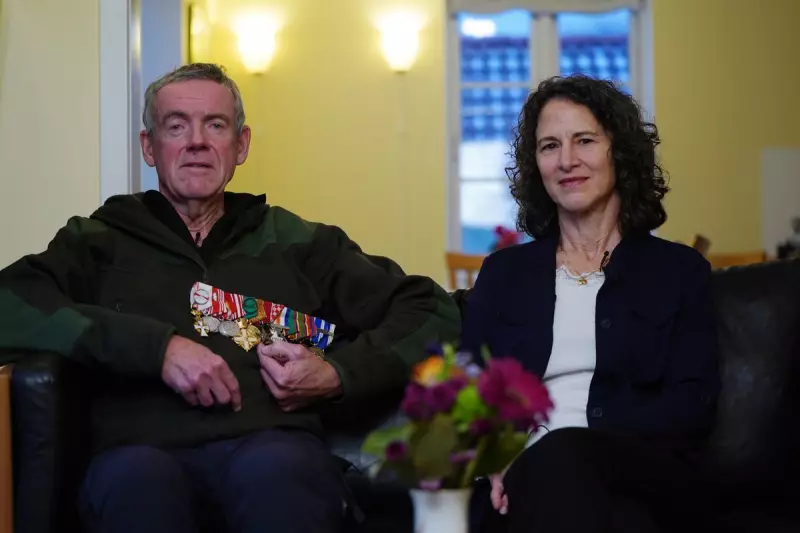
The emotional impact extends beyond words to tangible symbols of the partnership. Søren Knudsen, a 65-year-old veteran who served two tours in Afghanistan, received an American flag as a parting gift from U.S. service members at the end of his deployment. For years, he proudly displayed this framed flag alongside a U.S. Bronze Star medal honoring his service.
After hearing U.S. Vice President JD Vance accuse Denmark of "not being a good ally" during a television appearance, Knudsen removed both items in anguish. He has since packed them away in storage, telling his wife he will only retrieve them when the U.S.-Danish alliance is properly restored. As deputy president of the Danish Veterans Association, Knudsen reports hearing daily from fellow veterans who express similar hurt and sorrow at the administration's rhetoric.
"Many veterans who have wounds, whether on their souls or their body, certainly feel this as an offense straight to their heart," Knudsen explained.
Strategic Concerns Versus Alliance Principles
While Danish veterans acknowledge legitimate security concerns in the Arctic region, they strongly object to Trump's characterization of Denmark as incapable of protecting Western interests. Both Andersen and Knudsen emphasize that Denmark remains committed to defending the region through NATO frameworks and note that the United States already maintains significant military access to Greenland under a 1951 defense agreement.
The northwestern part of Greenland houses the U.S. Pituffik military base, which operates under the Pentagon's Space Force. Danish officials have repeatedly stated they would accommodate an increased American military presence on the island, pointing out that it was the United States that chose to reduce its footprint in recent years.
The Broader Implications for European Security
Beyond personal betrayal, Danish veterans express concern about the broader implications for European security at a time of increased Russian aggression. Denmark's prime minister has warned that a U.S. seizure of Greenland would effectively mean the end of NATO, an alliance Denmark has supported since 1949.
The human cost of Denmark's commitment to this alliance is substantial: forty-four Danish soldiers lost their lives in Afghanistan, representing the highest per capita death toll among coalition forces, with eight additional fatalities in Iraq.
"It feels surreal. It feels like it's a bad joke somehow," Andersen reflected. "I mean, you can't really fathom that this is actually something that is being said out loud. It just seems too crazy."

Knudsen offered an even more poignant perspective: "A U.S. invasion of Greenland would probably bring me to tears. I would be very sorry if it happened, because I would also see this as the final moments of the NATO alliance. And I would probably see it as the final moment of my admiration and love of what has been the American experiment for 250 years."
Both veterans maintain that the bonds forged with American troops during their service remain strong, and they are convinced that their former comrades do not share the political views now emanating from the White House. Knudsen's personal connections underscore this belief—his wife is American-born, and his brother-in-law serves as a U.S. Marine.