Cypriot Village on Edge After RAF Akrotiri Drone Strike Evacuations
Evacuations near the RAF base have reignited debate as Cypriots question the risks of hosting Western military sites. For generations, residents like Giorgos Konstantinos, vice-mayor of Akrotiri village, have lived alongside RAF Akrotiri on Cyprus, adapting to the roar of planes and military exercises. However, the events of the past two days have shattered that sense of normalcy.
Unprecedented Danger and Community Displacement
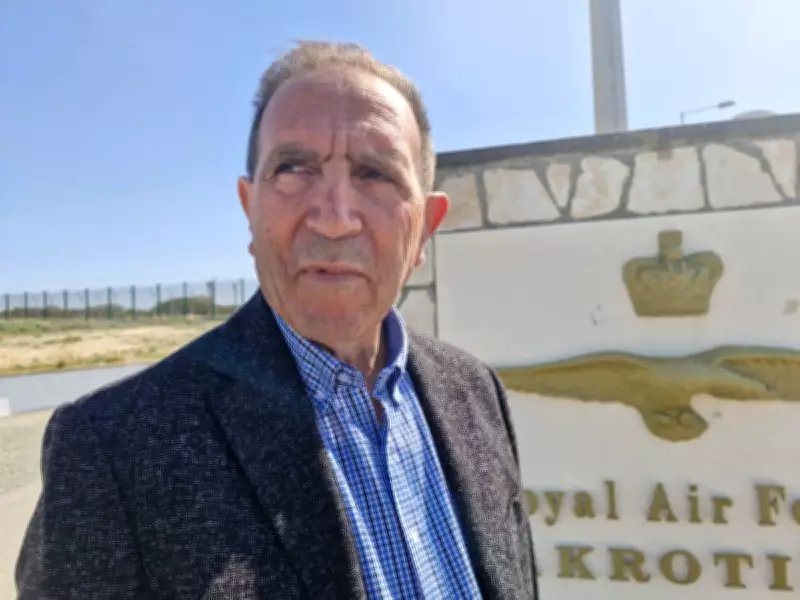
Giorgos Konstantinos, a retired lawyer, stood before the main gate of the facility, expressing disbelief. "We live here, we've got used to all the exercises, we've got used to all the planes, but what we never imagined is this," he said. "Who would have thought of a drone flying through our skies, exploding on the other side of that fence and forcing all of us to leave?" The dangers of proximity to a British base, amid regional conflict, became starkly real when an unmanned one-way attack drone crashed into RAF Akrotiri's runway early Monday, triggering sirens and a government-ordered evacuation.
By Tuesday, the village was nearly deserted, with police cars stationed near the church, empty streets, and a locked school. Konstantinos noted that over 1,000 community members had fled to hotels, a nearby monastery, or relatives in Limassol, leaving fewer than 30 behind. "People don't feel safe when there's so much uncertainty," he emphasized, questioning why air defence systems failed to detect the drone earlier.

Regional Tensions and Cypriot Concerns
Cyprus, the EU's easternmost member state, lies just a 20-minute flight from Lebanon, where Hezbollah is suspected of launching the Shahed-type drone and two others intercepted later. This incident marks the first attack on a British military installation on the island since 1986, raising alarms among Cypriot officials. Some link it to UK Prime Minister Keir Starmer's policy allowing the bases to be used defensively by the US, though the UK maintains the attack preceded this announcement.
Nicosia openly criticized London for failing to clarify the base's role, with President Nikos Christodoulides asserting Cyprus's neutrality and refusal to participate in military operations. Concerns about being dragged into a widening regional war are heightened as Cyprus heads the EU presidency, with France and Greece deploying military support, including frigates, F-16 jets, and anti-drone systems.
Community Response and Calls for Safety Measures
Residents like Michalis Georgiou, who works on the bases, described the terror of fleeing with his parents. "What happened on Sunday was terrifying. I'm not at all sure I am going to stay. The same thing could happen again, right?" he said, highlighting the base's longstanding presence on British-controlled territory since Cyprus's independence in 1960.
In Limassol, hundreds protested against the US-Israeli offensive and demanded the withdrawal of military fixtures seen as endangering Cyprus. Tasos Kosteas of the Pancyprian Peace Council stated, "Ours is a small country that must remain neutral. The bases are clearly a danger to Cyprus, because it is the bases that Iran is targeting." He argued that big powers prioritize geostrategic interests over Cypriot people's safety.
As evacuation orders remain in place for several more days, Konstantinos called for a permanent shelter in Akrotiri. "A refuge point where we would feel safe. It's not a demand that we've had before, but now I think everyone would agree it's become a priority," he concluded, underscoring the urgent need for enhanced security measures in the wake of this unsettling event.