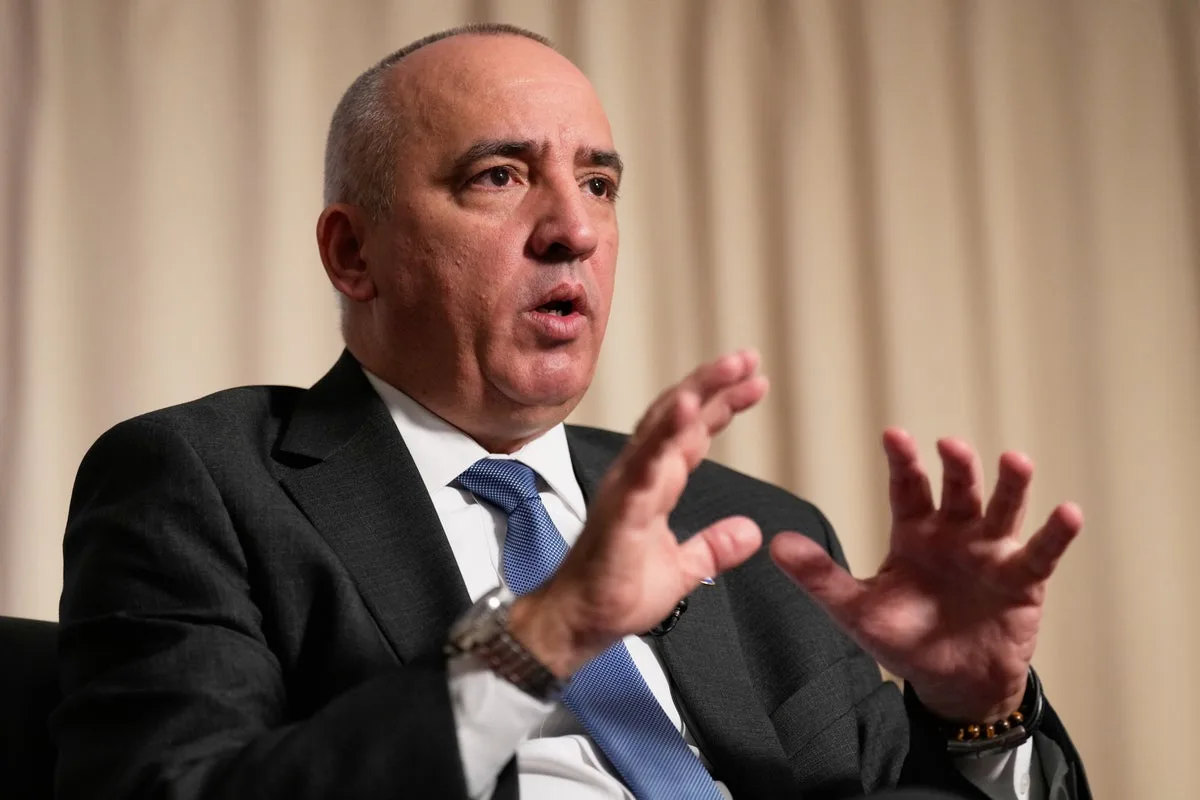
A senior Cuban diplomat has firmly denied that the release of political prisoners is part of ongoing negotiations with the United States, insisting that Havana will not bow to American "ultimatums." Speaking to The Associated Press on Thursday, Cuban Ambassador to the United Nations Ernesto Soberón Guzmán stated that internal matters concerning detainees "are not on the negotiating table."
Diplomatic Talks Resume After Decade-Long Hiatus
The comments come after the two longtime adversaries held discussions in Cuba earlier this month for the first time in ten years. The release of political prisoners had been a key demand from Washington. However, Guzmán emphasized that each country has its own legal system and must respect each other's internal affairs.
In response, the U.S. State Department reiterated its commitment to securing the release of all political prisoners, warning that the Cuban regime should not "play games" during direct talks. The department noted that there is a "small window" for Cuba to make a deal.
Secret Meetings and Rising Tensions
An American delegation traveled to Havana on April 10 for secret meetings aimed at urging Cuba to implement major economic and political reforms. The U.S. warned that failure to do so could result in continued economic pressure and even military escalation. Neither side has disclosed the identities of the participants, but Guzmán confirmed that the American team was led by an undersecretary of state and the Cuban side by a deputy foreign minister.
Tensions have escalated in recent months due to the U.S. energy blockade, which has exacerbated economic and other crises in the Caribbean nation. President Donald Trump has threatened tariffs on any country supplying oil to Cuba and has suggested that the U.S. might "take Cuba" following military operations in Venezuela and Iran.
Economic Hardship and Foreign Influence
The blockade, combined with severe water and power shortages, has deepened poverty and hunger across Cuba. In late March, a Russian tanker delivered 730,000 barrels of fuel—the first shipment Cuba had received in three months. Guzmán noted that this amount covers only a fraction of the country's needs.
Other issues raised by the U.S. during the talks included the influence of foreign powers on the island and compensation for hundreds of thousands of claims by Cuban Americans whose property was seized after Fidel Castro's 1959 revolution. Guzmán confirmed that compensation was discussed and that Havana is open to it, but only if paired with reciprocal economic relief from the decades-long U.S. embargo.
Preparing for All Scenarios
When asked whether Cuban officials can trust diplomatic efforts amid U.S. threats, Guzmán expressed optimism about creating a "new approach" to bilateral relations but acknowledged that the Trump administration's foreign policy has put Cuba on high alert. "We have been seeing what is happening all around the world, in our region, in the Middle East, so we are not naive," he said. "We are preparing for all scenarios. And I insist, our first option—what we really want—is a successful dialogue with the U.S. government." However, he added that if U.S. military aggression occurs, "we are ready to fight back."