Cuba Pledges to Combat 'Terrorist Aggression' Following Coastal Assault
Cuba has issued a resolute pledge to defend itself against what it terms "terrorist and mercenary aggression," in the wake of a deadly incident involving a US-registered speedboat. The declaration comes just one day after Cuban border guards reported killing four exiles aboard a Florida-registered vessel that allegedly opened fire on a patrol near the island's north coast.
Presidential Response and Regional Tensions
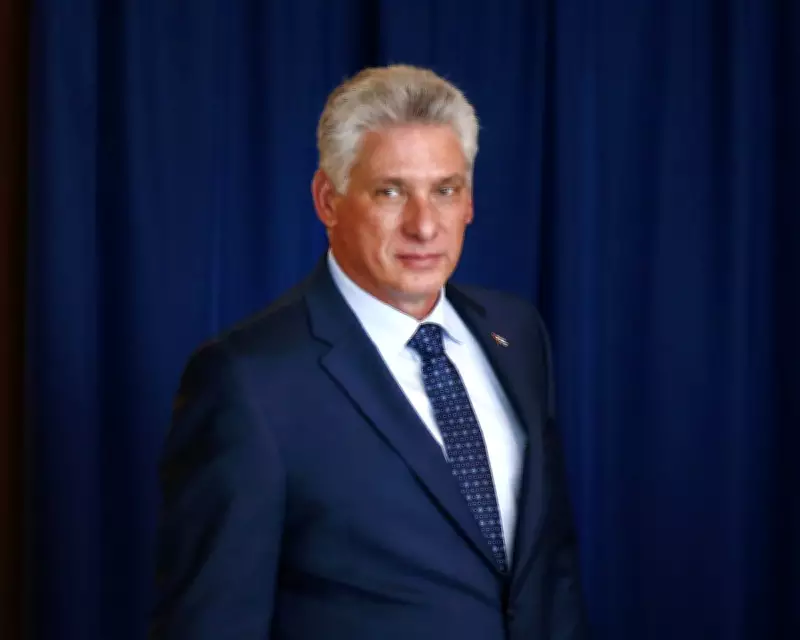
President Miguel Díaz-Canel took to social media platform X to assert that the Caribbean nation would "defend itself with determination and firmness." The confrontation left six additional individuals on the boat injured, according to official statements. This event carries significant potential to exacerbate already strained relations between Washington and Havana, which have been particularly tense since US forces detained Cuba's key ally, Venezuelan leader Nicolás Maduro, and the Trump administration imposed an oil blockade on the island earlier this year.
Despite the inflammatory nature of the incident, diplomatic channels appear to remain open. Both governments have demonstrated efforts to de-escalate the situation, with Díaz-Canel prefacing his remarks by stating, "Cuba does not attack nor threaten." Concurrently, reports emerged that US officials recently engaged in discussions with Raúl Guillermo Rodríguez Castro, the 41-year-old grandson of former Cuban president Raúl Castro, during the Caribbean Community (Caricom) meeting in St Kitts and Nevis.

Investigation and Conflicting Narratives
US Secretary of State Marco Rubio, who attended the Caricom session, clarified that the American government had no involvement in the incident and emphasized that authorities are "still gathering facts." However, details surrounding the assault remain incomplete and contradictory. The Cuban Ministry of the Interior located the attack among a network of keys east of Varadero's tourist beaches, where a small centre console speedboat, allegedly originating from the Florida Keys and carrying weapons, engaged with border patrols.
One of the deceased individuals, Michel Ortega Casanova, was described by an associate as aspiring to "liberate the island" from what he perceived as a "criminal and murderous narco-tyrannical government." This sentiment echoes a long-standing history of exile attempts to incite uprisings against Cuba's communist regime. Cuban authorities maintain that the boat's occupants initiated gunfire when intercepted, wounding a Cuban commander and one guard in the process.
Arrests, Evidence, and Exile Community Reactions
The Ministry of the Interior disclosed that an additional member of the group, who had flown to Cuba to rendezvous with the boat, had been apprehended and had "confessed." The vessel, identified as a 24-foot Pro-Line typically used for coastal fishing and possibly stolen, raised questions among experts regarding its suitability for a seaborne landing over 90 miles from Florida, given its limited capacity and engine power.
Survivors, all identified as Cuban residents in the United States, now face accusations of planning "an infiltration for the purposes of terrorism." Officials reported that they possessed criminal records in Cuba and were equipped with assault rifles, handguns, Molotov cocktails, and other military-style gear. Several are reportedly detained under heavy guard at a hospital in Santa Clara, approximately 150 miles east of Havana.
Reactions within the exile community have been mixed. While some in Miami have declared periods of mourning, others have expressed skepticism about the operation's rationale. Michael Bustamante, chair of Cuban and Cuban-American studies at the University of Miami, noted, "There is a feeling that, at the moment the US is clamping down and putting the Cuban government in the corner, this could actually give the Cuban government a lifeline." He also drew historical parallels, recalling that "a maritime raid is how the Cuban revolution got started," referencing the Granma expedition that brought Fidel Castro and other revolutionaries to Cuba in 1956.