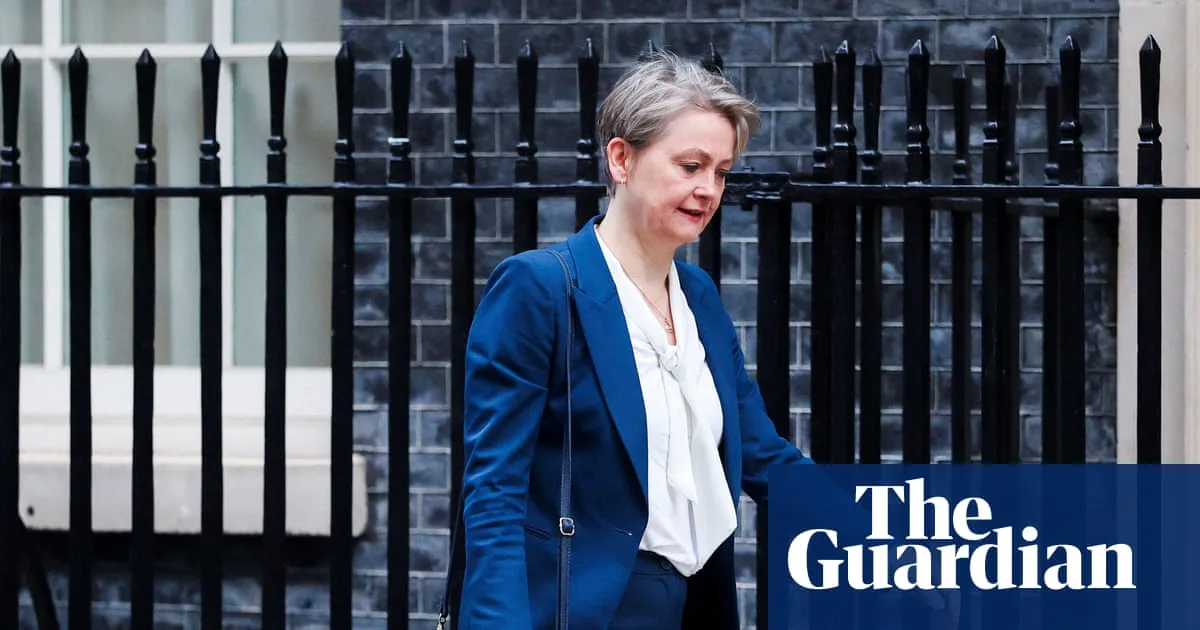
Foreign Secretary Yvette Cooper has come under fire from politicians across the spectrum for her carefully worded response to the US-led operation that captured Venezuelan leader Nicolás Maduro. Her parliamentary appearance on Monday night, described by some as a 90-minute humiliation, saw her avoid explicitly stating whether the UK viewed the action as a breach of international law.
The Ukraine Guarantee: The Unspoken Priority
The key to understanding Cooper's strategic silence lies not in Caracas, but in Paris. The day after her Commons grilling, a major joint statement was due in the French capital from a "coalition of the willing." A draft of this statement included a critical component: binding US security guarantees for Ukraine in case of further Russian aggression.
From the Foreign Office's perspective, openly criticising Donald Trump over Venezuela carried a severe risk. It could have provoked the US President to withdraw from the painstakingly negotiated and fragile agreement to participate in those Ukrainian security guarantees. For months, military-level talks had centred on these guarantees as a credible, viable alternative to Ukraine's now-abandoned NATO membership aspirations. They are also seen as a precondition for any negotiated settlement between Russia and Ukraine that Europe and Kyiv could accept.
The Rubio Factor and a Diplomatic 'No-Brainer'
The architect of the US return to offering protection for Ukraine was Secretary of State and National Security Adviser Marco Rubio, placing Europe deeply in his debt. Crucially, the capture of Maduro was a Rubio-masterminded operation. With Vice President JD Vance notably absent, British diplomats believed it was vital not to question the legal basis of what Rubio viewed as a major personal and political triumph.
One British official framed the decision as "a no-brainer." The value of publicly criticising Rubio over the removal of a head of state the UK did not recognise was weighed against safeguarding the crucial US commitment to Ukraine. By the time London was informed, Maduro's toppling was a fait accompli. The UK had already ceased supplying intelligence on US attacks against Venezuelan drug boats.
Navigating a Hobbesian World and a Shifting Alliance
Cooper did attempt to send coded hints to MPs, suggesting she had discussed the principle of international law applying in Venezuela during her weekend talks with Rubio. Furthermore, she is trying to insert UK expertise into Washington's sketchy plans for Venezuela's future, referencing the UK's long historical ties to the region dating back to Simón Bolívar.
However, the episode raises profound questions about the UK-US "special relationship." While Keir Starmer was not consulted on the Maduro operation, any journalist in Washington seemingly can get time with Trump. This asymmetry challenges the old assumption that the relationship, built on defence and intelligence, is still fundamentally rooted in shared values.
The Foreign Office now operates in a world defined by Trump officials like Stephen Miller, who stated on CNN that the real world is "governed by strength... force... power." With the US seizure of Greenland rumoured as a next prospect, the UK must cherish temporary wins like the Ukraine guarantees. Yet if "America First" requires dismantling the rules-based order, Britain may eventually have to swallow hard, shed its risk-aversion, and seek influence in a manner radically different from the past eight decades.




