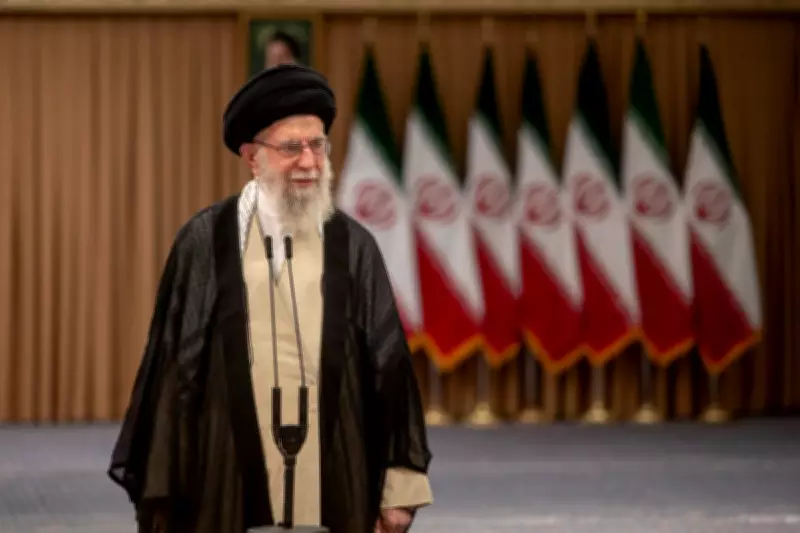
Months of CIA Surveillance Preceded the Assassination of Ayatollah Khamenei
Supreme Leader Ayatollah Ali Khamenei was assassinated in a surprise daytime airstrike carried out by Israel and the United States on Saturday, following extensive coordination and intelligence gathering. The attack, which targeted his compound in downtown Tehran, resulted from months of CIA tracking of Iranian leaders' movements, according to sources cited by The New York Times.
Intelligence and Timing of the Attack
The CIA had been monitoring Ayatollah Khamenei for months before learning of a scheduled meeting of top Iranian officials on Saturday morning. This gathering provided a critical window of opportunity, forcing the US and Israel to adjust their attack timing to eliminate key figures, including the 86-year-old supreme leader. Intelligence on Khamenei's position was shared with Israel, enabling precise strikes.
Israeli fighter jets, armed with long-range, highly accurate munitions, took off from bases around 6 a.m. and struck the Tehran compound approximately two hours and five minutes later. The attack involved over 200 Israeli jets dropping hundreds of munitions on more than 500 targets, as reported by the Israel Defense Forces. At the time of the strike, senior Iranian national security officials were in one building, while Khamenei was in another nearby structure.

Coordination and Targets
The US and Israel had built an extensive target list, including surface missile locations and Islamic Revolutionary Guard Corps command buildings, according to The Washington Post. The meeting included top defense officials such as Mohammad Pakpour, commander in chief of the Islamic Revolutionary Guards Corps, and Aziz Nasirzadeh, the minister of defense. Israeli Prime Minister Benjamin Netanyahu stated, "This fateful operation will continue as long as necessary, and it requires patience."
Prior to the operation, Israel's top military officials frequently traveled to Washington, D.C., for planning sessions. Netanyahu and former President Donald Trump had met in December at Mar-a-Lago and again in February at the White House, agreeing that military action would be justified if Iran continued its nuclear program.
Aftermath and Regional Impact
Since the strikes began, Iran has launched hundreds of retaliatory missiles at American and Israeli targets in the region. Trump warned that the US would respond with unprecedented force if Iran retaliated further. A senior White House official indicated that potential new leadership in Iran is open to talks, but military operations continue unabated for now.
Casualties include three US service members killed and five seriously wounded, with over 200 deaths reported in Iran, ten in Israel, and two in the UAE. Retaliatory strikes on Sunday hit an oil tanker off Oman and caused a fatality in Abu Dhabi after a drone interception. This attack follows previous US-Israel strikes in June that weakened Iran's air defenses and nuclear program.
The Trump administration has accused Iran of rebuilding its nuclear program, while Iran insists its activities are for peaceful purposes. The ongoing conflict underscores heightened tensions and the complex geopolitical landscape following Khamenei's assassination.