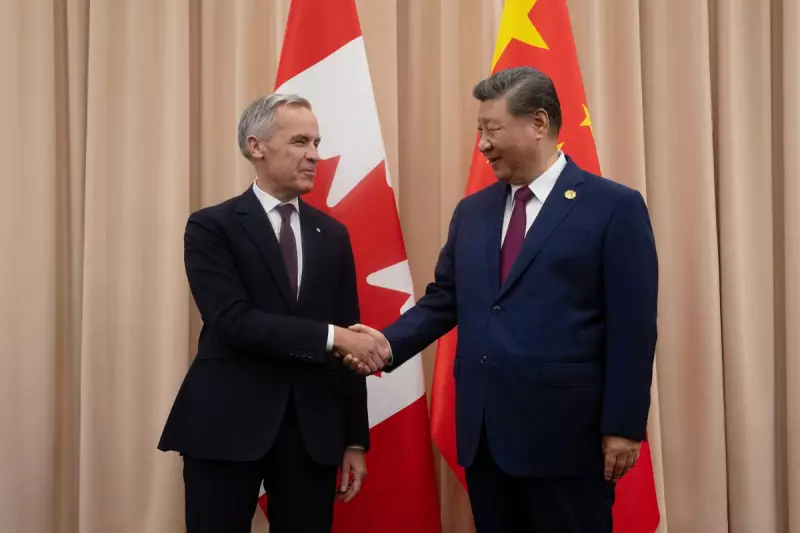
Chinese officials are using a high-profile visit by Canadian Prime Minister Mark Carney to urge Ottawa to distance itself from American influence, advocating for a policy of "strategic autonomy." The visit, which began on Wednesday 13 January 2026, is seen by Beijing as a pivotal moment to potentially weaken the longstanding bond between the United States and its northern neighbour.
A Calculated Outreach Amid Global Tensions
Beijing's state media has been explicit in its messaging. In a recent editorial, the China Daily argued that Canada should reflect on the "root causes" of recent bilateral setbacks, which it attributes to the previous government of Justin Trudeau acting "in lockstep with the United States" to contain China. The paper warned that if Ottawa continues to let Washington dictate its China policy, efforts to mend ties will be in vain.
Similarly, the Global Times suggested that the "heavy price" Canada paid for following the US in imposing high tariffs on Chinese goods may have awakened Ottawa's desire for greater independence. The context for this push is clear: China hopes that former President Donald Trump's aggressive economic and military actions on the world stage will erode traditional alliances.

Carney's Mission: Economic Diversification and Diplomatic Repair
For his part, Prime Minister Mark Carney, who took office last year, has framed the trip primarily around trade. He aims to forge new global partnerships to reduce Canada's heavy economic reliance on the American market. This goal has gained urgency after Trump hit Canadian exports with tariffs and even suggested the resource-rich nation could become "America's 51st state."
The visit is also an attempt at diplomatic resuscitation. Relations have been fraught for over six years, starting with the arrest of a Chinese tech executive in late 2018 at America's request. Tensions escalated in 2024 when the Trudeau government followed the Biden administration in imposing a 100% tariff on Chinese-made electric vehicles. China retaliated with tariffs on key Canadian exports like canola, seafood, and pork.
Canadian officials have tempered expectations, indicating they hope for trade progress but not necessarily a full removal of tariffs during this visit.
Common Ground and Clear Limits
Chinese experts point to potential areas of mutual concern that could bring Ottawa and Beijing closer. They cite the US military intervention in oil-rich Venezuela and Trump's statements about bringing Greenland under US control as actions that might unsettle Canada. "If the U.S. can claim Greenland, might it then lay claim to Canada?" posed Cui Shoujun, a foreign policy expert at Renmin University of China.
However, analysts remain realistic about how far this shift can go. Zhu Feng, Dean of the School of International Studies at Nanjing University, cautioned against overestimating the visit's importance, "because Canada is not only a neighbor of the United States but also an ally."
Deep historical, cultural, and military ties with the US, coupled with concerns over China's own growing clout and disagreements on issues like human rights and Taiwan, present significant barriers. While Trump's pressure on allies may create openings for China, nations like Canada must balance any new partnerships with their continued dependence on American economic and military strength for the foreseeable future.