Caribbean Nations Pledge Aid to Cuba Amid US Tensions and Regional Divisions
Caribbean Nations Pledge Aid to Cuba Amid US Tensions

Caribbean Nations Pledge Humanitarian Support for Cuba Amid Escalating US Tensions

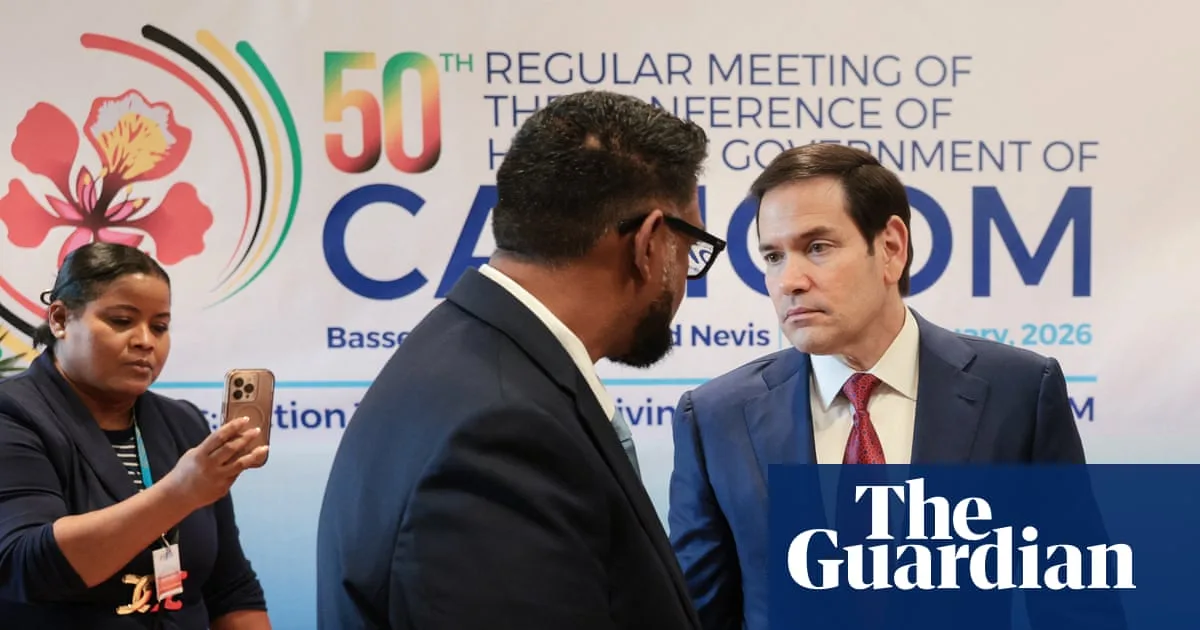
Caribbean countries have pledged to provide humanitarian assistance to Cuba, which is facing a severe crisis exacerbated by a US fuel embargo. This commitment was announced during a press conference on Friday, marking the conclusion of a four-day Caribbean Community (Caricom) summit in St Kitts and Nevis. The meeting, attended by US Secretary of State Marco Rubio, was defined by regional divisions over Washington's policies, including military interventions and economic sanctions.

Summit Held Amid Rising US-Cuba Tensions

The summit took place against a backdrop of escalating tensions between Cuba and the United States. These tensions have intensified following the arrest of Venezuelan leader Nicolás Maduro, a key ally of Cuba, by US forces, and the imposition of an oil blockade on Cuba by the Trump administration in January. At the opening of the conference, there were calls for dialogue to de-escalate the situation. Jamaica's Prime Minister Andrew Holness expressed concerns about the "severe economic hardship, energy shortages and growing humanitarian strain" in Cuba, warning of potential consequences for the wider region.

Humanitarian Pledge and Lack of Unified Stance

Outgoing Caricom chair, St Kitts and Nevis Prime Minister Terrance Drew, stated that the 15-country bloc will respond "in a significant way to help the humanitarian situation in Cuba" within a month. However, when asked about a joint Caricom statement condemning US military intervention in the region—which has included deadly strikes against suspected drug boats, resulting in at least 151 deaths without evidence of wrongdoing—Drew indicated that the body is still investigating and gathering information to ensure a comprehensive response.

Wide Pickt banner — collaborative shopping lists app for Telegram, phone mockup with grocery list

Disagreements Hinder Consensus on US Policies

Caribbean political analyst Peter Wickham noted that disagreement among Caricom members regarding US policies may explain the lack of a clear, unified position. During the meeting's opening session, Trinidad and Tobago's Prime Minister Kamla Persad-Bissessar, who has consistently praised Trump's military actions in the region, challenged calls from other leaders to protect the Caribbean as a zone of peace. She cited a reported reduction in crime in Trinidad and Tobago, attributing it to US intervention, and highlighted issues like narcotics and firearms smuggling from Venezuela.

Wickham explained that this staunch support for the Trump administration has made it difficult to reach a Caricom consensus on US military interventions. "The reality is that America believes it's legal. Trinidad and Tobago, who is an ally, believes it's legal. Everyone else has reservations about the legality. But Caricom has to speak from everybody's perspective. So once Trinidad and Tobago is in the room and they hold a different view, there's absolutely nothing that you can do to get a common position," he said.

Calls for Stronger Stance and Concerns Over Division

David Abdulah, a Caribbean politician and regional executive committee member of the civil society organisation the Assembly of Caribbean People, has called for a clearer position from Caricom. He referenced an open letter from the Assembly urging Caricom to "defend Cuba's sovereignty and its right to self-determination," stating that "it is very clear that the Caricom leaders withered." Abdulah expressed concern that Rubio's visit and meetings with heads of government would further split Caricom, preventing a strong common position.

Abdulah also pointed to Trump's invitation to only Persad-Bissessar and Guyana's President Mohamed Irfaan Ali from Caricom to a meeting with Latin American leaders, suggesting a strategy to divide the region. "It's very clear that what Trump and Rubio are doing is to divide Latin America and the Caribbean into those who are supporting them, and this is going to pose very grave dangers to the sovereignty of our individual countries and to the wellbeing of our citizens going forward," he added.

Pickt after-article banner — collaborative shopping lists app with family illustration

Caricom's Response to Disunity Concerns

In Friday's press conference, Drew addressed concerns about disunity within Caricom. He emphasized that "Caricom does not have a homogeneous or a single foreign policy—that is left up to sovereign states. Caricom might seek to coordinate, but each state has the opportunity to determine what would be its foreign policy agenda." Drew clarified that Caricom is not a political union and that invitations to individual countries, such as Trinidad and Tobago, do not fragment the bloc.

New Cooperation Agreement with the US

Drew also announced that Caricom and the United States will work on a new cooperation agreement to strengthen their relationship. This framework will guide areas such as migration, security, trade and investment, disaster recovery, human development, and technical assistance. The new agreement is set to supersede existing pacts like the Caribbean Basin Initiative, which was launched in 1983 to manage economic relations between the region and the US.




