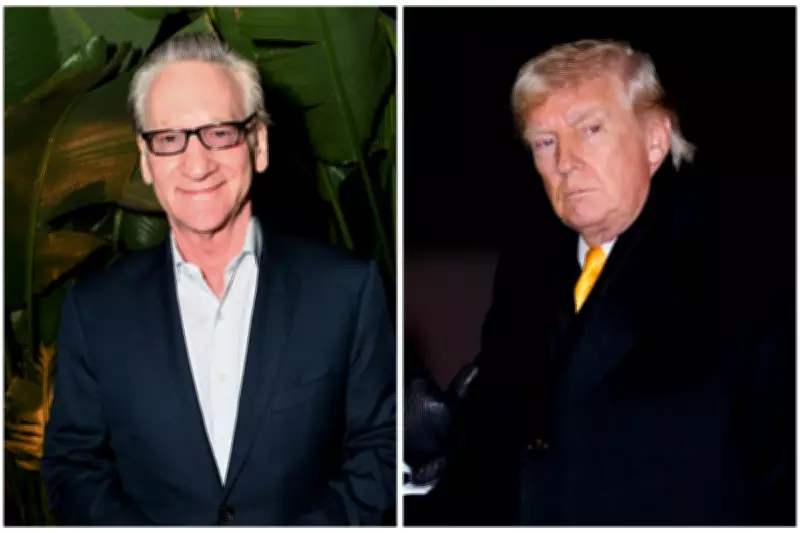
Late-night television host Bill Maher has delivered a sharp retort to former President Donald Trump's recent social media outburst, which criticised Maher for his ongoing political commentary. The exchange stems from a dinner the pair shared at the White House last April, with Trump taking to his Truth Social platform on Valentine's Day to express his frustration.
Trump's Truth Social Valentine's Day Message
In a post on his Truth Social account, Donald Trump directly targeted Bill Maher, voicing his annoyance that the comedian and political commentator has continued to be vocally "anti-Trump" on his HBO show, "Real Time with Bill Maher." Trump's message implied an expectation that the White House dinner should have led to a cessation of Maher's critical remarks, framing it as a personal betrayal following their cordial meeting.
Maher's Confused and Pointed Response
Responding during a recent episode of "Real Time," Bill Maher expressed clear confusion over Trump's assumption. Maher stated he was baffled by the idea that sharing a meal would automatically translate into softened criticism or political alignment. To illustrate his point, Maher drew a vivid analogy, comparing Trump's expectation to a scenario where a man buys a woman dinner and then feels entitled to sex in return, emphasising the flawed logic of such a transactional view of personal and professional interactions.

Maher firmly asserted, "I don't have Trump Derangement Syndrome," pushing back against a common refrain used by Trump and his supporters to dismiss critics. Instead, Maher framed his commentary as based on consistent political disagreement rather than irrational obsession. The host clarified that his role as a commentator requires him to address political figures critically, regardless of personal encounters, and that the dinner was a social event, not a political pact.
The Context of the White House Dinner
The dinner in question took place at the White House in April of last year, during a period when Trump was actively engaging with various media personalities. While the details of their conversation remain private, the incident has now sparked a public feud, highlighting the ongoing tensions between Trump and segments of the media. This episode underscores how personal interactions in political circles can quickly become fodder for public disputes, especially in the age of social media where figures like Trump directly communicate with their base.
Observers note that this back-and-forth reflects broader dynamics in American political discourse, where lines between personal rapport and professional criticism are frequently blurred. Maher's response, in particular, reinforces the independence many commentators maintain, refusing to let access journalism compromise their editorial stance. As both figures remain influential in their respective spheres, this clash is likely to resonate with audiences who follow the intersection of politics and entertainment closely.