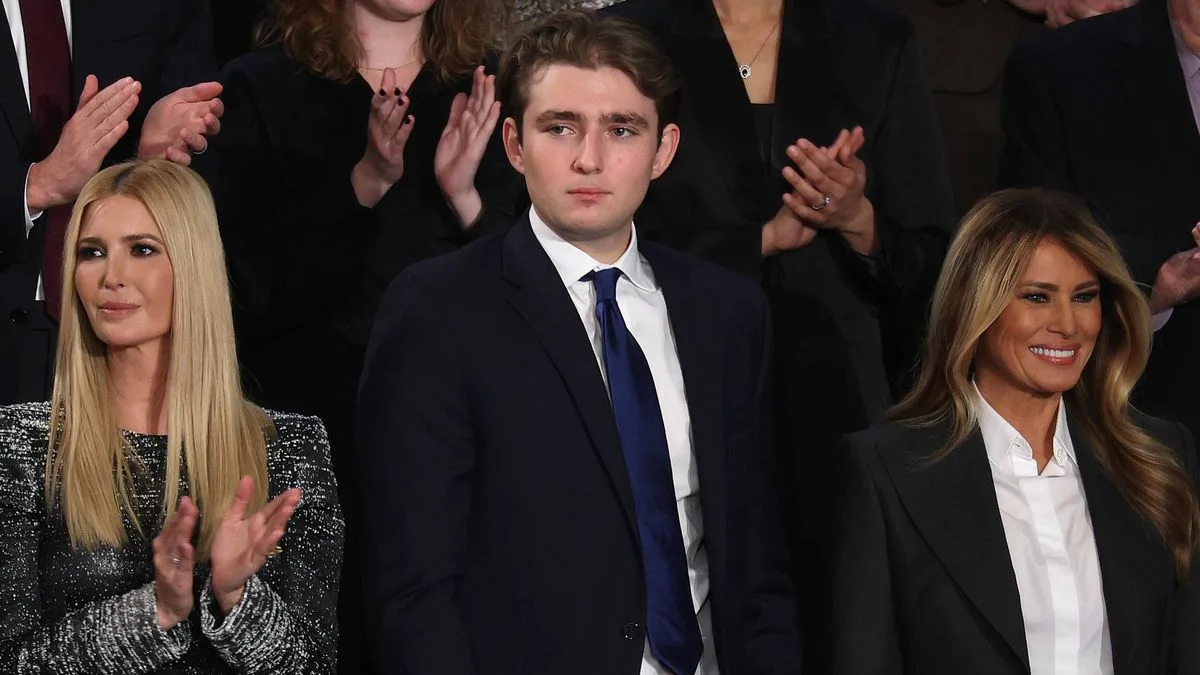
Barron Trump Potentially Exempt from Military Service Due to Height as Iran Tensions Escalate
Following coordinated military strikes by the United States and Israel against Iranian targets, American citizens have launched a social media campaign demanding that members of the Trump family should be subject to military conscription if a full-scale war necessitates a draft. The hashtag #SendBarron has been trending across platforms, with users calling for Donald Trump's youngest son to enlist in the armed forces.
Social Media Outcry for Presidential Family Military Service
As images of explosions in the Middle East circulated online over the weekend, Americans expressed significant frustration at the prospect of another prolonged military engagement in the region. With ground troop deployments appearing increasingly likely, social media users specifically targeted Barron Trump, the 19-year-old son of the former president, demanding his personal participation in any potential conflict.
"#SendBarron. Would certainly send a message of solidarity with our troops, and gratitude for the sacrifices they make every day," one prominent post declared. Another user commented, "POTUS is chilling at his own country club whilst starting WWIII #SendBarron," reflecting widespread sentiment that political leaders' families should share in military burdens.
Medical Exemption Looms for Towering Trump Heir
Despite the public pressure, Barron Trump may be medically disqualified from military service due to his exceptional height. Standing at 6 feet 9 inches tall, the teenager exceeds standard military height restrictions designed to ensure safety and equipment compatibility. The U.S. Army typically enforces maximum height limits of 80 inches (6 feet 8 inches) for personnel, particularly for roles involving confined spaces such as armored vehicles, tanks, or aircraft.
Military medical exemptions for excessive height are not uncommon, as extreme stature can create operational challenges and safety risks in combat environments. Such exemptions would potentially shield Barron from any future draft, regardless of public sentiment or political pressure.
Historical Precedent in Trump Family Military Avoidance
Should Barron secure a medical exemption, he would not be the first member of his family to avoid military service through medical channels. Donald Trump himself received a medical deferment during the Vietnam War era after being diagnosed with bone spurs by Dr. Larry Braunstein, a podiatrist who leased office space from Trump's father, Fred Trump.
According to accounts from Dr. Braunstein's daughters, Elysa Braunstein and Sharon Kessel, their father provided the diagnosis as "a favour" to the senior Trump, granting him "access" to the influential real estate developer. The story became "family lore" that was frequently discussed among relatives and friends.
In a 2016 interview, Donald Trump acknowledged receiving "a very strong letter" from a physician regarding his heel condition, though he could not recall the doctor's name at the time. Heel spurs, bony protrusions caused by calcium buildup on the heel bone, can be treated through stretching exercises, orthotic devices, or surgical intervention in severe cases, though Trump confirmed he never underwent surgery for the condition.
Broader Context of Military Service Debates
The current controversy emerges amid escalating tensions between the United States, Israel, and Iran. Early Saturday morning, the president announced that coordinated strikes had been launched against Iranian targets following days of diplomatic negotiations aimed at preventing Iran from obtaining nuclear weapons. Iran responded with counterstrikes targeting Israeli and American interests throughout the Middle East.
This development has reignited longstanding debates about military conscription, privilege, and equitable burden-sharing during times of international conflict. The #SendBarron movement represents a broader public demand for accountability and shared sacrifice among political elites and their families when military action is undertaken.
As the situation continues to develop, questions remain about potential draft implementation, medical qualification standards, and the historical patterns of military service avoidance among influential families. The intersection of physical characteristics, medical exemptions, and political privilege creates a complex landscape for military policy discussions during periods of international tension.




