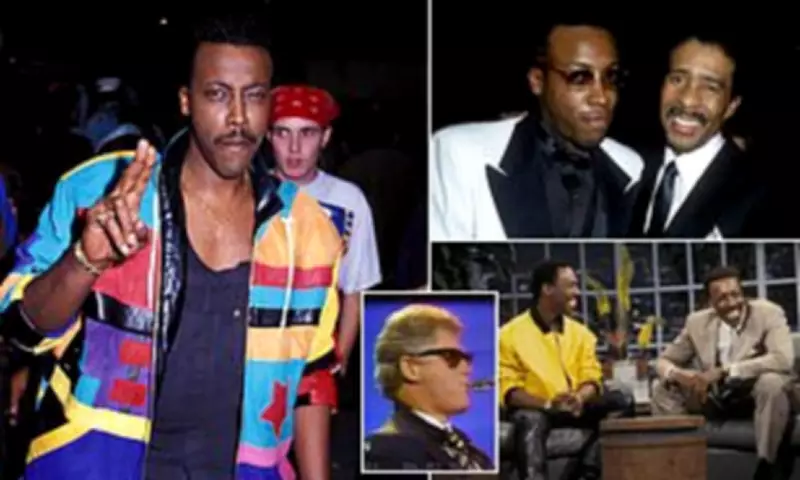
Arsenio Hall's Explosive Memoir Lifts Lid on Late-Night TV's Wild Era
The controversial king of late-night television, who revolutionized the genre and brought black culture into mainstream American living rooms, is now revealing that his off-screen world was even more outrageous than his most X-rated guests. In his upcoming memoir titled Arsenio, Hall exposes a jaw-dropping backstage life filled with wild parties, A-list excess, and eyebrow-raising encounters that defined television's chaotic golden era.
Prince's Strip Club Research and Eddie Murphy's Unlikely High
Among the most startling revelations is Hall's account of late-night outings with the legendary Prince. The singer, dressed immaculately in white, would study dancers in illegal after-hours clubs like Miss Mary's in Los Angeles to understand how they crafted their movements. Hall recalls entering through back doors guarded by pit bulls, where Prince would sit silently observing the room for hours.
Equally surprising is Hall's tale of getting teetotal Eddie Murphy high during a night of commiseration after learning their groundbreaking film Coming to America had been temporarily axed. When Murphy protested he didn't drink or smoke, Hall famously replied: 'Except for tonight.' The comedian reveals he had to explain the inhaling process to his clueless co-star.

Chilling OJ Simpson Confrontation and Richard Pryor's Stripper Debacle
The memoir details a tense confrontation with OJ Simpson, who drove to the Paramount lot in Los Angeles to berate Hall for not inviting him on the show despite featuring his white Naked Gun co-stars. Reflecting on that moment, Hall quips: 'If I'd known that OJ would be charged with double murder I might've put him on the first night.'
Hall also describes sending two strippers to cheer up the late legendary comedian Richard Pryor, only to realize he had forgotten his wallet to pay them. The dancers left glitter all over Pryor's bedroom after their private performance.
The Cultural Phenomenon That Changed Television
The Arsenio Hall Show ran for five groundbreaking years between 1989 and 1994, becoming a cultural phenomenon that made hip-hop mainstream and launched careers. Hall's show became the home for rappers like Snoop Dogg, Tupac, and Ice Cube while featuring musical icons from James Brown to Whitney Houston.
The program captured historic moments including Magic Johnson's emotional HIV announcement, three boxing legends (Mike Tyson, Sugar Ray Leonard, and Muhammad Ali) sharing a stage, and then-presidential candidate Bill Clinton's saxophone performance that became one of the era's most talked-about television moments.
Behind the Curtain of Success and Struggle
Hall reveals he convinced Clinton's camp to appear by telling them his presidential rival George H.W. Bush had refused the invitation. Bush's aides reportedly told Hall the former president was 'not a fan of the show' and 'didn't understand the success of Arsenio Hall.'
The green room transformed into hours-long parties where celebrities would drop by even when not scheduled to appear. Hall briefly dated both Pamela Anderson and Paula Abdul, referring to the latter relationship as the 'Taylor and Travis of the moment,' though both romances fizzled due to busy schedules.
Navigating Racial Politics and Eventual Departure
As the first black syndicated late-night host, Hall faced unique challenges. In a shocking conversation, Paramount executive Lucie Salhany asked: 'Are you going to be black every night?' She explained advertisers and station managers felt the show was 'very…black.' Hall defiantly replied: 'I am, and always have been, black.'
When ratings began declining as viewers gravitated toward David Letterman's edgier humor, Hall claims he submitted his resignation only to have Paramount bury the letter and announce the show's cancellation themselves. In his memoir, Hall insists he left on his own terms after giving everything to the program.

'I spent the last three years fighting for the show's life and my emotional and mental health,' Hall writes. 'I kept trying to ride in that middle lane between black and white America. It was difficult because the lines kept blurring. Finally, I had had enough.'
The memoir paints a vivid picture of an era when television's on-screen success and off-screen excess were inextricably linked, revealing the personal costs and extraordinary experiences behind one of television's most transformative cultural forces.