

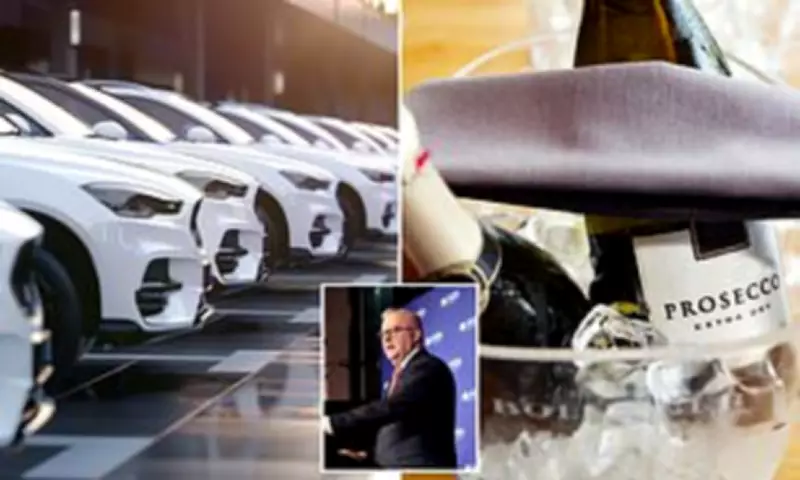
Australia's red meat exports to Europe are poised for a dramatic ten-fold increase under a landmark free trade agreement expected to be signed imminently. Simultaneously, Australian winemakers will secure the right to continue using the 'prosecco' label domestically, although they must phase out its use for foreign exports over the next decade. This concession is aimed at appeasing European negotiators determined to protect their influential wine industry.
Prime Ministerial Meeting to Finalise Long-Awaited Pact
Prime Minister Anthony Albanese is scheduled to meet European Commission President Ursula von der Leyen on Tuesday, with both leaders planning to sign the long-awaited free trade deal. This agreement is strategically designed to counter global economic turbulence exacerbated by recent US tariffs, providing a stable framework for enhanced bilateral trade.
Substantial Boost for Australian Red Meat Producers
According to sources close to the negotiations, Australian farmers have been vigorously advocating for expanded market access to Europe. Under the proposed terms to be discussed by the leaders, Australia would be permitted to export between 30,000 and 35,000 tonnes of beef annually to the European Union. This represents an astonishing increase of approximately 1,000 per cent compared to the current restrictive quota, offering a significant opportunity for the agricultural sector.

Further discussions are actively focusing on mechanisms to expand market access for a broader range of Australian agricultural products, potentially including dairy, sugar, and rice. This comprehensive approach aims to create a more equitable trading environment for Australian producers.
Tariff Reductions and Concessions on Key Products
In a move benefiting European automakers, the Australian side has agreed to eliminate a five per cent tariff on imported cars from Europe. However, contrary to earlier speculation, the luxury car tax will not be abolished. This balanced approach seeks to protect domestic revenue while facilitating trade.
The trade deal has faced numerous setbacks over the past eight years, primarily due to protracted disputes over Australian producers' rights to use European geographical indications like prosecco, feta cheese, and parmesan. While disagreements over all three products are now believed to be resolved, the precise details concerning feta and parmesan remain undisclosed. The phased ten-year withdrawal of the 'prosecco' name for exports is a critical compromise to secure the agreement.
Farming Groups Express Cautious Optimism and Concerns
Farming organisations have been pushing for a minimum annual quota of at least 50,000 tonnes for red meat exports, expressing concerns that the proposed figures may still be insufficient. National Farmers Federation president Hamish McIntyre warned that with current global instability, this is a precarious time to finalise an agreement that might disadvantage Australian agriculture.
'The NFF is concerned the EU will offer sub-par access for Australian producers while also deploying more billion-dollar subsidies to their producers - a double blow for Australian farmers,' McIntyre stated. The federation has emphatically declared that no deal would be preferable to a bad deal, highlighting the high stakes involved.
Expert Analysis on Quota Limitations
Former Australian trade official Prudence Gordon provided critical insight, noting that the existing quotas are prohibitively low and lack commercial viability for most farmers. 'It's not really worthwhile for most exporters of beef and lamb meat and other products like rice and sugar and dairy products to enter that market because the quotas are so tiny, but also the tariffs are really high,' Dr Gordon explained. The new agreement aims to address these barriers, making European markets more accessible and profitable for Australian exporters.
In a historic moment, European Commission President Ursula von der Leyen will become the first female foreign leader to address the Australian federal parliament on Tuesday, underscoring the significance of this diplomatic and economic milestone.






