AP Labels US-Israeli Strikes and Iran's Retaliation as Full-Scale War
AP Declares US-Israel-Iran Conflict a War After Escalation

AP Officially Designates US-Israeli Strikes and Iranian Retaliation as War

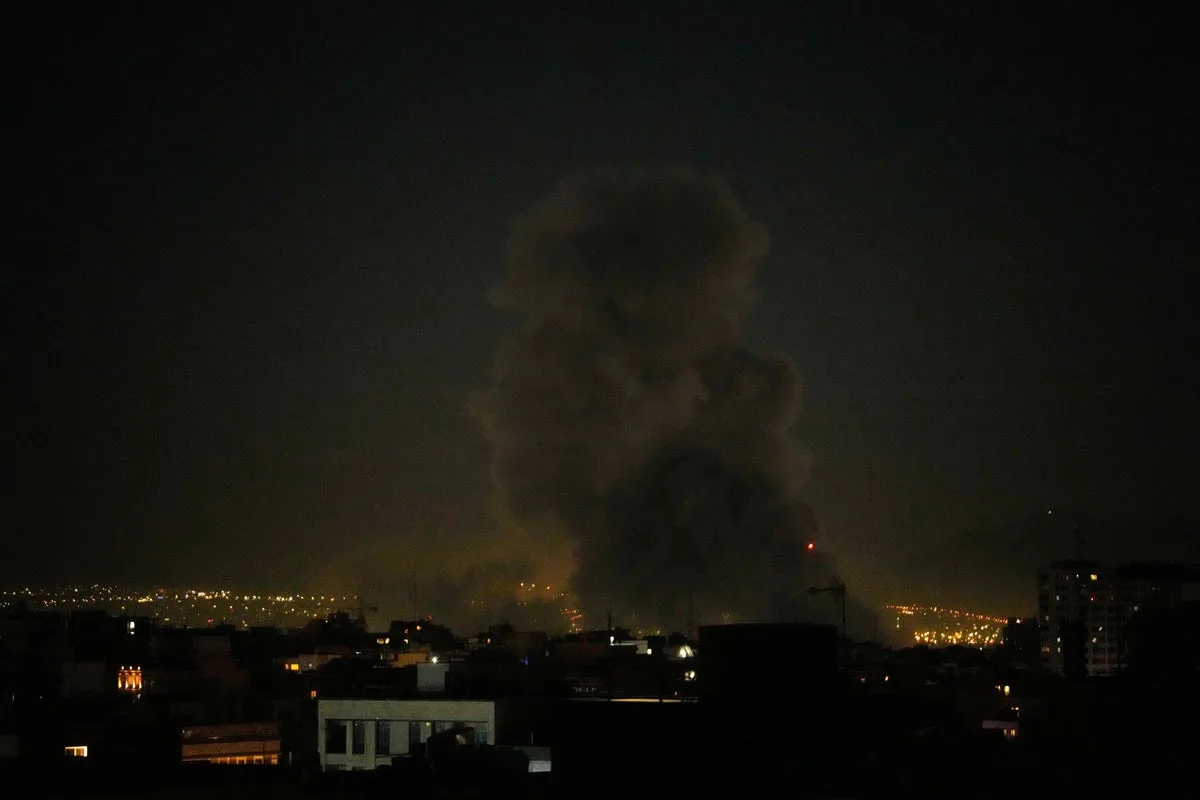
The Associated Press has made a significant editorial decision to use the term "war" to describe the escalating military conflict involving joint United States and Israeli strikes on Iran and Iran's subsequent retaliation. This determination, announced on Sunday 1st March 2026, reflects the substantial scope and intensity of the fighting that has unfolded across the Middle East.

What Constitutes This Conflict as War?

The AP's assessment is based on several critical factors. The initial strikes by American and Israeli forces targeted key military installations and resulted in the death of Iran's Supreme Leader Ayatollah Ali Khamenei, along with other senior government figures. In response, Iran launched a substantial barrage of missiles and drones directed at Israel and several Gulf Arab states that host United States armed forces bases.

Remaining Iranian leadership has vowed severe revenge for Khamenei's assassination, while former US President Donald Trump has publicly called for the overthrow of the Islamic Republic. This combination of high-level political rhetoric and large-scale military action suggests a prolonged conflict that could potentially engulf the entire region.

The Linguistic and Definitional Justification

The AP's decision aligns with standard dictionary definitions of war. Merriam-Webster defines war as "a state of usually open and declared armed hostile conflict between states or nations" or "a state of hostility, conflict, or antagonism." Although none of the involved nations have formally issued an official declaration of war, the scale of attacks, the significant destruction caused, and the substantial casualties incurred meet these established criteria.

Former President Trump himself has employed the word "war" when describing the ongoing hostilities. The AP emphasises that using precise terminology to characterise military actions between sovereign nations is crucial for accurate reporting and public understanding.

Why Terminology Matters in Conflict Reporting

Accurate language in conflict reporting carries substantial weight. If the term "war" is applied too liberally to describe minor skirmishes or one-sided attacks that do not escalate, it risks diminishing the word's significance. This could lead to public desensitisation, where people might fail to grasp the gravity when a genuine, full-scale war erupts.

The AP's editorial standards require that the designation reflect the reality on the ground, ensuring that audiences comprehend the severity and implications of the events being reported.

Precedent: AP's Historical Use of the Term 'War'

This is not the first instance where the AP has issued specific guidance on using the term "war." In June 2025, following Israeli attacks on Iran and Iran's retaliation, the AP began describing that conflict as a war in the days after the initial hostilities. That particular conflict lasted twelve days, with American and Israeli strikes significantly degrading Iran's air defence systems, military command structure, and nuclear capabilities.

Similarly, the AP commenced using "war" to describe the conflicts between Russia and Ukraine and between Israel and Hamas shortly after fighting began in those theatres. In all cases, editorial decisions were based on a careful evaluation of multiple factors:

  • The number of military and civilian casualties
  • The intensity and geographical spread of the fighting
  • The direct involvement of state military forces
  • The terminology used by the conflicting nations themselves

Editorial Nuances: 'war' Versus 'War'

The AP follows specific style guidelines regarding capitalisation. The word "war" is capitalised only when it forms part of a formal, recognised name for a specific conflict (e.g., the Second World War). As no such formal name has been established for the current US-Israel-Iran conflict, the AP uses the lowercase "war."

The Future of This Designation

The AP's guidance on terminology is dynamic and responsive to events. News leaders and standards editors continuously monitor developments to determine if changes in language are warranted. At present, the level of hostilities unequivocally constitutes a state of war between the nations involved.

Even if the fighting were to cease abruptly in the near future, the AP would maintain that the countries had been at war, reflecting the historical reality of this period of intense armed conflict. The designation is based on the actions that have already occurred, not on speculative future developments.




