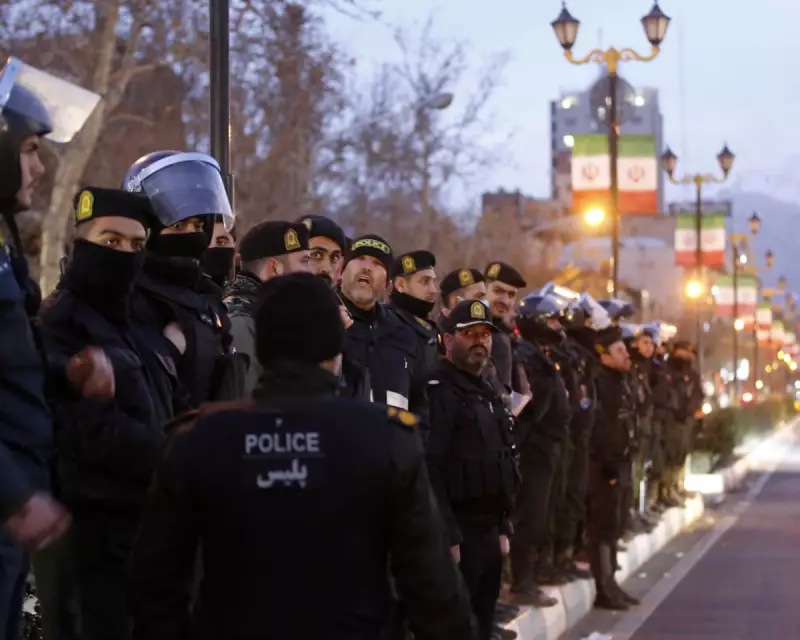
Police maintained a presence outside the UK embassy in Tehran on 14 January 2026, as demonstrators gathered in the Iranian capital. The scene, captured by Anadolu/Getty Images, underscores the ongoing tensions within the country and the complex international response they provoke.
The Futility of Military Force
The article draws a stark parallel with former US President Donald Trump's 2017 decision to deploy a massive GBU-43 bomb, or 'Mother of All Bombs', against an Islamic State complex in Afghanistan's Nangarhar province. While it killed an estimated 90 insurgents, the strike failed to eradicate IS or alter the ultimate trajectory of the US conflict with the Taliban.
Analysts suggest the action was more about projecting power than achieving strategic goals. This mindset, the argument goes, informs Trump's recent threats against Iran following internal unrest. The commentary posits that his primary aim is not Iranian democracy but a capitulation that would cement US hegemony over a resource-rich, defiant nation.

Why Regime Change by Bomb is a Flawed Strategy
Military options against Iran, including strikes on nuclear sites or bases of the powerful Islamic Revolutionary Guard Corps (IRGC), were reportedly considered. However, they were deemed unlikely to deliver the swift, headline-grabbing victory desired. Key US allies in the Gulf and even Israeli leader Benjamin Netanyahu expressed caution, fearing retaliatory strikes and regional destabilisation.
The concept of 'decapitating' the regime by targeting its leadership, such as Supreme Leader Ayatollah Ali Khamenei, is also dismissed as ineffective. Iran maintains a deep bench of potential hardline successors, including Khamenei's own son, meaning his removal would not guarantee reform and could potentially radicalise the situation further.
The Path Forward: Supporting Iranian Civil Society
The piece argues that the clerical regime, in place since the 1979 revolution, has lost its legitimacy through corruption, incompetence, and brutal repression. However, the solution is not externally imposed through violence. Instead, the focus must be on peaceful, internal change facilitated by sustained international pressure and support.
Surveys indicate most Iranians desire a secular constitution, free elections, and the abolition of the anachronistic role of supreme leader. To help achieve this, the West could:
- Intensify targeted economic and financial pressure on the regime and its leaders through sanctions and trade restrictions.
- Suspend diplomatic contacts and close embassies, like the UK's in Tehran, to deny the regime legitimacy.
- Employ cyber and hybrid operations to disrupt regime communications and revenue streams.
- Critically, provide robust support for Iran's fractured opposition, independent media, and civil society.
This includes helping citizens circumvent internet blackouts and expanding Persian-language broadcasting to counter state propaganda.
Ultimately, while Trump promised Iranians that "help is on its way", genuine assistance cannot be delivered at the barrel of a gun. The impetus for fundamental reform must come from within Iran. The international community's moral obligation is to break the cycle of opportunistic grandstanding and offer sustained, practical, and non-violent support to those building a future based on universal rights and the rule of law. Forging a peaceful future for Iran is a far harder task than dropping bombs, but it is the only viable one.