Global Allies Shun Trump's Board of Peace Amid Concerns Over US Dominance
In a striking display of international reluctance, most influential Western democracies are expected to avoid the inaugural meeting of Donald Trump's Board of Peace later this month. Key US allies such as France, Germany, the United Kingdom, and Canada are reportedly giving the board a wide berth, driven by apprehensions over its $1 billion price tag and the US president's expansive control over the body.
A Fiefdom in the Making
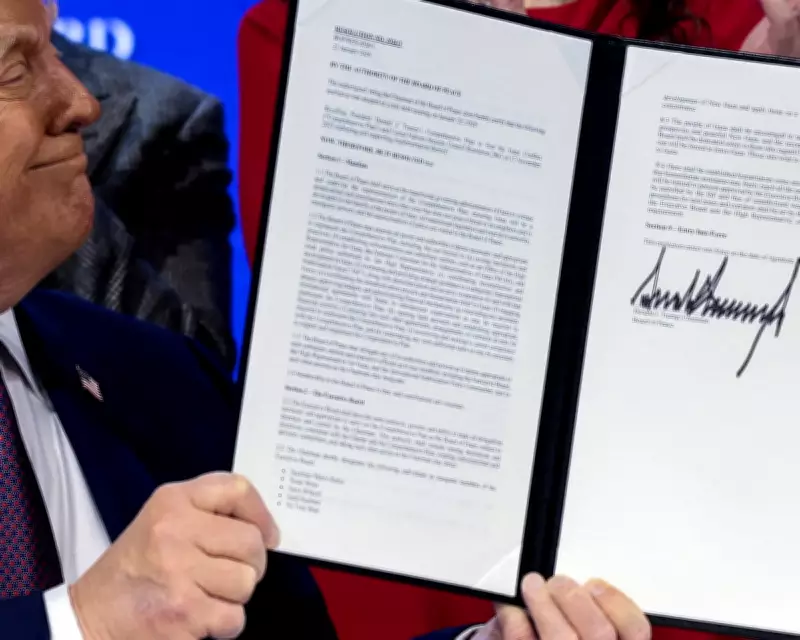
The Board of Peace, established last year through a UN Security Council resolution with the initial aim of implementing a Gaza peace plan, is increasingly viewed as a personal domain for Trump. The board's charter designates him with sweeping powers, including the authority to act as judge, jury, and executioner, while also handling finances and other operational aspects. This structure has raised alarms among global leaders who fear it could enable Trump to interfere arbitrarily in other nations' affairs.
"This board has the chance to be one of the most consequential bodies ever created in the history of the world," Trump declared in a January speech. During the same address, he boasted about military actions in Iran and Nigeria, and the capture of Venezuela's president, Nicolás Maduro, highlighting his aggressive foreign policy stance.

Limited Democratic Participation
Upon its formation in November, Trump invited approximately 60 countries to join the board. However, only about 20 have committed to participation, including nations like Albania, Argentina, Israel, Saudi Arabia, and Turkey. Notably, Reuters observed that few of these participating countries are democracies, underscoring the board's lack of broad democratic support.
The charter's evolution has further fueled skepticism. Originally focused solely on Gaza, it now omits any mention of the region, instead outlining goals for "securing enduring peace in areas affected or threatened by conflict" and calling for "a more nimble and effective international peace-building body"—a clear dig at the United Nations.
Structural Concerns and International Backlash
The board's governance framework grants Trump near-absolute authority. As chairman for life, he can call meetings, veto executive board decisions, and remove board members at will. The executive board, appointed by Trump and including his deputy national security adviser, cabinet members, and son-in-law, is unlikely to challenge his leadership, as the charter allows replacement only through voluntary resignation or incapacity determined by unanimous vote.
France has publicly refused to join, with officials expressing concerns that the board could conflict with the UN. In response, Trump threatened tariffs on French wines and champagnes, targeting President Emmanuel Macron. This reaction exemplifies Trump's combative approach, which has left many questioning whether his emotional and capricious foreign policy style is suited for global peace-building.
Broader Implications for Global Diplomacy
The Board of Peace's setup as a potential rival to the UN raises profound questions about the future of international cooperation. With Trump's willingness to involve himself in other countries' disputes—such as his recent threats against Canada over a bridge opening—there are genuine fears about entrusting such power to a body under his sole control. Countries must weigh whether investing $1 billion in taxpayer money into this venture aligns with their diplomatic and ethical standards.
As the board prepares for its first meeting, its limited democratic backing and Trump's dominant role suggest it may struggle to achieve its stated goals, instead becoming a tool for US influence rather than a genuine force for global harmony.