Australian PM Calls for Clear US Strategy in Iran Conflict
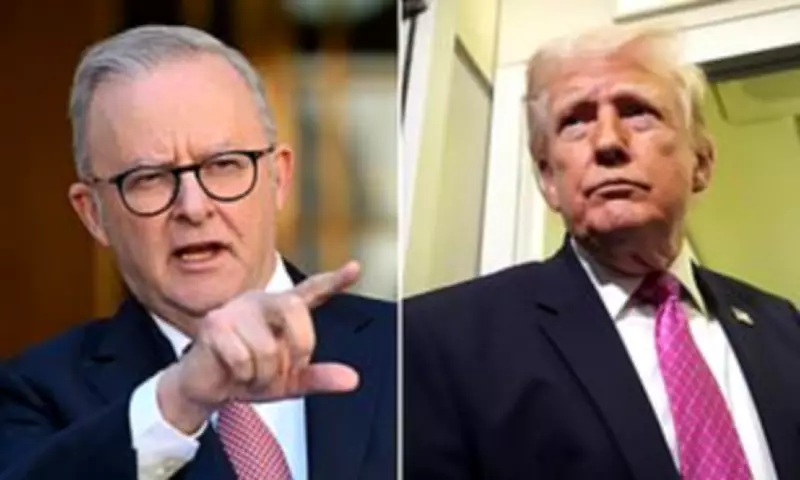
Prime Minister Anthony Albanese has publicly urged United States President Donald Trump to provide unambiguous clarity regarding America's strategic objectives in the ongoing war against Iran. Speaking from Canberra on Monday, Albanese expressed deep concern over the apparent lack of a defined direction and clear aims for the military campaign, which commenced on February 28 and shows no immediate signs of conclusion.
Concerns Over Strategic Ambiguity and Escalation
Albanese emphasised that his primary worry centres on the uncertainty surrounding the conflict's ultimate goals. 'I want to see more certainty in what the objectives of the war are, and I want to see a de-escalation,' the Prime Minister stated firmly. He elaborated that reducing tensions is not merely a regional imperative but a global economic necessity. 'A de-escalation is in the global economy's interests,' he asserted, linking military stability to worldwide financial security.
The Prime Minister was careful to clarify that advocating for diplomatic dialogue should not be misconstrued as support for Tehran's leadership. 'I have nothing but contempt for the Iranian regime,' Albanese declared, underscoring his vehement opposition to Iran's hardline ruling elite.

Assessment of Stated Objectives and a Warning on Regime Change
Albanese provided a detailed analysis of the originally stated US-led campaign objectives, acknowledging that significant progress had been made on two key fronts:
- Nuclear Non-Proliferation: 'At the beginning of the conflict, the objectives were outlined as one: stopping Iran getting a nuclear weapon, and I agree that has clearly been achieved,' he said.
- Degrading Military Power: 'The second objective was degrading the opportunity that Iran has for engaging in military action, either overtly or through its proxies in Hezbollah, Hamas and the Houthis, and clearly there has been substantial degrading of Iran's position,' Albanese added.
However, the Prime Minister voiced serious apprehension regarding a potential third, unstated objective: regime change. He issued a stark historical warning, noting that externally imposed political overhauls are notoriously difficult to execute and frequently result in further instability. 'The third objective was regime change, and I think history tells us very clearly that regime change imposed from outside is very difficult and tends to happen from the bottom up within a country, rather than being imposed from outside,' he explained.
Albanese argued that military interventions often have the counterproductive effect of bolstering nationalism and entrenching authoritarian governments rather than weakening them. 'Military action against a nation will tend to promote nationalism within that nation,' he cautioned.
Solidarity with Iranian People and Call for Explicit Intentions
Despite his criticism of the regime, Albanese expressed a personal desire for political change in Tehran and solidarity with the Iranian populace. 'I would like to see the Iranian regime, which I regard as abhorrent and reprehensible, replaced,' he stated, adding, 'I certainly stand with the Iranian people who have been subjected to abuse, human rights atrocities and oppression for a long period of time, particularly women and minority groups who have been persecuted by this abhorrent regime.'
The Prime Minister insisted that Washington must be explicit about its ultimate intentions, warning that strategic ambiguity risks prolonging both the conflict and its damaging economic repercussions. 'I think it needs to be clearly outlined whether that is going to occur or not,' he said, directly addressing the issue of regime change.
Context of Criticism and Allied Concerns
Albanese's remarks follow previous criticism from President Trump, who has faulted Australia for not providing greater assistance in securing the vital Strait of Hormuz—a key global oil transit route where the Pentagon is reportedly planning increased troop deployments and raids.

Furthermore, the Prime Minister's comments align with concerns raised by senior Australian opposition figure Andrew Hastie. The Liberal frontbencher recently questioned President Trump's management of the conflict, stating that allies have been left without adequate information. Hastie warned that this lack of clear planning has enabled Iran to exert disproportionate pressure on international markets. 'Iran has been able to pretty much hold the whole world economy to ransom,' he told the ABC's Insiders program, predicting worsening economic fallout and political consequences.
Hastie added that with more advance warning and coordination, allied nations could have been better prepared to mitigate the current crisis. The ongoing conflict, characterised by troop buildups and economic volatility, continues to pose significant challenges for global diplomacy and stability.