Iraq's Former Leader Decries Trump's Political Intervention as Sovereignty Violation
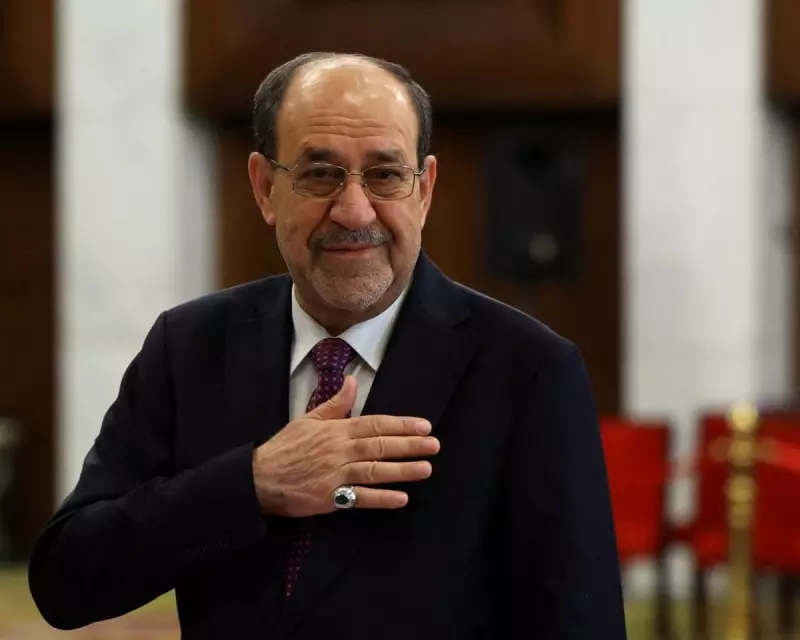
Nouri al-Maliki, Iraq's former prime minister, has issued a forceful condemnation of what he terms "blatant American interference" in the nation's internal political affairs. This rebuke comes directly in response to recent statements made by former US President Donald Trump, who threatened to withdraw American support should al-Maliki be returned to power.
A Sharp Response to External Pressure
"We reject the blatant American interference in Iraq's internal affairs and consider it a violation of its sovereignty," declared al-Maliki in an official statement released on Wednesday. The former leader, who has been nominated by the dominant Coordination Framework bloc to return as premier, framed Trump's comments as an unacceptable encroachment on Iraqi self-determination.
His remarks were triggered by a social media post from Trump, which starkly warned: "Last time Maliki was in power, the Country descended into poverty and total chaos … Because of his insane policies and ideologies, if elected, the United States of America will no longer help Iraq and, if we are not there to help, Iraq has ZERO chance of Success, Prosperity, or Freedom."

Complex Political Landscape and Regional Tensions
This diplomatic friction unfolds against a backdrop of heightened regional tensions. Trump's intervention coincides with his reported considerations of new strikes on neighbouring Iran, while the United States has initiated the transfer of Islamic State militants from Syrian to Iraqi detention facilities. Washington has persistently urged Baghdad to distance itself from Tehran, viewing al-Maliki's previous tenure—which ended in 2014 amidst the rise of ISIS—as overly aligned with Iranian interests.
The political scene in Iraq remains intricate. Although the list of candidates led by caretaker Prime Minister Mohammed Shia al-Sudani secured the largest share of parliamentary seats in last November's elections, al-Sudani subsequently stepped aside this month. This move effectively cleared the path for al-Maliki after both figures vied for the endorsement of the Shia-majority Coordination Framework, the largest parliamentary coalition.
Nomination and Parliamentary Delays
Following al-Sudani's withdrawal, the Coordination Framework formally named al-Maliki as its nominee for the premiership last week. A parliamentary session scheduled for Tuesday, intended to elect a president who would then appoint the prime minister, was abruptly cancelled due to an insufficient quorum. No alternative date has been established, leaving the process in a state of suspension.
Al-Maliki has affirmed his commitment to stand for the position "out of respect for the national will and the Coordination Framework's decision." Notably, al-Sudani, who initially assumed power in 2022 with the Framework's backing, successfully navigated a delicate balance between Iran and the US during his term. He also managed to restrain Iraqi pro-Iran militias from intervening in support of Tehran during last year's 12-day conflict between Israel and Iran.
Militia Reactions and Historical Context
Some of these very militias have now expressed support for al-Maliki's candidacy. Abu Alaa al-Walae, commander of the Kata'ib Sayyid al-Shuhada militia, labelled Trump's statement as "blatant interference in Iraqi affairs." He further accused "the criminal Trump, who physically assassinated the leaders of victory, now wants to repeat the act by politically assassinating [al-Maliki]."
This pointed reference recalls a pivotal moment during Trump's presidency: the January 2020 drone strike ordered by Trump that killed Iranian General Qassem Suleimani and Abu Mahdi al-Muhandis, the deputy leader of Iraq's Popular Mobilisation Forces. This umbrella organisation encompasses various militias, including Iran-backed groups originally formed to combat Islamic State. The legacy of that event continues to shape perceptions and tensions within Iraq's complex political and security landscape.