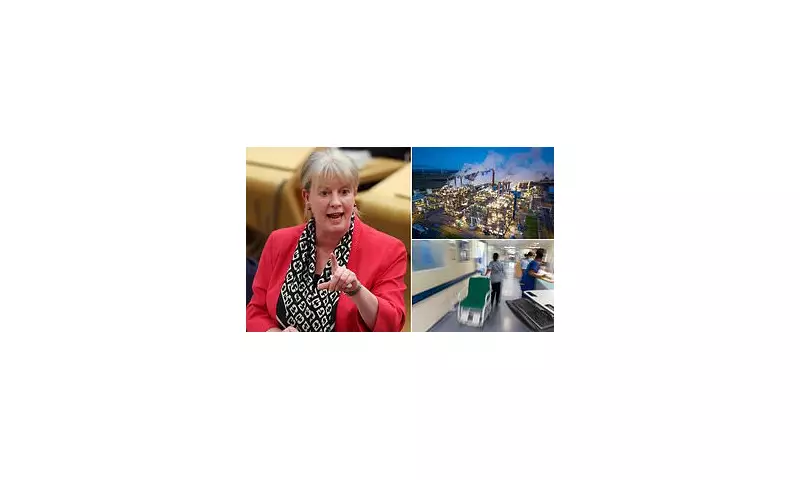
Finance Secretary Shona Robison has delivered a Scottish Government Budget that critics are labelling one of Holyrood's most significant missed opportunities, failing to chart a new course for economic growth or rectify the nation's punishing tax disparities.
A Budget of Status Quo and Tax Disappointment
Presented as a plan for a 'more prosperous future', the Budget instead opted for continuity, maintaining high welfare spending approaching £9 billion annually and continuing universal 'free' prescriptions and university tuition. The Finance Secretary resisted calls to cut the extraordinary 50 per cent marginal tax rate affecting Scots earning between £43,663 and £50,000, a move that would have addressed a major cross-Border disparity. Teachers, doctors, and nurses paying the higher rate will see no respite, continuing to shoulder a disproportionate burden compared to counterparts in England.
The only income tax change was a minor tweak to the thresholds for the basic and intermediate bands. The Scottish Conservatives highlighted that these 'paltry and insulting' changes mean no one will save more than £32 per year, while middle-earners continue to pay thousands of pounds more in tax than they would elsewhere in the UK.

New Levies and Inadequate Business Support
In a move targeting wealth, the Budget announced plans for a mansion tax, creating additional council tax bands for properties valued over £1 million. Critics argue this will hit elderly, asset-rich but cash-poor homeowners. With only 391 such sales in Scotland in 2024-25, the revenue raised is expected to be minimal. A proposed tax on private jets, an idea favoured by the Scottish Greens, signals the SNP's potential readiness to deal with Ross Greer's party post-election.
Business support was met with grudging acknowledgment. A limited rates discount for retail and hospitality was offered, but the Scottish Retail Consortium stated it 'falls well short' of the permanent discount available in England. Hospitality leaders dismissed the measures as a mere 'sticking plaster', with 'staggering' rates increases still looming over the next three years for pubs, hotels, and restaurants.
Spending Promises Amidst Cuts and Criticism
Ms Robison pledged £22.5 billion for health and social care, including £17.6 billion for NHS boards and funding to begin a national rollout of walk-in GP clinics. However, the British Medical Association warns of a crippling GP shortage, raising questions over who will staff these new services. Furthermore, the real-terms increase for health and social care spending next year is just 0.7 per cent, with a cut to alcohol and drug policy funding despite a public health emergency.
On infrastructure, the Finance Secretary confirmed the dualling of the A9 would be completed by 2035—a project originally due last year—but allocated no funding for the A96 dualling in the coming year. Over £5 billion is earmarked for net zero policies, while targeted support was promised to retrain oil and gas workers, a sector the SNP has previously criticised.
The Fraser of Allander Institute noted the government will need to slash day-to-day spending by £480 million, using one-off funds to plug a deficit, while still making significant cuts. The Joseph Rowntree Foundation delivered a damning assessment of the Budget's approach to child poverty, warning it 'doesn't meet the scale of action required'.
This 19th consecutive SNP Budget has been characterised by opponents as a 'basket case' jumble of unaffordable giveaways, failing to provide the bold intervention needed for Scotland's economy, public services, and overtaxed workforce.