

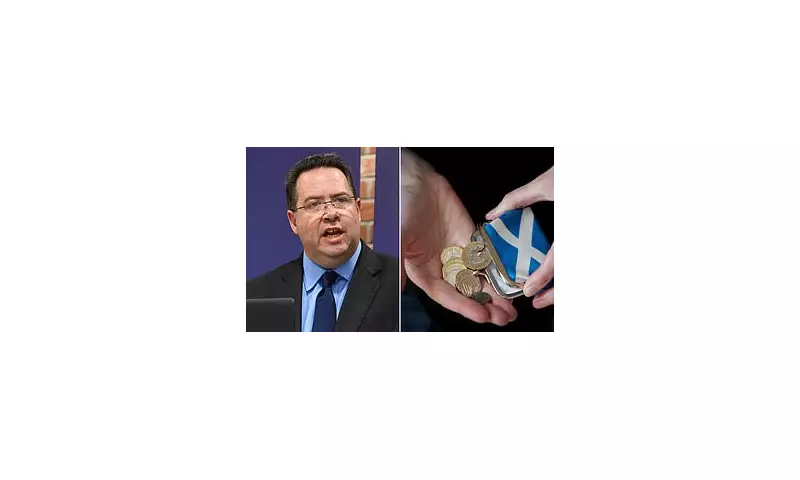
Hard-working households across Scotland are facing a significant financial squeeze following the Scottish Government's latest budget announcement, which has rejected calls for income tax cuts and introduced new levies.
Tax Threshold Freeze and New Levies
Finance Secretary Shona Robison has opted to freeze the thresholds for paying the higher, advanced, and top rates of income tax. Official figures project that this decision will result in 106,000 additional Scots being pulled into paying the top three rates by the 2026/27 financial year.
Alongside this, the budget introduces a new property levy on homes valued over £1 million through the creation of two additional council tax bands. Furthermore, a new charge will be applied to private jets landing in Scotland, a policy championed by the Scottish Greens. Ministers have also declined to cap potential council tax increases, leaving families exposed to rising bills.

Spending Priorities and Criticism
While the tax burden rises, government expenditure in certain areas is set to increase substantially. The budget for social security benefits is forecast to grow by 6.5 per cent, reaching £7.2 billion in 2026/27. Spending on overseas aid and international relations, which includes the SNP's network of overseas offices, will also see a rise.
The budget has faced fierce criticism from opposition parties. Scottish Conservative finance spokesman Craig Hoy condemned it as a "cynical and predictable" move that "hammers striving Scots." He argued that middle-earners would be "clobbered harder than ever before" and criticised the growing benefits bill.
Scottish Labour's finance spokesman, Michael Marra, stated the budget failed to meet the aspirations of the Scottish people or deliver real change.
Key Budget Details and Analysis
Other critical elements of the budget include:
- A rise in the Scottish Child Payment to £40 per week for children under one from next year.
- A two per cent real-terms funding increase for Scotland's local councils.
- Business leaders' condemnation of the failure to postpone a business rates revaluation, which is expected to cause severe bill hikes.
- The potential scaling back of capital projects, including promised NHS treatment centres intended to tackle waiting lists.
- A downgraded commitment to dual the A96 between Aberdeen and Inverness, with only "key sections" now slated for upgrade.
Despite freezing higher rates, the basic and intermediate income tax rate thresholds will increase by 7.4 per cent. However, the Institute for Fiscal Studies' David Phillips noted the maximum annual benefit from this would be just £32. He emphasised that the "biggest policy announced was a tax rise" due to the threshold freezes.
In her statement, Ms Robison claimed families are "better off because Scotland is led by the SNP," suggesting the wealthiest are contributing more to support those on lower incomes. The overall picture, however, points to a tightening fiscal environment for many Scots and public services.






