
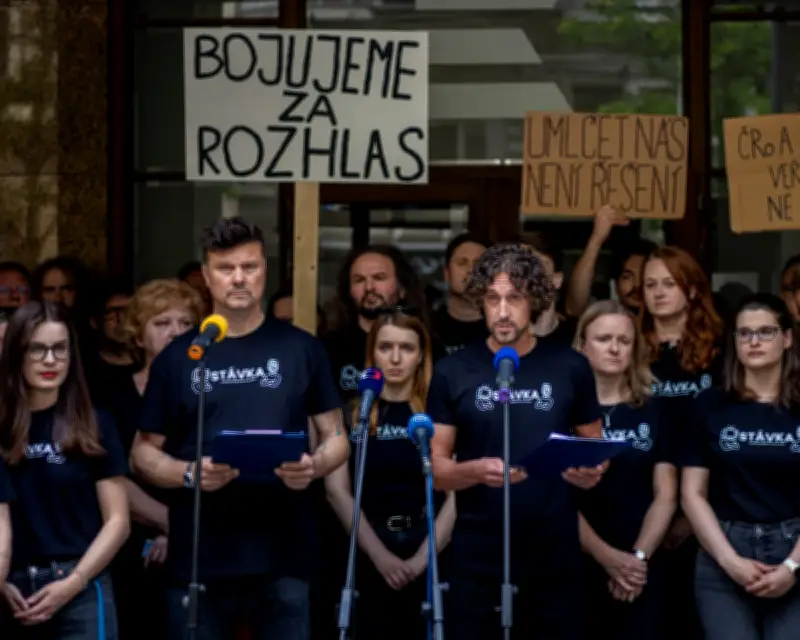
Czech Television and Czech Radio, the country's two main public broadcasters, launched a one-day strike on Monday, June 22, 2026, in protest against government proposals to slash their funding. The industrial action is the first of its kind in the history of the Czech Republic's public broadcasting.
Strike Details and Impact
Employees at both broadcasters walked off the job, disrupting regular programming. Czech Television suspended all live broadcasts, replacing them with a looping message explaining the strike. Czech Radio also halted most of its output, airing only emergency announcements and music.
According to the broadcasters' unions, the strike is a response to a government bill that would cut the television license fee by 20% and the radio license fee by 15%, effective from 2027. The unions argue that these cuts would severely undermine the broadcasters' ability to produce independent journalism and cultural content.
Government Justification and Reactions
The government, led by Prime Minister Petr Fiala, defends the cuts as part of a broader fiscal consolidation plan. Finance Minister Zbyněk Stanjura stated that the reduction is necessary to lower the state budget deficit and that public broadcasters must also contribute to savings.
However, the broadcasters and their supporters contend that the cuts are politically motivated. Petr Mrzena, chairman of the Czech Television union, said: "This is not about money. It is about the independence of public service media. The government is trying to silence us."
Public and Political Support
The strike has drawn widespread support from opposition parties, journalists' organizations, and cultural figures. A petition against the funding cuts has garnered over 100,000 signatures. Some opposition MPs have called for a no-confidence vote in the government over the issue.
International media freedom groups, including Reporters Without Borders, have also voiced concern, urging the Czech government to reconsider its plans.
Potential Consequences
If the bill passes, Czech Television and Czech Radio would face significant budget reductions, potentially leading to job losses and reduced output. The broadcasters warn that this could weaken democratic discourse and leave citizens less informed about public affairs.
The strike is scheduled to last until midnight, but unions have warned of further action if the government does not withdraw the bill. The outcome of this dispute could set a precedent for public broadcasting funding across Europe.




