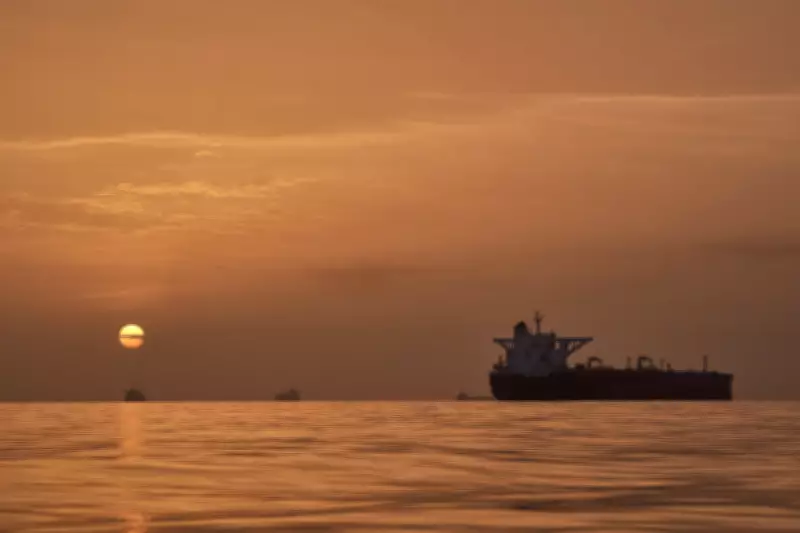
President Donald Trump has announced that the U.S. Navy is actively clearing Iranian mines from the Strait of Hormuz, a critical waterway for global oil shipments whose disruption is increasingly threatening the world economy. The effort, part of a broader push to reopen the strait, comes amid a tenuous ceasefire between the United States and Iran following weeks of conflict.
Mine-Clearing Could Take Months
Experts warn that sweeping for underwater explosives could take six months or longer. Pentagon officials reportedly told lawmakers during a classified briefing that clearing mines from the strait would likely take half a year, according to a person familiar with the matter. Defense Secretary Pete Hegseth declined to confirm the timeline but expressed confidence in the military's ability to clear any mines identified.
“Allegedly that was something that was said,” Hegseth said at a Pentagon news conference. “But we feel confident in our ability, in the correct period of time, to clear any mines that we identify.”

Psychological Warfare at Sea
Even if the U.S. clears the strait, restoring confidence among commercial shippers and insurers may prove difficult. Emma Salisbury, a scholar at the Foreign Policy Research Institute’s National Security Program, noted that the mere threat of mines can be as effective as actual mines. “You don’t even have to have laid mines — you just have to make people believe that you’ve laid mines,” she said. “And even if the U.S. sweeps the strait and says everything’s clear, all the Iranians have to do is say, ‘Well, actually, you haven’t found them all yet.’”
Insurers are already adding clauses requiring ship owners to contact Iranian authorities for safe passage, though these certifications do not specifically address mines. Dylan Mortimer, U.K. marine war leader for insurance broker Marsh, described the “specter of threat” that mines create, which plays into Iran’s favor regardless of whether mines are actually present.
US Assets and Strategies
The U.S. Navy has two littoral combat ships in the Middle East capable of mine-clearing, along with two Avenger-class minesweepers en route from Japan. Additionally, divers and explosive ordnance disposal teams are available, offering less visible options than large warships. Helicopters can also search for mines using lasers.
Steven Wills, a retired Navy lieutenant commander, compared minehunting to “walking through your yard pulling individual weeds” and minesweeping to “mowing the grass.” Scott Savitz of the RAND Corp. noted that complete clearance is unnecessary, as areas from World War I and II still contain unexploded mines.
Iranian Capabilities and Uncertainties
It remains unclear whether any mines have actually been deployed. Iran has only mentioned the “likelihood” of mines in prewar routes. Estimates suggest Iran possesses low thousands of mines, mostly older Soviet models, with some newer ones from China or domestic production. Salisbury noted that minelaying is easier than minesweeping, as mines can be pushed off speedboats or laid by small submarines that are hard to detect.
Economic and Political Stakes
The strait typically handles about 20% of the world’s oil, and its disruption has driven up energy prices, posing political risks for the Trump administration. The U.S. has also blockaded Iranian ports and seized ships tied to Tehran. A second round of ceasefire talks is planned in Pakistan this weekend.
Despite the challenges, shipping companies may eventually accept risks due to the lucrative nature of the route. However, the psychological impact of mines could prolong the recovery of confidence even after hostilities cease.