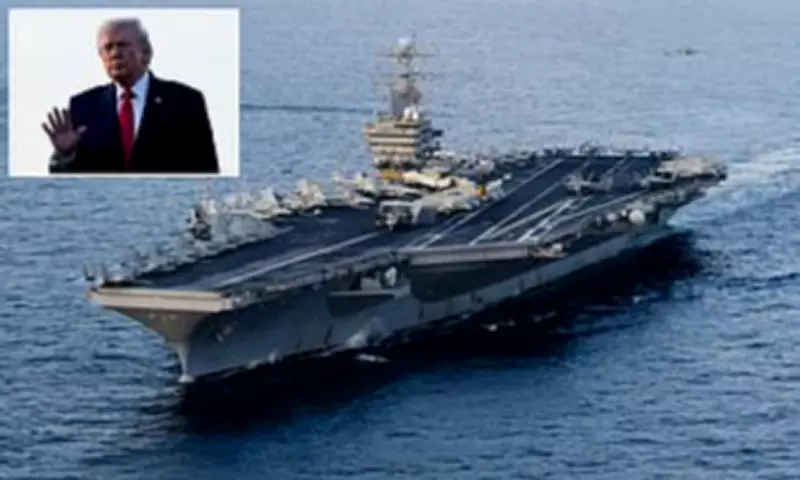
US Military Prepares for Weeks-Long Operations Against Iran, Officials Warn
The United States military is actively preparing for the possibility of sustained, weeks-long operations against Iran, according to two anonymous US officials who spoke to Reuters. This planning represents a potential escalation far beyond previous confrontations between the two nations, significantly raising the diplomatic stakes as negotiations continue.
Complex Planning and Escalated Targets
The officials described the ongoing preparations as complex, noting that a sustained campaign would likely target a broad range of Iranian state and security facilities, not merely nuclear infrastructure. This marks a substantial shift from more limited strike options previously considered.
Experts caution that such an operation carries far greater risks for US forces, given Iran's formidable arsenal of missiles and proven capability for asymmetric warfare. The potential for retaliatory strikes by Iran dramatically increases the likelihood of a broader regional conflict engulfing the Middle East.

Anticipated Retaliation and Diplomatic Ultimatums
One official stated that the US fully expects Iran to retaliate against any military action, leading to a protracted cycle of back-and-forth strikes and reprisals over an extended period. The White House and Pentagon declined to comment on specific questions regarding these retaliation risks or the potential for regional escalation.
President Donald Trump has repeatedly threatened military action against Iran, citing its nuclear and ballistic missile programs alongside its internal crackdowns. On Thursday, he issued a stark warning, stating that the alternative to a diplomatic solution would be "very traumatic, very traumatic," and set a blistering deadline for a deal by next month.
Iranian Warnings and US Military Buildup
Iran's Revolutionary Guards have warned that any strikes on Iranian territory would be met with retaliation against US military bases throughout the region. The US maintains a significant network of bases in countries including Jordan, Kuwait, Saudi Arabia, Qatar, Bahrain, the United Arab Emirates, and Turkey.
This comes amid a substantial US military buildup. Officials confirmed on Friday that the Pentagon is deploying the nuclear-powered aircraft carrier USS Gerald R. Ford to the Middle East. This $13 billion vessel will join the USS Abraham Lincoln and its strike group, effectively doubling the US Navy's carrier strike power in the region.
Strategic Deployment and Diplomatic Manoeuvres
The deployment adds thousands of troops, fighter aircraft, and guided-missile destroyers to the area, significantly bolstering American firepower. The USS Gerald R. Ford, currently in the Caribbean, is expected to take up to four weeks to arrive, aligning with Trump's diplomatic ultimatum timeline.
White House spokesperson Anna Kelly, when asked about preparations for a sustained operation, stated, "President Trump has all options on the table with regard to Iran. He listens to a variety of perspectives on any given issue, but makes the final decision based on what is best for our country and national security."
Meanwhile, diplomatic channels remain active but indirect. A top Iranian security official visited Oman and Qatar this week to exchange messages with US intermediaries, opting for backchannel communications rather than direct dialogue as the military posture intensifies.