Ukrainian Forces Overwhelm NATO Brigade in Simulated Battle Exercise
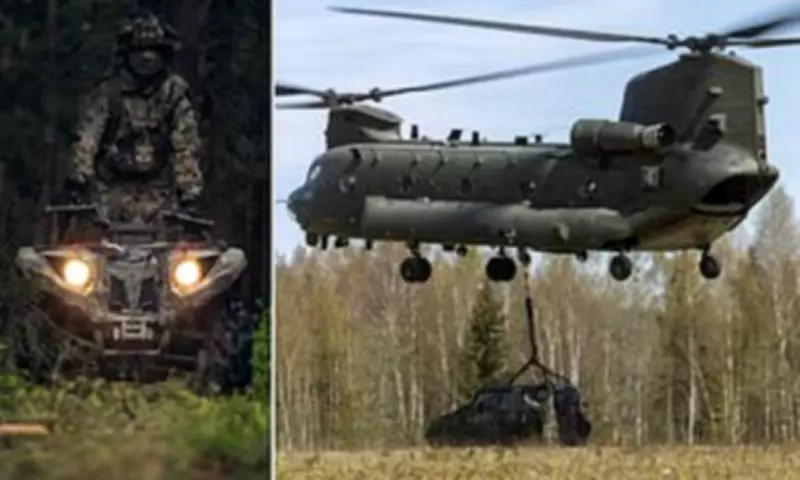
In a startling revelation from a major NATO military exercise held last year in Estonia, Ukrainian forces were reported to have 'destroyed' a British brigade during a simulated wargame. The exercise, known as Hedgehog 2025, involved over 16,000 troops from twelve NATO member countries and aimed to replicate a modern battlefield environment dense with drone warfare.
Simulation Details and Devastating Outcome
The scenario pitted a battle group comprising a British brigade and an Estonian division, totaling thousands of personnel, against a Ukrainian team acting as the adversary. According to participants, the result was described as 'horrible' for NATO, with the Ukrainian forces achieving a decisive victory. One participant noted that the NATO group appeared unprepared, 'just walking around, not using any kind of disguise, parking tents and armoured vehicles' in plain sight.
Lieutenant Colonel Arbo Probal, head of the unmanned systems programme for the Estonian Defence Forces, explained that the simulation's objective was to test soldiers' adaptability under intense pressure. 'The aim was really to create friction, the stress for units and the cognitive overload as soon as possible,' he stated. The exercise mirrored the early phases of the Ukrainian war, featuring mobile tank and troop advances rather than the static front lines seen currently.

Advanced Ukrainian Tactics and Technology
To counter the NATO forces, the Ukrainian team employed the Delta battlefield-management system, a sophisticated tool that integrates real-time intelligence gathering with artificial intelligence. This system enabled coordinated strikes, target identification, and data analysis, proving highly effective. In one specific instance, a team of ten Ukrainians executed thirty mock strikes over half a day, resulting in the 'destruction' of seventeen armoured vehicles.
Aivar Hanniotti, an Estonian systems coordinator who led a unit on the opposing side, confirmed the severity of the outcome. 'We quite easily found cars and mechanised units, and we were able to take them out quite fast with strike drones,' he remarked, adding that two battalions were eliminated in a single day, rendering them combat-ineffective. Reports indicate that one commander reacted to the drill by exclaiming, 'We are f****d,' underscoring the shock of the defeat.
Broader Implications for Drone Warfare
This simulation has starkly highlighted the pivotal role of drones in contemporary conflict, with analysts estimating that drones account for approximately 70 percent of casualties in the Ukraine war. In response, European allies have accelerated drone production and initiated training programmes in unmanned warfare. Notably, Ukraine and Germany recently unveiled their first jointly produced strike drone, which Ukrainian President Volodymyr Zelensky praised as 'modern Ukrainian technology. Battle-tested. Powered by AI.'
Britain has also committed to a significant investment, pledging £2 billion towards drone development to enhance battlefield readiness. A defence review released shortly after the Estonian exercise emphasised that drones are 'an essential component of land warfare,' urging the Army to diversify its unmanned aerial vehicle capabilities.
Geopolitical Context and Peace Efforts
Amidst these military developments, diplomatic efforts to end the war in Ukraine continue. US President Donald Trump has set a June deadline for negotiations, urging Zelensky to 'get moving' on a potential peace deal with Russia, which he claims is willing to engage. However, recent diplomatic engagements have seen complications, such as US Secretary of State Marco Rubio's absence from a key meeting with European leaders, attributed to scheduling conflicts but criticised by some officials as 'insane.'

Upcoming peace talks are scheduled for February 17-18 in Geneva, involving US and Russian delegations. The Kremlin has appointed Vladimir Medinsky, a presidential aide to Vladimir Putin, to lead the Russian side, though his involvement has raised concerns due to past controversies, including comparisons of the Ukraine war to historical conflicts like the Great Northern War. The Ukrainian delegation will be headed by senior advisors Rustem Umerov and Kyrylo Budanov, aiming to navigate these complex negotiations.