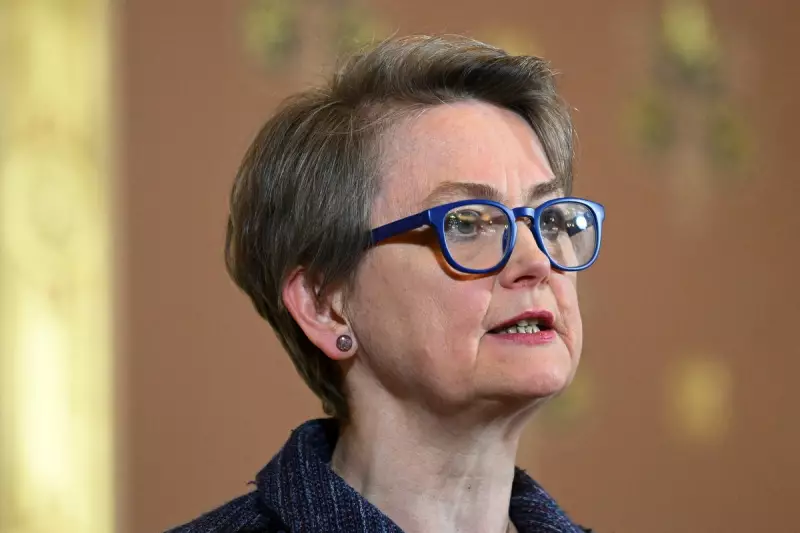
Foreign Secretary Yvette Cooper has declared that Britain is significantly increasing its focus on security in the Arctic, during a diplomatic tour of Scandinavia. The move comes amid heightened tensions driven by former US President Donald Trump's renewed threats to annex Greenland and ongoing concerns about Russian military activities in the High North.
Diplomatic Push in the High North
Ms Cooper's visit to Finland and Norway on Wednesday 14 January 2026 is centred on reinforcing the UK's strategic interests. Her itinerary includes meetings with Finnish border guards and British Royal Marines stationed at Norway's Camp Viking base. She stated the government is actively "reinforcing our diplomatic and security commitment to the region" through collaboration with allies.
Ahead of the trip, Cooper emphasised the gravity of the situation: "Britain is stepping up on Arctic security. With our allies we are working to strengthen Arctic defences and deter any attempts from the likes of Vladimir Putin to threaten our interests and our infrastructure." She framed Arctic security as a critical transatlantic partnership issue, vital for the safety of both Britain and the NATO alliance.

The Shadow of US Annexation Threats
While the tour's official focus is on Russian aggression, it is conducted under the considerable shadow of statements from Donald Trump. The former president has repeatedly insisted the US must take control of Greenland to prevent it falling under Russian or Chinese influence. His administration has even threatened to use force to annex the semi-autonomous Danish territory, causing alarm within NATO.
This stance has provoked a firm response from Greenland itself. On Tuesday, Greenland’s energy minister Naaja Nathanielsen told a press conference in Westminster that the territory had "no intention of becoming American" and felt "betrayed" by the US. While warning that an invasion would mean "we would all be under attack", she expressed a preference for a peaceful resolution, potentially involving greater security monitoring or an expanded NATO presence.
UK's Strategic Response and NATO Coordination
The UK's heightened discourse on Arctic security appears directly linked to the escalating US rhetoric, which intensified at the start of 2026. Prime Minister Sir Keir Starmer has already discussed the issue in calls with Trump, the Danish prime minister, and the NATO secretary-general.
Ms Cooper is now poised to advocate for enhanced NATO efforts to safeguard the region. She argued that collective action is essential: "Coming together as an alliance allows us to unify and tackle this emerging threat. We see it as our responsibility and our duty to tackle these challenges head on, making us all safer in the process." This positions the UK as a key player in efforts to maintain stability in the increasingly contested Arctic, balancing deterrence against Russia with diplomatic management of intra-alliance tensions over Greenland.