
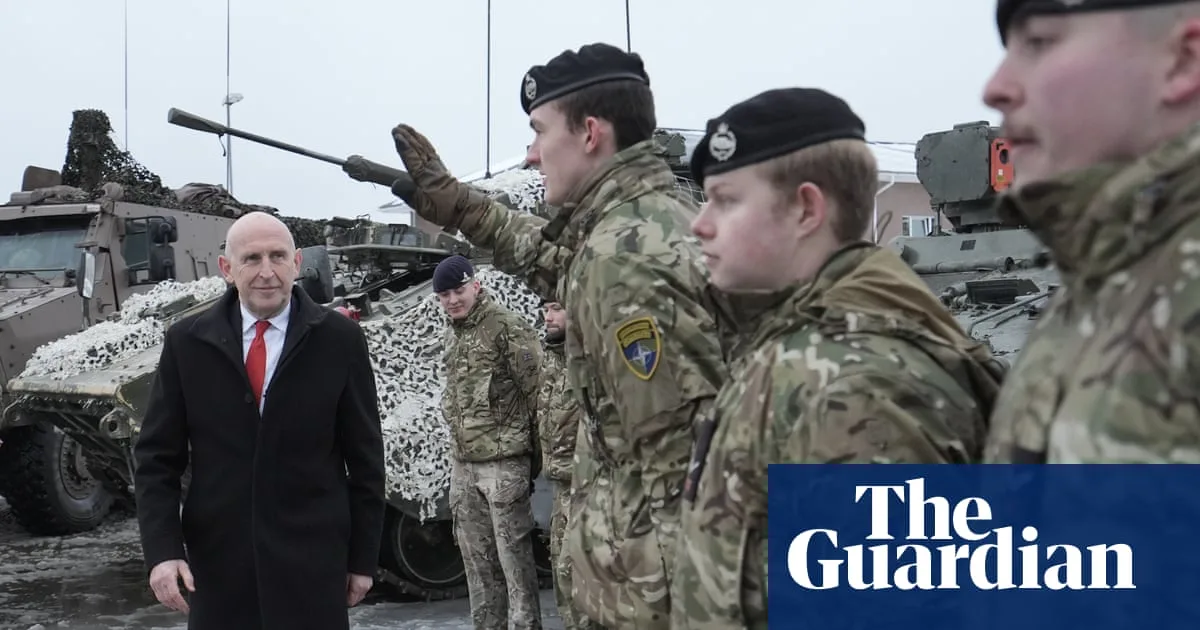
Britain and Germany’s highest-ranking military leaders have issued an unprecedented joint appeal to the public, urging acceptance of the “moral” case for rearmament and preparation for the threat of war with Russia. Air Chief Marshal Richard Knighton, the UK’s chief of the defence staff, and Gen Carsten Breuer, Germany’s chief of defence, argued that Russia’s military stance had “shifted decisively westward” and that a “step change” was needed in Europe’s defence and security.
In a joint article published in the Guardian and Die Welt, the defence chiefs wrote: “There is a moral dimension to this endeavour. Rearmament is not warmongering; it is the responsible action of nations determined to protect their people and preserve peace.” They warned that if Russia perceives Europe as weak or divided, it may be emboldened to extend its aggression beyond Ukraine.
The appeal comes amid significant public reluctance in both countries to accept economic pain for rearmament, despite majorities believing a third world war is likely within five years. Polling by YouGov found only 25% of Britons favour tax rises and 24% spending cuts to fund greater defence spending. Similarly, German and French voters are less supportive of increased defence budgets if it means trade-offs with other investment.
Prime Minister Keir Starmer, speaking at the Munich Security Conference, stressed the need for closer UK-European defence cooperation, stating: “We are not the Britain of the Brexit years.” He described Europe as “a sleeping giant” with fragmented industrial planning and procurement.
Knighton and Breuer called for “whole-of-society defence”, including resilient infrastructure, private sector technology research, and national institutions prepared for increasing threats. The UK and Germany have deepened defence cooperation under the 2024 Trinity House agreement. Germany is permanently stationing a combat brigade on Nato’s eastern flank and has amended its constitution for unrestricted defence funding, while Britain is building six munitions factories for sustained stockpile capability.




