UK Forces Narrowly Avoid Iranian Missile Strike in Bahrain
Three hundred British military personnel were positioned just 200 metres from an Iranian missile and drone strike targeting the United States naval base in Bahrain on Saturday. This alarming incident represents one of multiple occasions where United Kingdom forces have become inadvertently entangled in the escalating Middle East conflict, despite the UK not participating in the initial US-Israeli joint bombing campaign against Iran.
Retaliatory Attacks Across the Region
The strike in Bahrain formed part of over twenty-five waves of retaliatory attacks launched by Iran in response to the massive US-Israeli bombing offensive that commenced on Saturday. This offensive resulted in the death of Iran's supreme leader, Ali Khamenei, along with other key officials. In the aftermath, Tehran has executed counterstrikes targeting Israel, Kuwait, Bahrain, Qatar, Saudi Arabia, the United Arab Emirates, and Jordan.
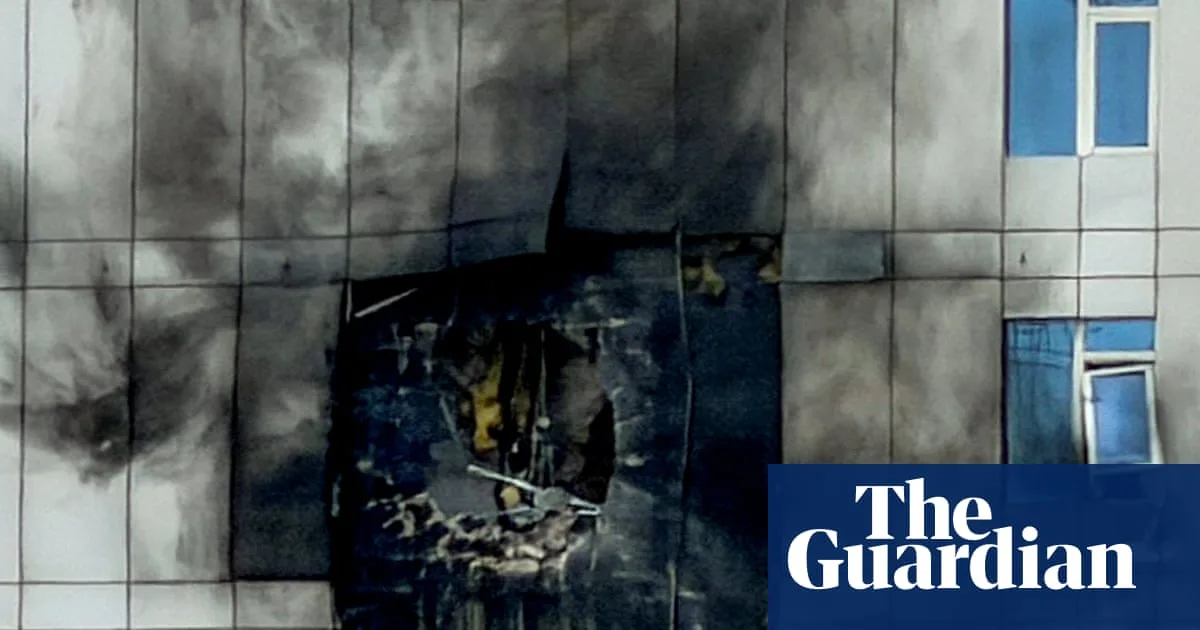
Many of these Iranian attacks have focused on American bases throughout the region. However, others have struck civilian locations previously considered relatively secure, including Kuwait's international airport, the Fairmont hotel in Dubai, and a skyscraper in Bahrain. Fortunately, no casualties were reported from the Bahrain missile strike near UK personnel.
UK Defence Operations and Statements
John Healey, the United Kingdom's defence secretary, stated that Iran is "lashing out in an increasingly indiscriminate and widespread way." He emphasised that Britain's role involves actively engaging in regional defence operations to support allies under attack, aiming to protect both civilian sites and military assets. The UK is not involved in the US-Israeli attack on Iran, which has faced widespread criticism for lacking a foundation in international law.
British forces have been mobilised to intercept threats, with RAF Akrotiri in Cyprus and the American al-Udeid airbase in Qatar serving as key operational hubs. Aircraft from these locations have successfully shot down drones and slower-moving cruise missiles. However, they remain incapable of stopping faster-moving ballistic missiles, highlighting a significant defensive limitation.
Additional Incidents Involving UK Personnel
In a separate event, British forces intercepted and destroyed an Iranian drone over Iraq that was reportedly heading towards a western military base. Additionally, an Iranian missile landed approximately 400 metres from UK personnel stationed in Iraq, who are engaged in counter-Islamic State operations. All UK personnel across the Middle East have been confirmed as safe and accounted for, though British troops remain on the highest state of alert.
Military positioning and locations are under continuous review as the conflict develops. In another concerning development, Iran fired two missiles into the eastern Mediterranean Sea towards Cyprus. Officials do not believe these were targeted at RAF Akrotiri or Cyprus broadly, suggesting they may have been aimed at the US navy's Ford carrier strike group operating nearby.
Strengthened Defensive Measures
Defence Secretary Healey underscored the gravity of the situation, noting public concern over attacks extending beyond military targets to include civilian infrastructure like airports and hotels. In response, the UK has reinforced its defensive capabilities in the region to better safeguard against such indiscriminate assaults. The ongoing conflict underscores the complex and volatile nature of Middle Eastern geopolitics, with UK forces playing a critical defensive role amidst escalating hostilities.




