UK Defence Exposed as Iran Conflict Escalates, Warns Expert
UK Defence Exposed in Iran Conflict, Warns Expert

UK Defence Exposed as Iran Conflict Escalates, Warns Expert

As Iran's foreign ministry warns that the war could soon spread beyond its borders and affect Europe, conflict expert Keir Giles has highlighted how the United Kingdom is wholly unprepared for potential fallout. The stark consequences of years of procrastination in defence policy are now becoming alarmingly clear.

Royal Navy Struggles Amid Crisis

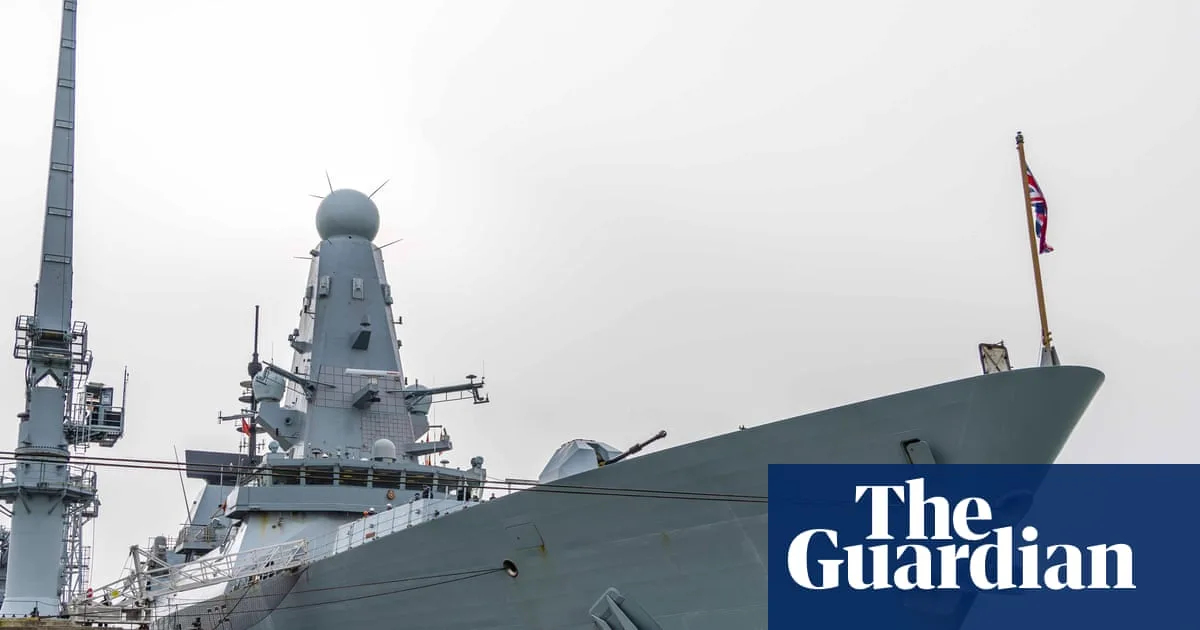
For years, defence experts, former ministers, and service chiefs have cautioned that failing to urgently rebuild Britain's defences only heightens the risk of conflict. This risk has been starkly demonstrated by the UK's inability to protect its citizens, interests, and bases in the Gulf and on Cyprus from the fallout of American attacks on Iran. The crisis has exposed the Royal Navy's limited capabilities to respond to emergencies.

A shortage of operational vessels meant the Navy planned to have no warships in the Gulf for the first time since 1980, a move defended by the Royal Navy's fleet commander just two days before the current round of attacks on Iran began. Now, HMS Dragon, a destroyer with anti-missile capabilities, has been pulled from planned maintenance and sent urgently to the eastern Mediterranean. This suggests it sailed with known defects and unfinished work, impacting both effectiveness and future availability, a symptom of how decades of defence cuts are biting hard as Britain's armed forces face testing times.

Funding and Strategic Failures

Drone attacks on Gulf cities and Cyprus could serve as a wake-up call to shock the British government into action. However, it is more probable that the snooze button will be pressed again, as Chancellor Rachel Reeves continues to block funding promised to NATO and used as a baseline for the UK's National Security Strategy and Strategic Defence Review.

The impact of the UK's refusal to invest in defence is evident in the Joint Expeditionary Force, where the UK serves as the framework nation. In 2014, the UK was the only member among ten to meet NATO's spending commitment of 2% of GDP. Just over a decade later, it has fallen to ninth place in relative spending, ahead only of Iceland, which lacks a military. Questions also arise over what the money would be spent on if it ever becomes available.

Technological Vulnerabilities and Adaptation

The reported absence of drone defences at the UK's sovereign base in Akrotiri, Cyprus, has deepened fears that the UK has not adapted swiftly enough to new capabilities shaping current conflicts. In 2025, British commanders at a joint exercise in Estonia were reportedly shocked at how easily Ukrainian and Estonian forces located and destroyed their vehicles using new technology, including drones and innovations like the Delta information sharing system and covert wildlife cameras.

Defence observers hope this experience can catalyse change in the UK's forces, kickstarting the dissemination of lessons learned from Ukraine so the British Army no longer plans to fight as if it were 2021. Persistent rumours suggest that British Challenger tanks in Estonia may be withdrawn, with forces scaled down to "light role" troops, a move that could signal unwillingness to take commitments to allies seriously and undermine British resolve in the eyes of Russia.

Homeland Threats and Civil Defence

The problems are not confined to distant regions. The UK's National Security Strategy warns of direct threats to the homeland. It has long been known that the UK needs a cost-effective counter-drone and counter-missile capability as part of an integrated air and missile defence system. A Sky News podcast recorded in early 2025 highlighted the country's near-complete inability to counter long-range missile threats.

As noted by analysts, hostile drones can be launched from much closer. The wave of drone incursions that closed European airports in late 2025, while not involving attacks, demonstrated the vulnerability of critical infrastructure and the ease of mounting an assault. Vulnerabilities extend beyond air threats, with the government reportedly on alert for Iranian sleeper cells to be activated in the UK for attacks.

Despite these combined threats, the government has not released a promised home defence programme or started visible work on rebuilding civil defence. National and local agencies, emergency services, and industry are increasingly aware of the threat and seek direction and resources from central government, but appear to receive little. Ministry of Defence liaison officers connect with civilian partners, but without government direction, they can only share information without offering solutions.

A Period of Consequences

In 1936, Winston Churchill told parliament, "The era of procrastination, of half-measures... of delays, is coming to its close. In its place, we are entering a period of consequences." The war on Iran shows that this period of consequences has arrived for the UK. There is hope that the government's procrastination will not cost too dearly, but the current crisis underscores the urgent need for action to bolster national defence and security.




