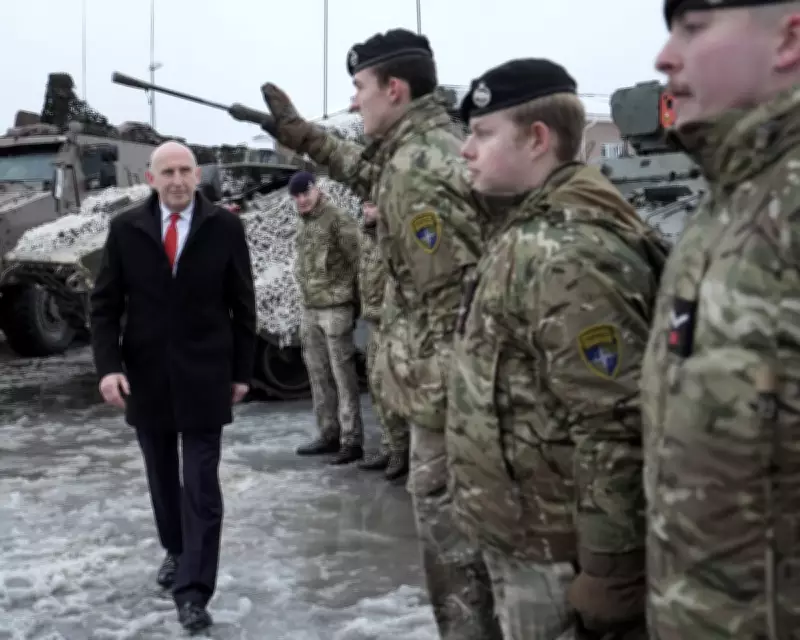
In a landmark move, the highest-ranking military chiefs of Britain and Germany have issued a joint public appeal, pressing the moral case for rearmament and warning of the imminent threat posed by Russia. Air Chief Marshal Sir Richard Knighton, the UK Chief of the Defence Staff, and General Carsten Breuer, Germany's Chief of Defence, published a joint article in the Guardian and Die Welt, following the Munich Security Conference, urging citizens to prepare for potential conflict.
Unprecedented Warning from Military Leaders
The defence chiefs emphasized that their plea stems from a duty to explain the stakes involved, as both nations commit to the most significant sustained increases in defence spending since the Cold War. They argued that Russia's military posture has decisively shifted westward, necessitating a step change in Europe's defence and security strategies. In their words, rearmament is not an act of warmongering but a responsible measure to protect populations and preserve peace.
Public Reluctance and Political Challenges
Despite growing fears of a third world war, with majorities in Britain and Germany believing such a conflict is likely within five years, there is significant voter resistance to economic sacrifices for rearmament. Recent YouGov polling reveals that only a minority in the UK support tax rises or spending cuts to fund defence increases. Similarly, polls in Germany and France show declining public willingness to trade off other investments for higher defence budgets.

This reluctance is mirrored in political spheres, with opposition from the left of the Labour party in Britain and from both left-wing and far-right factions in Germany, including the AdF party. The debate intensifies as governments seek to rebalance spending after years of investing in public services during a perceived peace dividend era.
Strategic Moves and International Cooperation
UK Prime Minister Keir Starmer has called for closer defence ties with Europe, emphasizing procurement and manufacturing integration to strengthen European defence. At the Munich Security Conference, he stated that Britain is moving beyond its Brexit-era stance, advocating for unity against Russian threats. Meanwhile, Germany is taking concrete steps, such as permanently stationing a combat brigade on NATO's eastern flank and amending its constitution to unlock defence funding.
Both nations have deepened cooperation through the Trinity House Agreement signed in 2024. Germany has initiated procurement of thousands of armoured vehicles and expanded industrial capacity, while Britain is building up to six munitions factories to ensure sustained stockpiles. These efforts align with NATO's commitment to spend 5% of GDP on defence by 2035, a move projected to boost economies but sparking contentious debates over priorities.
Broader Implications and Future Outlook
The defence chiefs warned that if Europe appears weak or divided, Russia may be emboldened to extend aggression beyond Ukraine. They called for a whole-of-society approach to defence, involving resilient infrastructure, private-sector technology development, and prepared national institutions. German Chancellor Friedrich Merz highlighted the urgency, noting that freedom is no longer guaranteed and requires firmness to defend, with discussions underway on joining France's nuclear umbrella for enhanced security.
This joint appeal underscores a pivotal moment in European security, driven by Russia's actions and uncertainties in US support under a potential Trump administration. As Europe grapples with these challenges, the call for rearmament reflects a strategic shift towards greater self-reliance and collective defence preparedness.