

Trump Issues Ultimatum to Iran Over Nuclear Ambitions and Protest Crackdowns
US President Donald Trump has delivered a stark warning to Iran, demanding the nation abandon its nuclear programme and immediately cease the killing of protesters. The president's ultimatum comes as a significant US naval armada, including powerful warships, sails towards the Middle East, heightening regional tensions.
Military Buildup and Diplomatic Maneuvers
Speaking at the premiere of the documentary Melania, Trump outlined two non-negotiable conditions for Iran to avoid potential military confrontation. "Number one, no nuclear. And number two, stop killing protesters," the president stated emphatically. He added that Iranian authorities are "killing them by the thousands", though he claimed to have intervened to prevent executions.
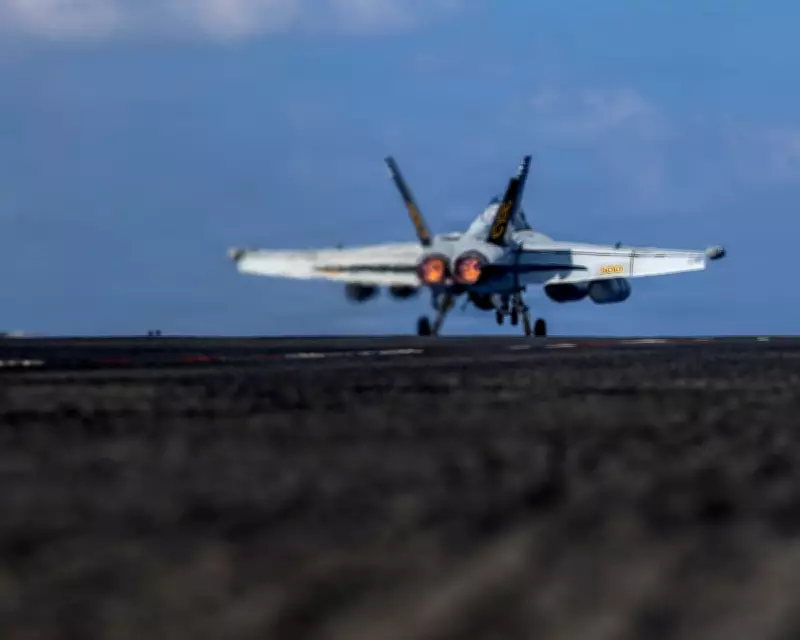
The US military deployment represents a substantial show of force, with Trump remarking, "We have a lot of very big, very powerful ships sailing to Iran right now, and it would be great if we didn't have to use them." Earlier in the week, the president had taken to Truth Social to declare that a "massive Armada is heading to Iran", describing it as "ready, willing, and able to rapidly fulfil its mission, with speed and violence, if necessary".

Iranian Response and Regional Diplomacy
As Trump issued his warnings, Iranian Foreign Minister Abbas Araghchi arrived in Turkey for discussions about potential negotiations with the United States. Araghchi is scheduled to meet Turkish President Recep Tayyip Erdoğan, though initial remarks suggested little immediate prospect of a diplomatic breakthrough.
The Iranian diplomat reiterated Tehran's position, stating, "Iran has always welcomed a mutually beneficial, fair and equitable nuclear deal – on equal footing, and free from coercion, threats, and intimidation." He emphasised that nuclear weapons "have no place in our security calculations and we have NEVER sought to acquire them".
Meanwhile, Araghchi conducted separate telephone discussions with counterparts from Qatar, Egypt, the United Arab Emirates, Oman, and Turkey. Arab states have reportedly insisted their air and ground facilities cannot be utilised by US forces for any potential attack on Iran.
European Sanctions and Iranian Retaliation Threats
The diplomatic landscape grew more complex as the European Union moved to designate Iran's Islamic Revolutionary Guards Corps (IRGC) as a terrorist organisation, a decision likely to be followed by the United Kingdom. Araghchi condemned this development, describing Europe as "a declining continent" that has "lost its role on the international level".
The Iranian foreign minister characterised the EU's decision as "a major strategic mistake", warning it would have serious consequences for European interests. While specific reprisals were not detailed, UK Foreign Office officials have long expressed concerns that such designation could prompt Iran to sever diplomatic relations entirely.
Broader Demands and Strategic Calculations
Trump's special envoy, Steve Witkoff, has articulated additional requirements beyond the nuclear programme and protest crackdowns. These include:
- Complete termination of Iran's nuclear enrichment activities
- Transfer of existing highly enriched uranium stocks out of the country
- Limitations on Iran's missile development programme
- Cessation of support for proxy groups in Lebanon, Iraq, and Yemen
From Tehran's perspective, these cumulative demands represent an existential threat to Iranian sovereignty if fully implemented. The White House appears to be banking on military pressure compelling Iran to adopt a more flexible negotiating position, though time is reportedly running short for diplomatic resolution.
The situation remains fluid, with Trump indicating he has been communicating with Iranian officials through intermediaries, though the precise nature and substance of these exchanges remain unclear. As warships continue their journey toward Iranian waters, the international community watches anxiously for signs of either escalation or de-escalation in this high-stakes geopolitical standoff.






