Starmer Stresses Urgency of Closer Defence Ties with Europe at Munich Conference
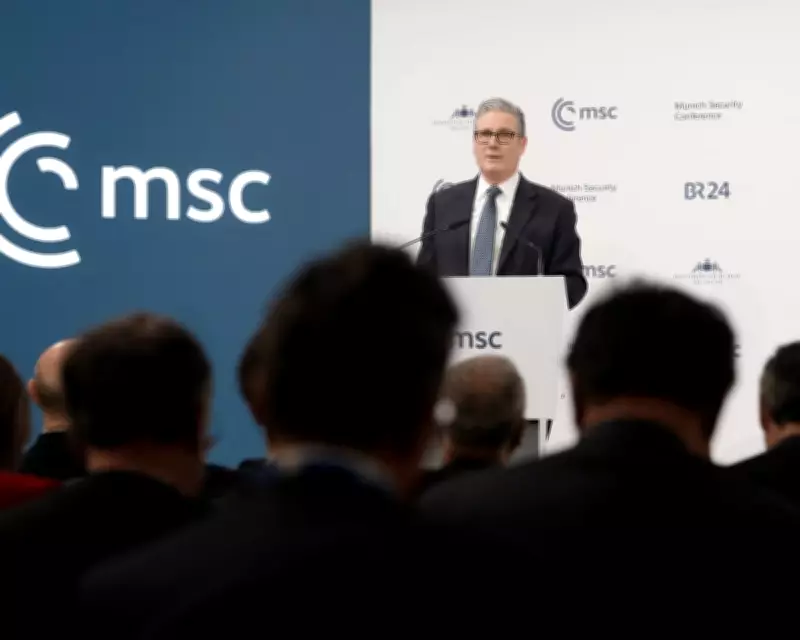
In a significant address at the Munich Security Conference on Saturday, British Prime Minister Keir Starmer emphasised the critical need for the United Kingdom to forge closer defence relationships with European allies. Speaking to an engaged audience, Starmer highlighted that stronger security across the continent relies on enhanced cooperation and integration, particularly in defence procurement and manufacturing.
A New Era Post-Brexit
Starmer declared, "We are 10 years on from Brexit. We are not the Britain of the Brexit years." This statement, met with applause, underscored a shift in the UK's approach towards Europe. He argued that the long-term threat posed by Russia necessitates Europe taking greater responsibility for its own defence, making it imperative for the UK to integrate more closely with European partners on defence procurement.
Proposals for Enhanced Cooperation
The Prime Minister is actively examining the case for a European Defence Mechanism, an intergovernmental instrument open to all European democracies, regardless of EU membership. This initiative, promoted by the Bruegel institute and former UK Foreign Secretary David Miliband, would involve members financing joint procurement and assets across Europe. Additionally, the UK and France are keen to reopen talks about the UK joining Security Action for Europe, an EU rearmament scheme, after previous discussions stalled over cost concerns.

Addressing Inefficiencies and Dependencies
Starmer described Europe as "a sleeping giant," noting that while European economies dwarf Russia's more than tenfold and possess substantial defence capabilities, fragmented industrial planning and procurement have led to inefficiencies. He stated, "This situation is wildly inefficient and it harms our collective security. The US security umbrella has allowed these bad habits to develop, but now we must break them." He called for generational investments to move from overdependence on the US to interdependence within Europe.
Commitment to NATO and US Relations
Starmer stressed that a closer UK-EU defence relationship does not imply any weakening of the UK-US relationship or NATO's strength. He described NATO as "the most effective defence alliance we have ever known," and affirmed that the security and intelligence relationship with the US remains as tight as ever. However, he urged European leaders to be more honest with their electorates about the changing global landscape and the rising costs of defence.
Political Context and Warnings
Reflecting on domestic politics, Starmer insisted he emerged from a turbulent week stronger, positioning himself well for future challenges. He warned against the rise of extremist parties, saying, "The peddlers of easy answers are ready on the extremes of left and right... Soft on Russia, weak on NATO, if not outright opposed, and determined to sacrifice the relationships we need on the altar of their ideology." He cautioned that such paths could lead to division and capitulation, echoing historical warnings about Europe's security.
In conclusion, Starmer reiterated the urgency of the moment, calling for increased spending, better coordination, and a generational shift in defence industrial cooperation to ensure collective security and stability across Europe.