Starmer Confronted Over Defence 'Complacency' as MPs Declare UK 'At War'
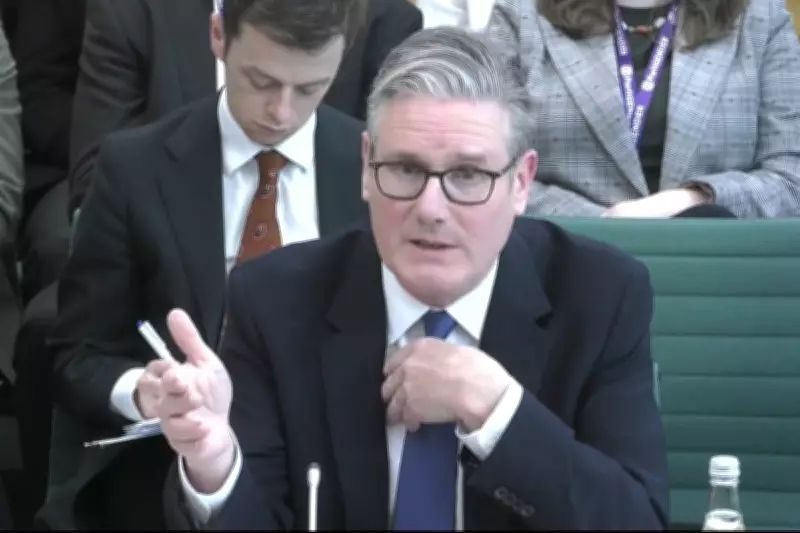
Prime Minister Keir Starmer has faced fierce accusations of "complacency" from senior Members of Parliament regarding the United Kingdom's defence preparedness during the escalating Middle East conflict. The confrontation occurred during a tense appearance before the Commons Liaison Committee, where the prime minister was challenged over the nation's apparent lack of readiness for potential hostilities.
Parliamentary Grilling Over Defence Posture
The committee hearing, comprising chairs of parliamentary select committees, saw Starmer clash with both Labour and Conservative MPs who asserted that the UK "is at war" and questioned the government's response timeline. This parliamentary scrutiny preceded a crucial emergency Cobra meeting chaired by the prime minister to address the conflict's impact on living costs, during which Starmer admitted he could not provide a definitive timetable for conflict resolution despite former US President Donald Trump's declared ceasefire.
Public concern about defence matters has more than doubled according to recent Ipsos Mori polling released just before Starmer's committee appearance. The survey revealed that public anxiety regarding UK defence capabilities surged by 16 percent to 31 percent, elevating defence to the third highest public priority behind immigration and economic stability.

Contentious Exchanges Over Military Preparedness
During the difficult committee session, a visibly flustered Starmer struggled to answer questions about conflict duration, stating: "It's hard to answer that question, if I'm honest about it. I think all our focus and energy has to be in the swift de-escalation, but we've got to plan on the basis that it could go on for some time."
The prime minister grew visibly angry when reminded that Winston Churchill required no defence review during the Second World War to execute Britain's defence strategy. This comparison proved particularly sensitive for Starmer, who has been described as "no Winston Churchill" by Donald Trump.
Naval Deployment Criticisms and Strategic Concerns
Conservative veteran MP Sir Bernard Jenkin delivered particularly scathing criticism, suggesting the government exhibited a "lack of war fighting mentality" and that defence decision-making "smacks of enormous complacency." Jenkin argued that the UK is effectively at war and questioned why the government wasn't "just getting on with it."
Starmer responded defensively: "Because the strategic review commits us to a war footing, and we now need to put the funding in place to increase defence spending to 2.5 percent, something that didn't happen under the last government."
Labour Defence Select Committee chair Tanmanjeet Singh Dhesi joined the criticism, highlighting embarrassing revelations about naval deployment capabilities. "When the US began ramping up forces around Iran in preparation for attack, it was embarrassing that we couldn't muster a single naval asset around the region," Dhesi stated.
Cyprus Base Vulnerabilities and Regional Response
The questions intensified following Iranian drone attacks on Cyprus, including one striking the UK base RAF Akrotiri at the conflict's outset. While destroyer HMS Dragon was eventually deployed, it required six days of hurried preparations before sailing to the Mediterranean, with no other British ships initially positioned in the region.
This situation proved particularly embarrassing as Greek and French governments managed to deploy naval assets to defend Cyprus before UK forces arrived. Dhesi further pressed the prime minister about in-year defence budget savings and sought assurances regarding the UK's commitment to spend 5 percent of GDP on defence and security by 2034.
Strategic Review and Funding Standoff
Both Jenkin and Dhesi pressed Starmer about publication timelines for the crucial Defence Investment Strategy, with the prime minister appearing to acknowledge a standoff between the Ministry of Defence and Treasury, stating: "It is my job to resolve this."

Regarding Cyprus base defence, Starmer attempted to reassure: "We constantly assess this, and we do have very effective ways of defending ourselves. I don't want to raise levels of public anxiety. They are anxious about what they're already seeing on their television screens."
The prime minister detailed defensive measures including embedding UK airspace battle management specialists into Middle East military commands, working with industry to distribute air defence missiles to Gulf partners, and deploying short-range air defence systems to Bahrain, Kuwait, and Saudi Arabia.
Starmer concluded by praising military and intelligence personnel working "literally 24/7 to keep us safe," while facing continued parliamentary pressure to demonstrate stronger defence leadership during the ongoing international crisis.