NATO Chiefs Issue Stark Warning to Starmer Over Defence Spending
NATO chiefs have delivered a stark warning to Prime Minister Keir Starmer regarding the severe consequences of failing to increase defence spending. Senior officials have informed the PM that without substantial additional investment, the United Kingdom risks falling towards the bottom of the alliance's league table, jeopardising its strategic position and military capabilities.
Spending Targets and Capability Concerns
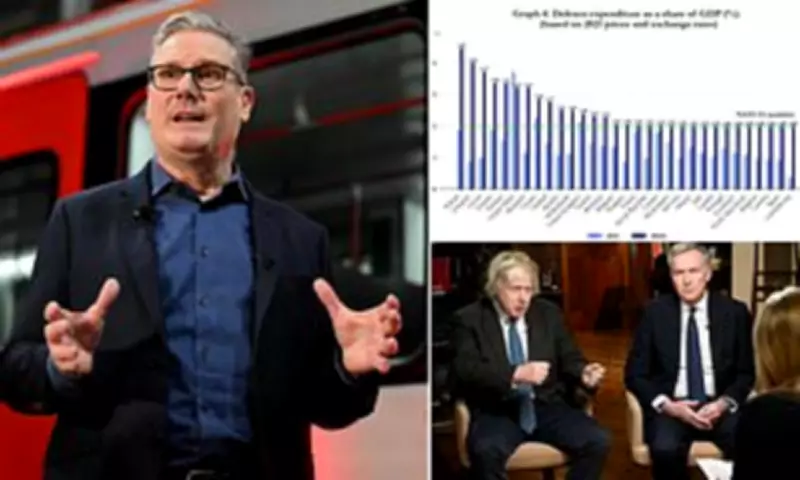
Top NATO officials have highlighted the critical danger of not raising defence budgets as a proportion of GDP. Britain is currently missing key targets for bolstering military capabilities, with the UK's permanent representative to NATO, Angus Lapsley, and assistant secretary general Nick Catsaras both expressing serious concerns about spending levels. According to reports, Mr Catsaras has informed the government that the UK ranks 31st out of 32 member states for progress on meeting 2025 capability targets.
Prime Minister Starmer has committed to increasing defence expenditure from 2.4 per cent of GDP to 2.5 per cent by 2027, with an ambitious goal of reaching 3 per cent in the 2030s. However, Downing Street aides are now pushing to achieve this higher target much earlier, potentially before the next general election. Meeting these costs, estimated at approximately £14 billion annually, presents a significant challenge, especially after Labour MPs blocked efforts to reduce the spiralling benefits bill.

Pressure from NATO and Domestic Challenges
Royal Navy admiral Keith Blount, NATO's outgoing deputy supreme allied commander Europe, has privately voiced similar concerns about UK defence spending. The alliance has emphasised that European allies and Canada must do more to deliver credible defence spending paths and real military capabilities. A NATO spokesman stated that this is a necessity now more than ever, representing a long-term investment in Euro-Atlantic security.
The UK has attempted to argue that more weight should be placed on the cost of maintaining the nuclear deterrent, a burden not borne by other NATO countries such as Germany, which is currently ramping up its defence spending. Despite this, the pressure remains intense, with Prime Minister Starmer admitting he 'must go faster' on defence spending amid the ongoing Russian threat and additional pressure from figures like former US President Donald Trump.
Healey Rejects Johnson's Call for Ukraine Troop Deployment
This NATO intervention emerged as Defence Secretary John Healey snubbed a call from former Prime Minister Boris Johnson for immediate troop deployment to Ukraine. Mr Johnson suggested that putting 'boots on the ground' to maintain peace could 'flip a switch' in Vladimir Putin's mind, convincing him that Europe is serious about supporting Kyiv. He argued there was 'no logical reason' why non-fighting boots should not be on the ground in Ukraine immediately, questioning why plans for post-war deployment could not be implemented now.
In contrast, Mr Healey stated he hopes to send British forces to Ukraine this year, but only if a peace deal has been successfully negotiated. Writing ahead of the fourth anniversary of Russia's invasion, Healey emphasised that deploying troops would signify the war is finally over and peace has been secured. He described this as the 'heavier burden' on any Defence Secretary or government, committing armed forces to operations.
Peacekeeping Coalition Discussions
Britain and France have been leading discussions with allies about forming a 'coalition of the willing' that would deploy peacekeeping forces if a deal is reached to end the conflict. Mr Healey reiterated that a secure Europe requires a strong, sovereign Ukraine, and any troop deployment would be contingent upon successful peace negotiations.
As the war enters its fifth year, with continued Russian strikes on Kyiv, the dual pressures of meeting NATO spending requirements and navigating complex Ukraine policy decisions present significant challenges for the Starmer government. The premier also faces domestic pressure to increase spending on public sector services and wages, having barely survived a recent coup attempt within his party.