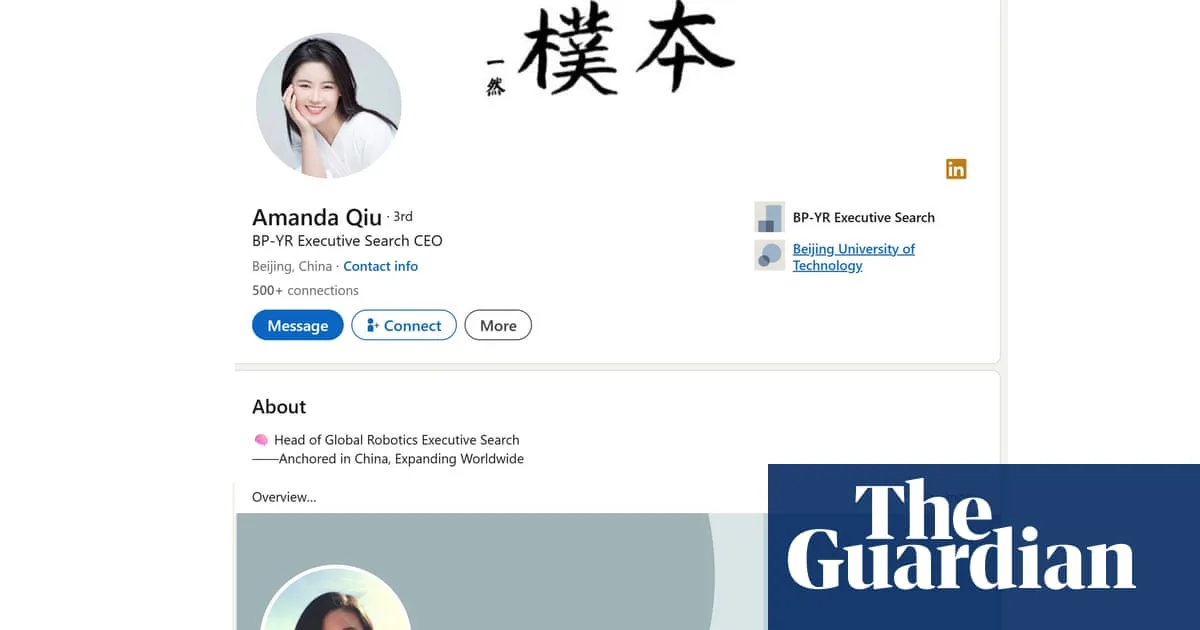
A recent security alert issued by MI5 to Members of Parliament and their staff working within the Palace of Westminster has starkly highlighted the persistent and sophisticated threat posed by Chinese espionage operations. This is not an isolated or new phenomenon, as detailed by a former Army intelligence officer who was himself targeted in 2017.
The Honeytrap Approach: A Calculated Grooming Process
According to Philip Ingram, a former Army intelligence officer, he was approached in 2017 by a man via LinkedIn. The offer was seemingly legitimate: an all-expenses-paid trip to China, plus a $2,000 fee, to produce a report for a counter-terrorism conference in Shanghai following the London Bridge attack. However, several red flags immediately raised his suspicions.
The first concern was the Chinese element itself. Under Article 7 of the Chinese constitution, any citizen or organisation is legally required to cooperate with state intelligence services. This legal framework means that any interaction with a Chinese entity carries an inherent risk. The fact that the fee was to be paid in cash upon arrival in China sounded further alarm bells for Ingram.
Drawing on his experience running counter-intelligence operations, Ingram decided to engage cautiously to uncover the agent's true priorities. He suggested meeting in London or elsewhere in Europe, but his contact offered excuses. When Ingram proposed moving their conversation to Proton Mail—a secure email service blocked in China—his contact responded via that platform in under 15 minutes. This confirmed the individual had high-level government sanction. The agent then revealed he was seeking private documents and conversations not available to the public.
Beyond the Honeytrap: A Multi-Faceted Threat
The tactics extend far beyond simple approaches on professional networking sites. MI5 has highlighted profiles like those of Shirly Shen and Amanda Qiu, which use images of attractive women—a classic honeytrap technique designed to lower the defences of male targets.
However, the threat intensifies significantly if an individual travels to China. Potential risks include:
- Compromised accommodation: Hotel rooms can be bugged with video and audio surveillance.
- Device hacking: Leaving electronic devices unattended allows intelligence services to download all data and potentially install monitoring hardware.
- Malicious software: Downloading any Chinese software, even for visas or tourism, can compromise a device entirely.
- Blackmail and coercion: If a honeytrap fails, individuals may face staged altercations, fake drug charges, visa problems, or even threats against their family to apply pressure.
This is a professional, long-term strategy. The Chinese intelligence apparatus operates on a 'shotgun effect,' making thousands of approaches in the hope that a few will succeed. They target not just Parliament, but also defence, technology, and engineering sectors.
Staying Vigilant: How to Protect Yourself
Philip Ingram strongly advises against engaging with suspicious contacts. For the average person, the safest course of action is to block the individual immediately. He outlines key steps for anyone approached unexpectedly:
Firstly, scrutinise the approach. Ask why you are being contacted. If the profile does not match the request—such as a person with broken English offering a high-level opportunity—be suspicious.
Secondly, verify legitimacy. Assume an approach is not legitimate and take active steps to confirm the person's identity and motives, rather than assuming they are genuine.
Finally, understand the long game. Espionage is a grooming process. They may not ask for sensitive information for months or years, instead focusing on building a relationship and gathering tiny pieces of information to build a larger intelligence picture, pixel by pixel.
The pervasiveness of this threat is extensive. The Chinese government employs a multi-generational strategy, utilising all national resources, including data harvesting from platforms like TikTok. It is no coincidence that there is a noted increase in Chinese restaurants near sensitive UK government and military sites, providing a potential starting point for intelligence gathering through staff on short-term visas who can collect names and contact details.
This sustained campaign underscores why MI5 produced the 'Think Before You Link' pamphlet and why constant vigilance is required from all those in positions of influence.




