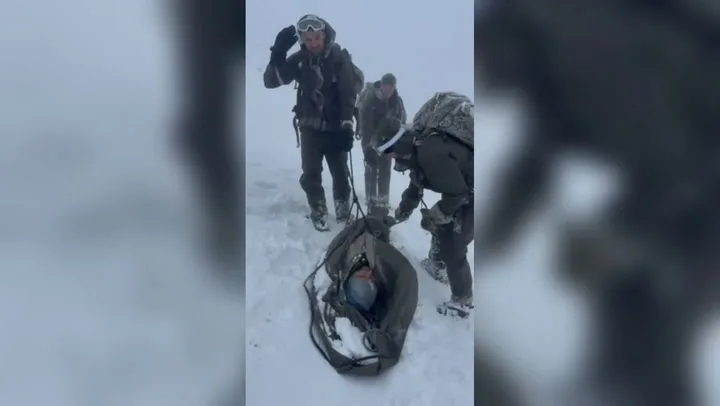
Royal Marines on a mountain training exercise in Scotland have been credited with saving the life of a climber who was succumbing to severe exposure and hypothermia in treacherous conditions on Ben Nevis.
Dramatic Summit Discovery in Blizzard Conditions
The rescue unfolded on January 24th when a joint team of Scottish Royal Marine Reserves and Dutch Korps Mariniers, participating in Exercise Highland Warrior, discovered the stricken climber lying in snow near the summit of Britain's highest peak. Temperatures had plunged dramatically during a fierce blizzard, creating life-threatening circumstances.
Visible Signs of Prolonged Exposure
Colour Sergeant McKenzie of the Royal Marine Reserves described the alarming scene. "Solid blocks of ice clung to his eyebrows, hat, and gloves – evidence of long exposure to freezing conditions," he reported. The climber's equipment showed signs of struggle, with one walking pole bent and another apparently broken or collapsed.
When questioned, the disoriented man revealed he had become separated from two climbing companions and had no knowledge of their whereabouts. The environmental conditions were exceptionally severe, with biting winds estimated at around 40mph combining with summit temperatures to create wind chill factors between minus 15°C and minus 20°C.
Rapid Deterioration During Descent Attempt
Initially attempting to assist the climber to walk down, the marines quickly realised his condition was worsening. "One of the Dutch lads took his arm to steady him, but his condition continued to deteriorate," explained C/Sgt McKenzie. A second Dutch marine moved to provide additional support, improving stability but causing practical difficulties with crampons becoming repeatedly dislodged.
During what would become the final stop to readjust equipment, the climber's physical decline became unmistakable. "His posture sagged, his co-ordination faltered, and his responses slowed," recalled McKenzie. The critical moment came when the climber announced he could no longer bend his leg, indicating that cold, exhaustion and exposure were now severely impairing his physical functions.
Improvised Stretcher Rescue
Recognising that the climber was entering advanced hypothermia and would be unable to continue walking, the marine team swiftly constructed an improvised stretcher using available equipment including a bivvy sack, ropes, a mat and a jacket. This makeshift arrangement enabled them to transport the incapacitated climber down the mountainside to safety.
Training Proved Critical
Dutch Marine Sergeant Onno Lankhaar, section commander for the participating Dutch unit, emphasised the gravity of the situation. "If we hadn't seen him, he certainly would not have survived," he stated bluntly, highlighting how the timely intervention prevented almost certain tragedy.
The rescue demonstrated the practical value of the military training exercise. C/Sgt McKenzie acknowledged that "the skills, drills and preparation they reinforced during the week directly enabled us to deal with the situation confidently and safely when it mattered." He specifically credited training delivered by Sergeant Rich Ely and Major Matt O'Toole in the days preceding the incident.
International Co-operation on the Mountain
The successful operation also showcased effective international military co-operation. "It was not only a privilege to be invited by the Dutch to join them on their bucket-list climb of Ben Nevis, but also an absolute pleasure to work alongside them throughout the day," added McKenzie, reflecting on the collaborative nature of the exercise that turned into a genuine emergency response.
Exercise Highland Warrior, the mountain-training event that brought the British and Dutch marine units together in Scotland, unexpectedly provided the perfect preparation for a real-life mountain rescue scenario, ultimately saving a climber from freezing to death on the treacherous slopes of Ben Nevis.




