Japan Ends Ban on Lethal Weapons Exports in Historic Policy Reversal
Japan Scraps Lethal Weapons Export Ban in Major Shift

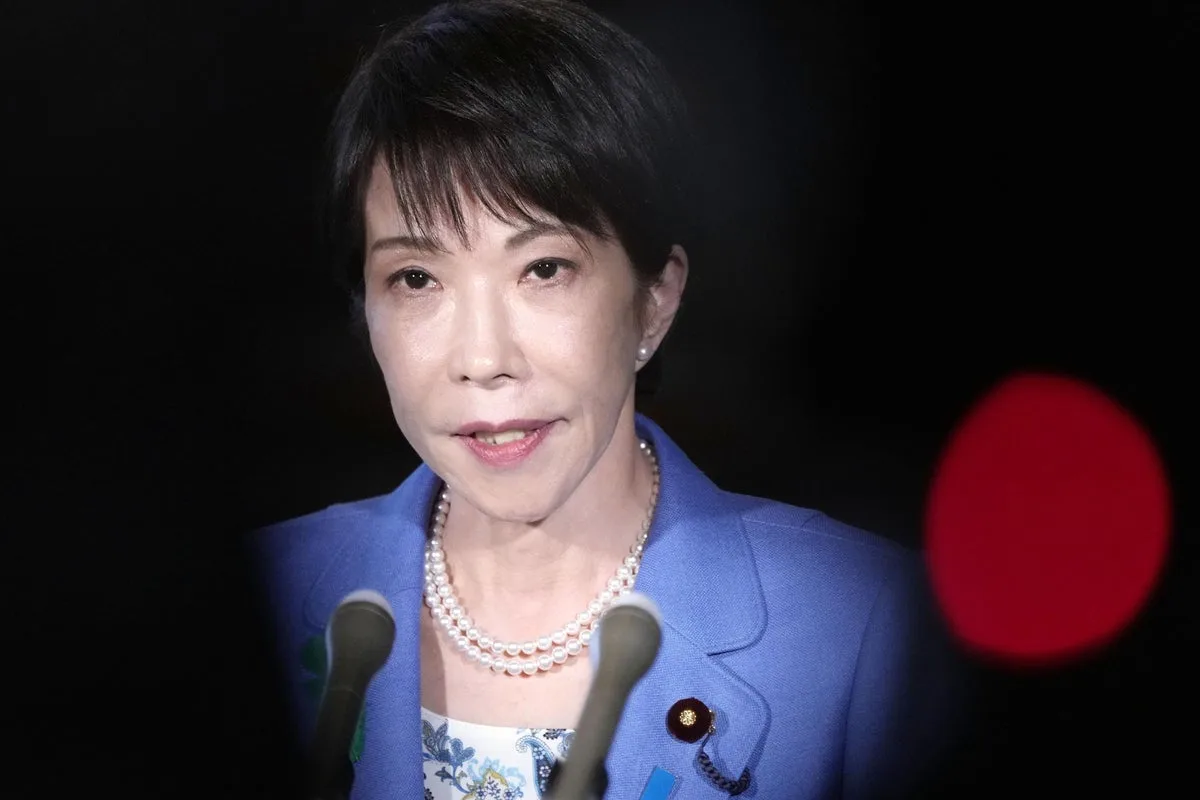
In a landmark decision that overturns decades of postwar policy, Japan has formally abolished its ban on the export of lethal weapons. The cabinet of Prime Minister Sanae Takaichi approved the new guidelines on Tuesday, removing the final administrative barriers to Japan's emergence as a significant player in the global arms trade.

A Strategic Pivot Amid Regional Tensions

This historic shift is driven by Japan's urgent need to strengthen its domestic arms industry and forge deeper defence collaborations with key allies. The policy change occurs against a backdrop of escalating security challenges across the Asia-Pacific region, prompting Japan to accelerate its comprehensive military modernisation programme.

While the move has drawn sharp criticism from China, which views it as a destabilising development, it has been broadly welcomed by Japan's established defence partners, including Australia. Furthermore, nations across Southeast Asia and Europe have expressed considerable interest in potential future defence procurement from Japanese manufacturers.

Wide Pickt banner — collaborative shopping lists app for Telegram, phone mockup with grocery list

Constitutional Controversy and Domestic Opposition

Domestic opponents argue vehemently that the export policy violates the spirit of Japan's pacifist constitution, established in the aftermath of World War II. Critics warn that the move risks inflaming global tensions and could ultimately compromise the safety and security of the Japanese populace by entangling the nation in foreign conflicts.

The transformation of Japan into one of the world's foremost defence spenders has unfolded gradually over many years, consistently reigniting a fundamental national debate: does this ongoing military expansion constitute a breach of the country's constitutional commitment to pacifism?

The Evolution of Japan's Postwar Defence Posture

In the wake of World War II, Japan was initially prohibited from maintaining any form of military force. During the American occupation from 1945 to 1952, US officials were determined to eradicate the militarist ideology that had fuelled Japanese aggression across Asia.

This intent was codified in Article 9 of the US-drafted 1947 constitution, wherein Japan formally renounced war as a sovereign right and the threat or use of force to settle international disputes. The article explicitly stated that land, sea, and air forces would never be maintained.

From Pacifism to Partnership

The onset of the Korean War in 1950 prompted a dramatic reassessment by the United States. Japan was reconceived as a vital ally rather than a potential threat, leading directly to the establishment of the Japanese Self-Defense Forces in 1954. Over time, Article 9 has been reinterpreted to provide a legal foundation for maintaining military capabilities strictly for self-defence purposes.

Japan has subsequently, and repeatedly, expanded the interpretation of "self-defence." This has permitted the overseas deployment of troops for international peacekeeping operations, although such missions have traditionally avoided direct combat roles.

The Abe Legacy and Collective Defence

A significant turning point arrived in 2014 under the leadership of former Prime Minister Shinzo Abe, who championed the goal of a "normal" military for Japan. Abe's government introduced a novel reinterpretation of Article 9, asserting that it permitted the right of collective self-defence.

This policy was enacted into law the following year through new security legislation. It authorised Japan to use military force if the United States or other friendly nations came under attack, even if Japan itself was not directly threatened. This strategic manoeuvre by Abe sought to normalise Japan's military role without undertaking the politically fraught process of formally amending the constitution itself.

The decision to lift the lethal weapons export ban represents the latest and most consequential step in this ongoing strategic evolution, positioning Japan for a more assertive role in global defence and security affairs.

Pickt after-article banner — collaborative shopping lists app with family illustration




