
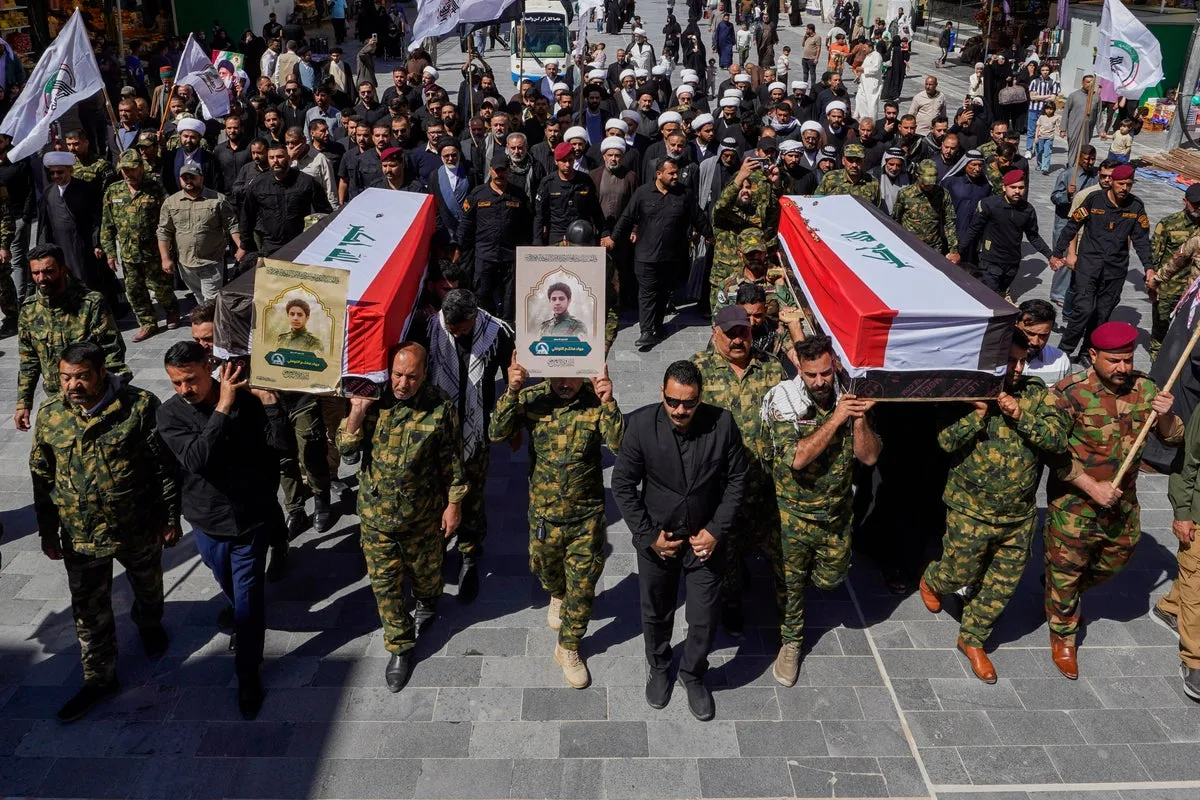
Iran has given its commanders greater autonomy over militias in Iraq, allowing some groups to carry out operations without Tehran’s approval, according to three militia members and two other officials who spoke to the Associated Press.
Many Iran-backed militias are funded through the Iraqi state budget and embedded within the security apparatus, drawing criticism from the United States and other countries that have borne the brunt of their attacks. Despite mounting pressure from Washington, Baghdad has struggled to contain or deter the groups.
The most hard-line factions now operate under Iranian advisers using a decentralised command structure. “The various forces have been granted the authority to operate according to their own field assessments without referring back to a central command,” said one militia official.
The war in the Middle East has exposed the fragility of Iraq’s state institutions and their limited ability to restrain these groups. On Friday, the US imposed sanctions on seven commanders and senior members of four hard-line Iran-backed Iraqi militia groups.
Days into the war sparked by US and Israeli strikes on Iran on 28 February, an Iranian delegation arrived in Iraq’s Kurdish region and delivered a message that they had devolved authority to regional commanders, a senior Iraqi Kurdish official said. This shift followed lessons from a 12-day war in June, during which operations were tightly centralised.
At the heart of government efforts to rein in militia groups lies a paradox: the factions the government says it cannot control are tied to political parties that brought it to power.




