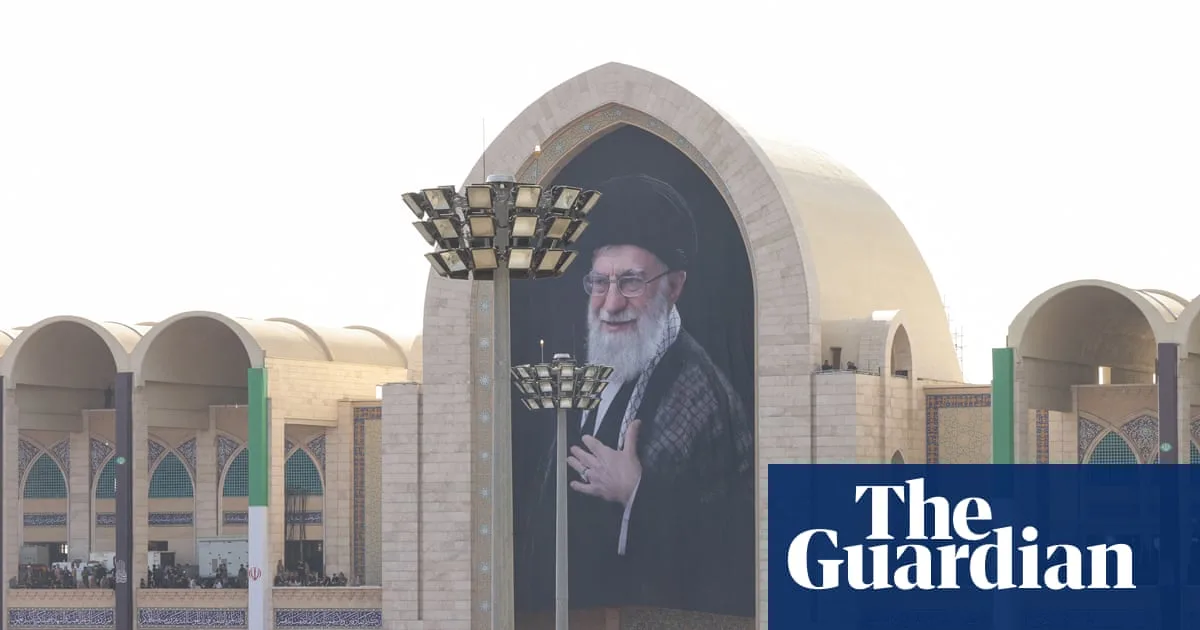
Israeli Defence Minister Israel Katz issued a chilling and direct threat on Wednesday, vowing to assassinate any Iranian leader selected to succeed the late supreme leader Ayatollah Ali Khamenei. This declaration comes amid breaking reports that Mojtaba Khamenei, the 56-year-old son of the deceased Ayatollah, has been appointed as Iran's new Supreme Leader following his father's death in recent US-Israeli strikes on Tehran.
A Stark Warning on Social Media
In a provocative post on the social media platform X, Minister Katz stated unequivocally: 'Any leader selected by the Iranian terror regime to continue leading the plan for Israel's destruction, threatening the United States, the free world and countries in the region, and suppressing the Iranian people, will be a certain target for assassination, no matter his name or where he hides.' This statement represents a significant escalation in rhetoric from a senior Israeli official, directly linking the succession process in Iran to a declared policy of targeted assassination.
The Rise of Mojtaba Khamenei
According to reports from the Iranian opposition outlet Iran International, Mojtaba Khamenei was chosen by Iran's Assembly of Experts 'under pressure from the Revolutionary Guards.' As the second oldest son of the late Ayatollah, Mojtaba is not a high-ranking cleric, has never held public office, and lacks an official role within the regime's clerical hierarchy. However, his background and connections paint a picture of considerable behind-the-scenes influence.
He served in the Iranian armed forces during the protracted Iran-Iraq war and is believed to wield significant power through his strong links to the Iranian Revolutionary Guard Corps (IRGC) and the Basij volunteer paramilitary force. For years, he has been touted as a potential successor to his father, despite not being included in a list of three senior clerics that Ali Khamenei reportedly identified last year as possible candidates.
Controversy Over Hereditary Succession
The appointment of Mojtaba is fraught with political and religious controversy within Iran. His father, the late Ayatollah, is said to have indicated opposition to his son's candidacy, fearing it would resemble the hereditary rule of the US-backed Shah monarchy, which was overthrown in the 1979 Iranian Revolution. Furthermore, father-to-son succession is generally viewed negatively within the Shiite Muslim clerical establishment in Iran, making Mojtaba's reported ascension a significant break from traditional norms.
The context of this succession is also critical. Much of Iran's top military and political leadership has been decimated in the latest conflict, creating a power vacuum. Mojtaba's close ties with the powerful IRGC and Basij forces likely provided the leverage needed for his appointment, overriding the ideological objections to hereditary rule.
This remains a developing news story, with further details expected to emerge regarding the internal dynamics of Iran's leadership transition and the international response, particularly from Israel and its allies.




