Iranian Warship Sunk by US Submarine Was Returning from Indian Naval Exercises
Officials in New Delhi have confirmed that an Iranian warship, which was sunk by a United States submarine near Sri Lanka, had previously taken part in naval exercises hosted by India. The vessel was navigating through international waters in the Indian Ocean on its journey back to Iran when the attack occurred.
Details of the Sinking and Rescue Efforts
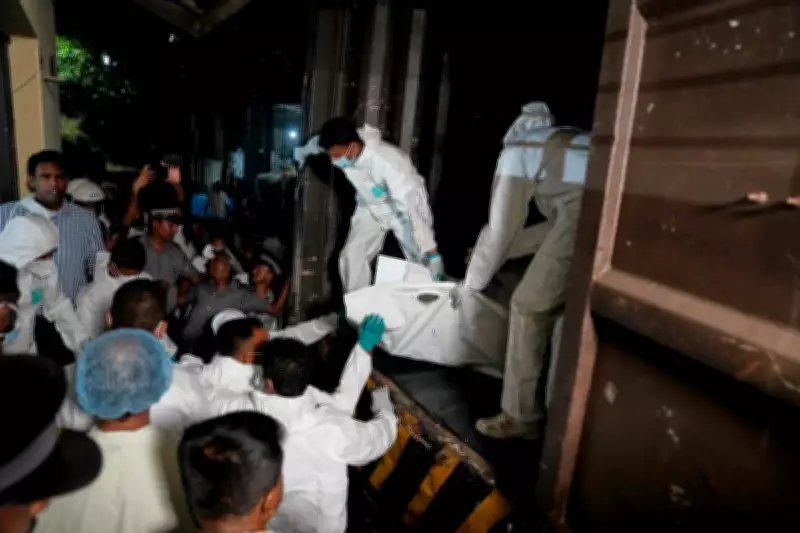
On Wednesday, the Sri Lankan navy responded to a distress signal from the Iranian frigate IRIS Dena. Upon arrival at the location, they found no trace of the ship, only oil patches and sailors adrift in the water. The rescue operation recovered 87 bodies and saved 32 Iranian sailors, who were subsequently transported to a hospital in Galle, a town on Sri Lanka's southern coast.
This incident marks a rare occurrence of a submarine torpedoing a ship since the conclusion of World War II, highlighting the escalating military tensions in the region.

US and Iranian Responses to the Attack
US Defense Secretary Pete Hegseth described the sinking as an illustration of the expanding US-Israeli military campaign against Iran, referring to the IRIS Dena as a "prize ship." President Donald Trump has previously stated that a primary objective of the conflict is to eliminate Iran's naval capabilities.
In retaliation, Iranian Foreign Minister Abbas Araghchi condemned the US Navy for committing what he termed an "atrocity at sea" and warned that the United States would "come to bitterly regret" the attack. A video released by the US Department of Defense on social media platform X captured the moment of the torpedo strike, showing the ship breaking apart after an underwater explosion.
Indian Involvement and Political Fallout
The Iranian warship had been involved in the International Fleet Review and the multilateral naval exercise MILAN 2026, organized by the Indian navy in Visakhapatnam from February 15 to February 25. According to the Indian defense ministry, 74 countries participated in these events. Images shared by the Indian navy on February 17 depicted the vessel at sea during the exercises, with crew members posing on deck alongside the Iranian flag.
Araghchi emphasized that the frigate had been "a guest" of India's navy, yet the Indian government has remained silent on the incident. This lack of response has ignited a debate within India regarding maritime security in the Indian Ocean, an area where New Delhi maintains a substantial naval presence to protect vital sea lanes for global trade and energy shipments.
Political Criticism and Diplomatic Implications
Opposition leaders in India have criticized Prime Minister Narendra Modi's government for its silence. Rahul Gandhi of the Indian National Congress party remarked that the conflict has reached India's backyard, yet the Prime Minister has offered no official statement. Former foreign secretary Kanwal Sibal noted that while India is not politically or militarily responsible for the US attack, it bears moral and human responsibility, as the ship was in the region due to India's invitation.
India has historically sought to maintain a diplomatic balance between the US and Iran, advocating for dialogue and diplomacy. However, this incident underscores the challenges of navigating such tensions, particularly as the US-Iran war extends beyond the Middle East into international waters near South Asia.
The sinking of the IRIS Dena not only underscores the broader scope of the US-Iran conflict but also raises critical questions about maritime security and India's strategic position in the Indian Ocean region.