
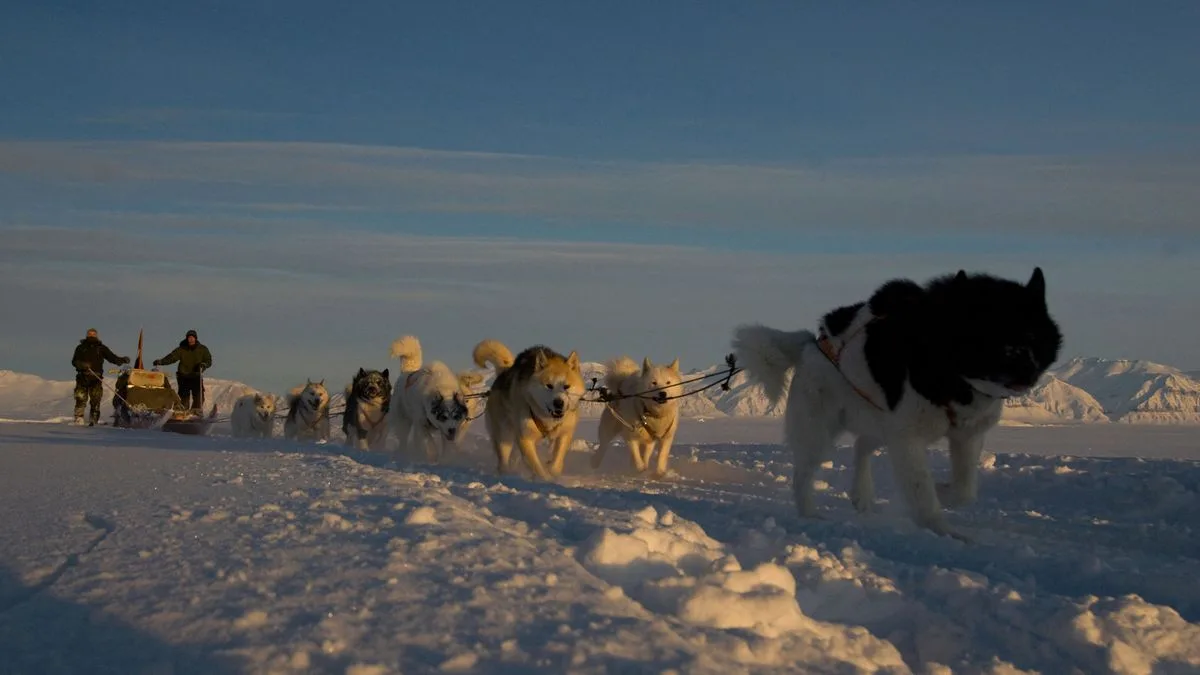
Denmark's legendary Sirius Dog Sled Patrol, an elite special forces unit, operates in one of the harshest environments on Earth. Racing across Greenland's frozen wilderness by dog sled, the team endures hunger, frostbite, and months of isolation, with temperatures plunging to -55C. For up to five months at a time, they conduct long-range reconnaissance missions through the frozen north, where winter brings constant darkness.
The unit's history dates back to World War Two, when its predecessors helped repel Nazi encroachment along Greenland's remote coastline. Today, it could face an unlikely adversary in US forces, should Donald Trump act on his threats to seize the mineral-rich Arctic territory. Trump has mocked Denmark's Arctic defences, ridiculing the addition of an extra dog sled patrol, calling it 'a great move' in a sarcastic tone.
Danish defence experts dismissed Trump's remarks as dangerously naïve. Former rear admiral Torben Orting Jorgensen branded Trump's comments 'an insult of stupidity', emphasising his ignorance about the conditions in Greenland. 'They are using transport that has been adapted to this environment for centuries - now supported by drones and other modern capabilities,' he said.
As the Arctic ice melts, Greenland has become a focal point for global powers. In response, Denmark has announced a £4.8 billion military investment, including new radar systems, patrol ships and long-range drones. However, in Greenland's frozen north, where modern military vehicles cannot operate, the Sirius Patrol remains the frontline defence. It is the world's only dog sled special forces, patrolling where no other military can.
Each autumn, six sled teams set out to patrol an area the size of Britain and France combined. Their missions last up to five months, with near-total isolation. During a 26-month tour, patrolmen are permitted just one brief return to civilisation. They form an unbreakable bond with their Greenland huskies, which act as transport, companions and early warning systems. The dogs emit a distinctive hissing growl when a polar bear approaches, giving soldiers time to reach for their weapons.
Selection for Sirius is among the toughest in the world. Recruits undergo extreme physical trials and psychological testing to ensure they can withstand prolonged solitude. Those who succeed face at least eight months of intensive training, learning everything from hunting to survival skills.




