
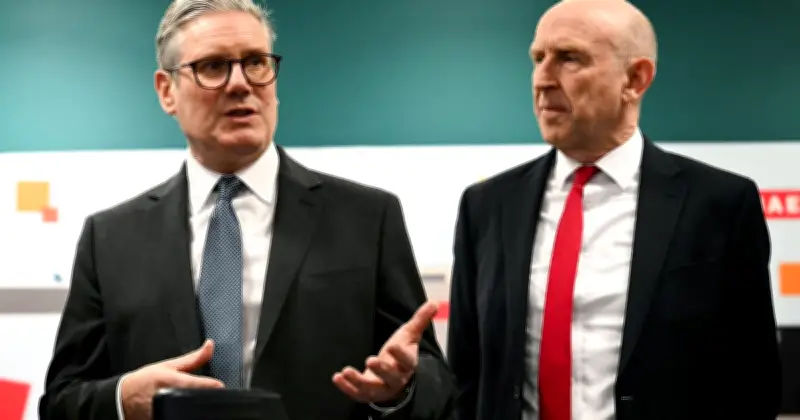
Defence expert Ben Jones has described John Healey's resignation as defence secretary as a "devastating blow" to Prime Minister Keir Starmer, exposing "major leadership issues" within the Labour Government. Mr Healey quit on Thursday afternoon, stating that the Prime Minister had been "unable" and the Treasury "unwilling" to provide adequate funding for the Defence Investment Plan (DIP). Although the Government committed to spending 3.5% of GDP on defence by 2035, Mr Healey said the plan presented to him on Monday moved too slowly, with defence spending rising to just 2.68% by 2030.
Ben Jones, a senior lecturer at the RAF College in Cranwell, said the resignation was a damning indictment of the Prime Minister, revealing that he had "failed to prioritise defence to the satisfaction of a true party loyalist who hasn't got any political points to score." Mr Jones noted that Mr Healey has been defence secretary since Starmer became Labour leader and is seen as a very safe pair of hands, highly respected in military circles. The delay in publishing the DIP and keeping it below 3% by the end of the decade indicates major financial problems for the country and major leadership issues.
Mr Jones suggested that the resignation may be the "final nail in the coffin" for Sir Keir after weeks of political turmoil following disastrous local election results and ahead of the crucial Makerfield contest next week. With Starmer's current position, the only thing he could do was make a big policy announcement like a defence boost, but today's events have completely undermined that. Now he does not even have a Defence Secretary.
While Mr Healey's resignation letter blamed Chancellor Rachel Reeves for being "unwilling" to reallocate funds to defence, it was also telling that he said Sir Keir was "unable" to exert authority over his ministers. Mr Jones explained that the Prime Minister can order the Treasury, especially on national defence, given the apparent dangers from Russia, the Middle East, and elsewhere, and real doubts about the armed forces' ability to deal with them.
Mr Jones added that despite Starmer's reputation for strategic US diplomacy and positions on Ukraine and the Middle East, he continues to neglect domestic security. Part of the UK's international grade is measured in defence, and the UK is dropping down the NATO league table. The Government pays lip service to delivering the biggest spending boost since the Cold War, but spending has declined rapidly in the last 30 years. With NATO potentially in direct conflict with Russia in four years, this is the most dangerous position Britain has been in since the end of the Cold War. The Prime Minister should make defence a top priority and let other ministers resign if they disagree.
Responding to Mr Healey's resignation, Sir Keir insisted the DIP would provide the resources the military needs to keep the country safe. In a letter to the outgoing defence secretary, he said the Government would increase defence spending in a sustainable way, making big strategic investments for the long term, giving certainty for private finance, allowing the armed forces to transform and modernise, and ensuring money is spent wisely to back jobs and growth in Britain.




