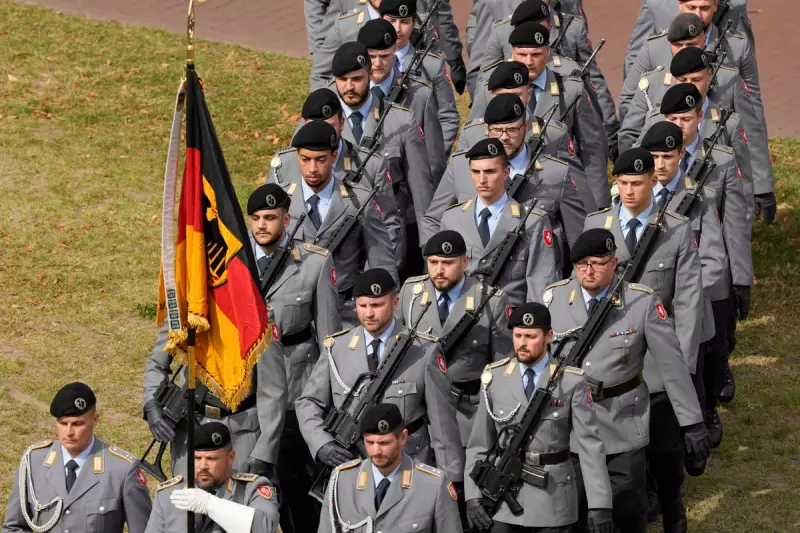
German lawmakers have passed a significant new initiative to revitalise the nation's armed forces, voting to reintroduce a form of voluntary military service. The move is a direct response to growing security concerns in Europe, particularly the perceived threat from Russia.
The New Recruitment Drive: Questionnaires and Medicals
The Bundestag, Germany's federal parliament, formally endorsed the measure with 323 votes in favour, 272 against, and one abstention. Central to the plan is a new system targeting the country's youth. Starting in January 2026, all 18-year-olds will be sent a questionnaire assessing their interest and willingness to join the Bundeswehr.
While filling out the form will be mandatory for young men and voluntary for women, the process goes further for men. They will also be required to undergo mandatory medical examinations. However, the government stresses this is not a full return to conscription, which was suspended in 2011.

The approved strategy is a refined version of a plan first proposed by Chancellor Friedrich Merz's cabinet in August 2025. Defence Minister Boris Pistorius championed the legislation, telling parliament that "our allies are looking at Germany" and asserting the country has become a "pacesetter for defence in Europe."
Bolstering Numbers in a Changed Security Landscape
This recruitment push coincides with a massive, multi-billion euro investment to modernise Germany's military equipment after years of underfunding. The personnel challenge is stark: current troop numbers linger just above 180,000, a sharp fall from the 300,000 personnel in 2001 when conscription was active.
The government's ambitious goal is to increase the Bundeswehr to 260,000 troops within the next decade. It also aims to more than double its reserve forces, targeting around 200,000 reservists.
To attract volunteers, the plan promises more attractive pay, better training, and flexible service terms starting from a minimum of six months. From January 2027, the Defence Ministry must report to parliament every six months on recruitment progress.
A European Trend and the Shadow of Compulsion
Germany is not acting in isolation. This move is part of a broader European trend to strengthen defence. France recently unveiled a new programme to train thousands of young volunteers, while Belgium and Poland are crafting similar initiatives.
Although the current plan is voluntary, it leaves a crucial door open. The legislation allows for the future introduction of mandatory service for a limited number of people, possibly selected at random, if the defence or personnel situation demands it. Many in Chancellor Merz's conservative bloc believe conscription will ultimately be necessary.
Opposition exists, notably from the Left Party. Lawmaker Desiree Becker called on young people to "strike against the reintroduction of conscription." In response, Minister Pistorius welcomed demonstrations but insisted many young people are ready to take responsibility. He stated the service would remain voluntary if recruitment targets are met, but warned: "if the threat situation continues to develop... we won't be able to avoid a partial compulsory service to protect this country."
Currently, ten European Union nations maintain compulsory military service: Austria, Cyprus, Croatia, Denmark, Estonia, Finland, Greece, Latvia, Lithuania, and Sweden.