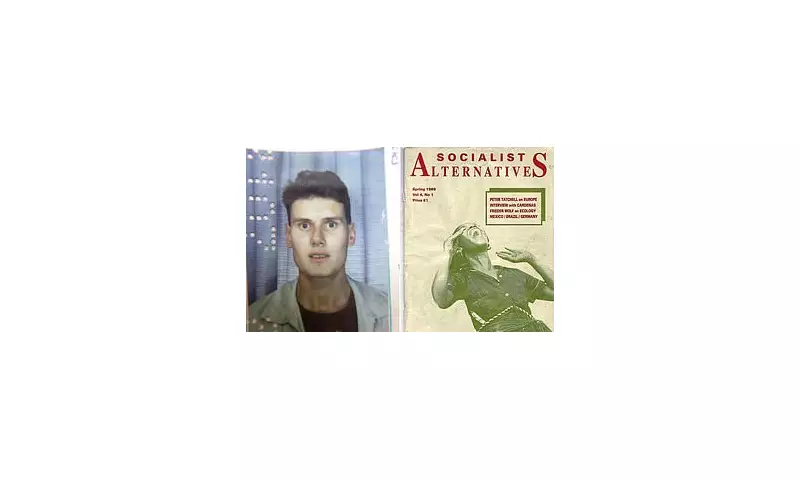
Prime Minister Sir Keir Starmer has faced intense scrutiny after demanding explanations from Reform UK leader Nigel Farage over alleged anti-Semitic and racist comments made more than four decades ago at school. This political attack, however, has triggered a detailed examination of Starmer's own formative years, revealing a period of hard-Left activism and associations that contrast sharply with his current centrist image.
The Farage Allegations and Starmer's Response
Sir Keir Starmer was quick to seize on a Guardian report detailing a dossier of complaints from over a dozen former classmates of Nigel Farage at Dulwich College in South London. The allegations, which Farage strongly denies, stem from the late 1970s and early 1980s.
One Jewish contemporary claimed that a 13-year-old Farage would approach him and growl, "Hitler was right" or "gas them," sometimes adding a hissing sound. Another pupil from an ethnic minority background alleged that a 17-year-old Farage would ask where he was from before pointing away and saying, "That's the way back."

The Prime Minister insisted Farage needed to urgently "explain the comments, or alleged comments." Senior Labour figures, including Attorney General Richard Hermer, echoed this demand, with Hermer stating Farage had "clearly deeply hurt" many people.
Uncomfortable Questions for the Prime Minister
While the concerns about Farage's alleged teenage behaviour are understandable, Starmer's involvement in a row about a rival's schooldays has inevitably invited scrutiny of his own youth. A Mail on Sunday investigation reveals a series of uncomfortable questions about the Labour leader's activities in his mid-to-late twenties.
In 1986, just before his 24th birthday, Starmer travelled to Communist Czechoslovakia to join an international work camp to restore a memorial to victims of a Nazi atrocity. Unbeknownst to him and other volunteers, such camps were part of a long-term operation by the nation's secret police, the StB. Declassified files show the aim was to identify young high-fliers from the West for potential future exploitation by undermining NATO.
The Socialist Alternatives Magazine and KGB Links
More significantly, the investigation centres on a magazine called Socialist Alternatives, launched by Starmer and a small group of friends in 1986, just weeks before his Czechoslovak trip. The publication was fully funded by the Paris-based International Revolutionary Marxist Tendency, an obscure hard-Left faction.
Starmer played a key role in the editorial collective. According to contributor Richard Barbrook, while the charismatic Frenchman Benjamin Schoendorff was the leader, it was Starmer "who got the magazine done"—collecting articles, laying out pages, and handling distribution.
The magazine's content was radically left-wing. It criticised Neil Kinnock's Labour Party for not being socialist enough, called for a "radical extension of common ownership," attacked Thatcherism, and lambasted police actions during the Wapping dispute.
One particularly intriguing article, penned by two of Starmer's co-editors in July 1986, was a stern critique of Western "media hysteria" over the Chernobyl nuclear disaster. Headlined "Katastropha," it mocked Western superiority and accused the US and UK of similar secrecy.
This article raises profound questions, as the Mail discovered that one month prior to its publication, Moscow had launched Operation Graphite—a secret KGB push to "paralyse" criticism of Chernobyl in the West. The declassified strategy involved encouraging Western outlets to write stories highlighting their own nuclear accidents instead. The London Czechoslovak embassy was directly involved in spreading this disinformation in the UK.
Furthermore, in 1987, Socialist Alternatives ran an appeal from the "Justice for Otelo Committee," campaigning to free Otelo de Carvalho, a convicted Marxist terror chief whose group, FP-25, was responsible for killings and bombings. The appeal's signatories included Jeremy Corbyn, Tony Benn, and Noam Chomsky, and it directed supporters to an address in North London that Sir Keir shared with others involved in the magazine.

Starmer's Defence and Lasting Questions
When asked about these articles, a Labour Party spokesman pointed to Starmer's later record as Director of Public Prosecutions, where he "locked up 150 terrorists." However, Starmer himself has told his biographer, Tom Baldwin, that his articles from that time "do matter" and are "part of his evolution."
Benjamin Schoendorff, now a clinical psychologist in Canada, offers a scathing assessment, calling Starmer "an empty suit" and "a puppet." He claims there is "no sign" that Starmer's radical youth left any trace on his current politics.
Despite the sound and fury, Socialist Alternatives was a commercial flop. Schoendorff himself conceded, "No one read it." Nevertheless, the revelations about its content and the coinciding KGB propaganda operation present a complex picture of the Prime Minister's political journey.
The episode underscores how political attacks can swiftly lead to reciprocal scrutiny. As Sir Keir Starmer continues to distance himself from the hard-Left politics of his predecessor, the details of his own involvement with Socialist Alternatives and a KGB-linked disinformation campaign remain a contentious part of his personal history.