In a significant diplomatic move, Germany has publicly called on France to increase its defence expenditures, emphasising the need for European self-sufficiency in security matters. This appeal comes as transatlantic relationships face strain, raising doubts about the United States' commitment to defending its NATO allies.
Pressure on Paris to Act
German Foreign Minister Johann Wadephul, in an interview with Deutschlandfunk, directly addressed French President Emmanuel Macron, urging action to match rhetoric on European sovereignty. "He repeatedly and correctly refers to our pursuit of European sovereignty," Wadephul stated. "Anyone who talks about it needs to act accordingly in their own country."
This criticism highlights ongoing friction within the Franco-German alliance, traditionally a cornerstone of European Union cooperation. Disagreements have surfaced over issues such as pooled debt for investment, plans for a next-generation European fighter jet, and an EU trade deal with South American nations.

NATO Spending Targets and Progress
At a NATO summit last June, member states pledged to boost defence spending to 5% of GDP by 2035. However, Wadephul noted that progress towards this goal has been insufficient, particularly in France. "Unfortunately, efforts in the French republic have also been insufficient to achieve this so far," he remarked. "France, too, needs to do what we are doing here amid tough discussions."
Germany has taken steps to bolster its defence capabilities, exempting most defence expenditures from its constitutional "debt brake" and allocating over €500 billion for defence between 2025 and 2029. In contrast, France faces challenges with public spending, ranking third in the EU for debt burden as a proportion of GDP, behind Greece and Italy.
Munich Security Conference Highlights
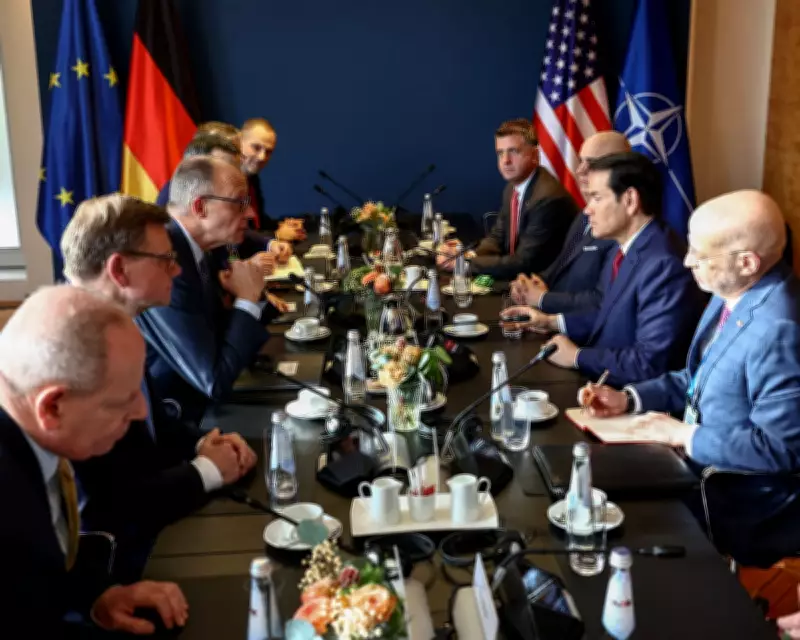
The discussions unfolded against the backdrop of the Munich Security Conference, where German Chancellor Friedrich Merz met with US Secretary of State Marco Rubio. Merz warned of the threat posed by Russia to Europe and stressed the importance of repairing transatlantic trust. "In the era of great power rivalry, even the United States will not be powerful enough to go it alone," Merz asserted. "Dear friends, being a part of NATO is not only Europe’s competitive advantage. It is also the United States’ competitive advantage. So let’s repair and revive transatlantic trust together."
Nuclear Deterrence Debates
A key point of contention emerged over nuclear defence capabilities. Merz disclosed initial talks with Macron about Germany potentially joining France's nuclear umbrella, sparking debate within Germany's ruling coalition. Wadephul expressed caution, noting, "There are enough atomic weapons in the world," and emphasised that no one in Washington questions the US commitment to defending Europe with its nuclear arsenal.
Germany's Vice-Chancellor Lars Klingbeil, a Social Democrat, affirmed Berlin's reliance on NATO's nuclear deterrence system, with no plans to acquire atomic weapons. He welcomed discussions with France but noted, "We’ll see what the outcome is." Meanwhile, senior Christian Democrat Armin Laschet warned that such proposals might signal a voluntary renunciation of US protection, as France would likely retain full control over its nuclear arsenal.
European Security Responsibilities
Thomas Röwekamp, chair of the Bundestag defence committee, called for Germany to assume more responsibility for European security without hastily replacing US nuclear guarantees. He advocated for a "European complement within NATO" to the US atomic arsenal, acknowledging France's longstanding contribution to European deterrence.
In a related development, Britain and Germany's highest-ranking military leaders jointly appealed to the public in an article published in the Guardian and Die Welt, urging acceptance of the moral case for rearmament and preparedness for potential conflict with Russia.
As European nations grapple with these complex security challenges, the call for increased defence spending and strengthened cooperation underscores the evolving dynamics of global power and the urgent need for a unified European approach to defence.