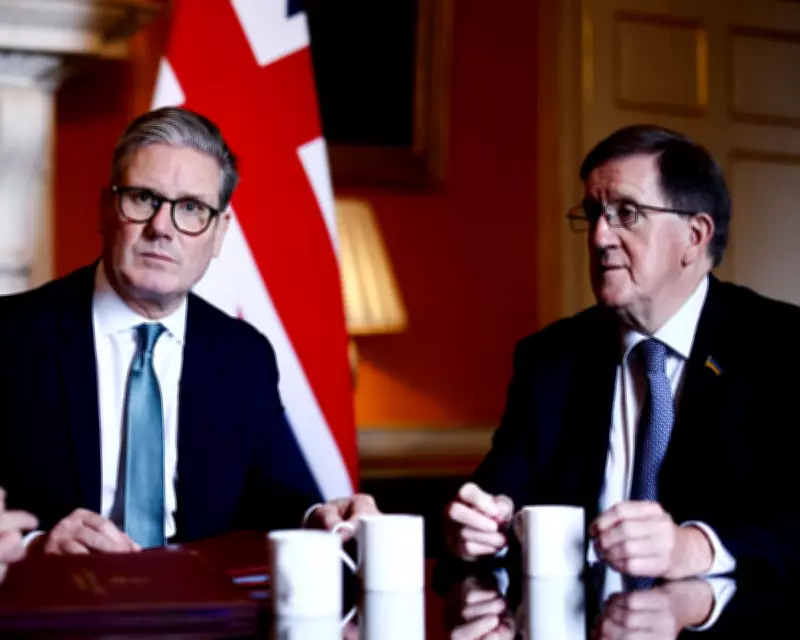
Ex-Nato Chief Condemns Starmer's Defence Policy as 'Corrosive Complacency'
In a scathing critique, former Nato secretary general George Robertson has accused the British government of displaying a "corrosive complacency towards defence," warning that this attitude has placed the United Kingdom "in peril." The remarks, delivered during a lecture in Salisbury, target Keir Starmer's military policies and highlight urgent concerns over underfunding and preparedness.
Robertson's Warning on Defence Underfunding
Lord Robertson, who led Nato from 1999 to 2003 and now serves as a government adviser, asserted that Starmer is "not willing to make the necessary investment" in defence. He emphasised that the ongoing Iran war should serve as a "rude wake-up call" to address critical gaps in military funding. Robertson stated, "We are underprepared. We are underinsured. We are under attack. We are not safe ... Britain's national security and safety is in peril."
He further criticised "non-military experts in the Treasury" for what he termed "vandalism," arguing that "We cannot defend Britain with an ever-expanding welfare budget." Robertson pointed to Chancellor Rachel Reeves's budget speeches, noting she used "a mere 40 words on defence in over an hour" last year and "none" in the recent spring statement, illustrating a lack of prioritisation.

Delays and Funding Shortfalls in Defence Plans
The government's strategic defence review, authored by Robertson, includes proposals for a 10-year defence investment plan originally slated for last autumn. However, these plans have been repeatedly postponed amid warnings of a £28 billion funding gap over the next four years. Sources indicate that the Ministry of Defence, the Treasury, and Downing Street have yet to reach an agreement on how to proceed.
Robertson believes that spending cuts in other departments may be necessary to boost defence funding. He lamented that "even a promised national conversation about defence can't be started," accusing political leadership of paying only "lip service" to risks and threats.
Military Readiness and Operational Challenges
In his speech, Robertson cited the UK's inability to deploy more than one Royal Navy warship, HMS Dragon, to the Mediterranean within the first fortnight of the Iran war as evidence of complacency. He warned of not just shortages in military equipment but also "crises in logistics, engineering, cyber, ammunition, training, and medical resources."
Luke Pollard, the minister for defence readiness and industry, acknowledged in February that overhauling the armed forces is "a bigger task than many people outside defence realise." He explained it involves "fundamentally changing the shape of our armed forces" towards more autonomy and refilling stockpiles sent to Ukraine, noting it is "not a simple matter of just replacing tank A with tank B."
Government Response and Ongoing Threats
Last week, Defence Secretary John Healey exposed a covert Russian submarine operation targeting critical undersea infrastructure around UK waters, underscoring the persistent threats. A government spokesperson responded, "We are delivering on the strategic defence review to meet the threats we face." They highlighted "the largest sustained increase in defence spending since the cold war," with over £270 billion invested across this parliament, and added that the defence investment plan is being finalised for publication soon.
Robertson's comments reflect growing unease about the UK's defence capabilities amid global tensions, urging immediate action to safeguard national security.