
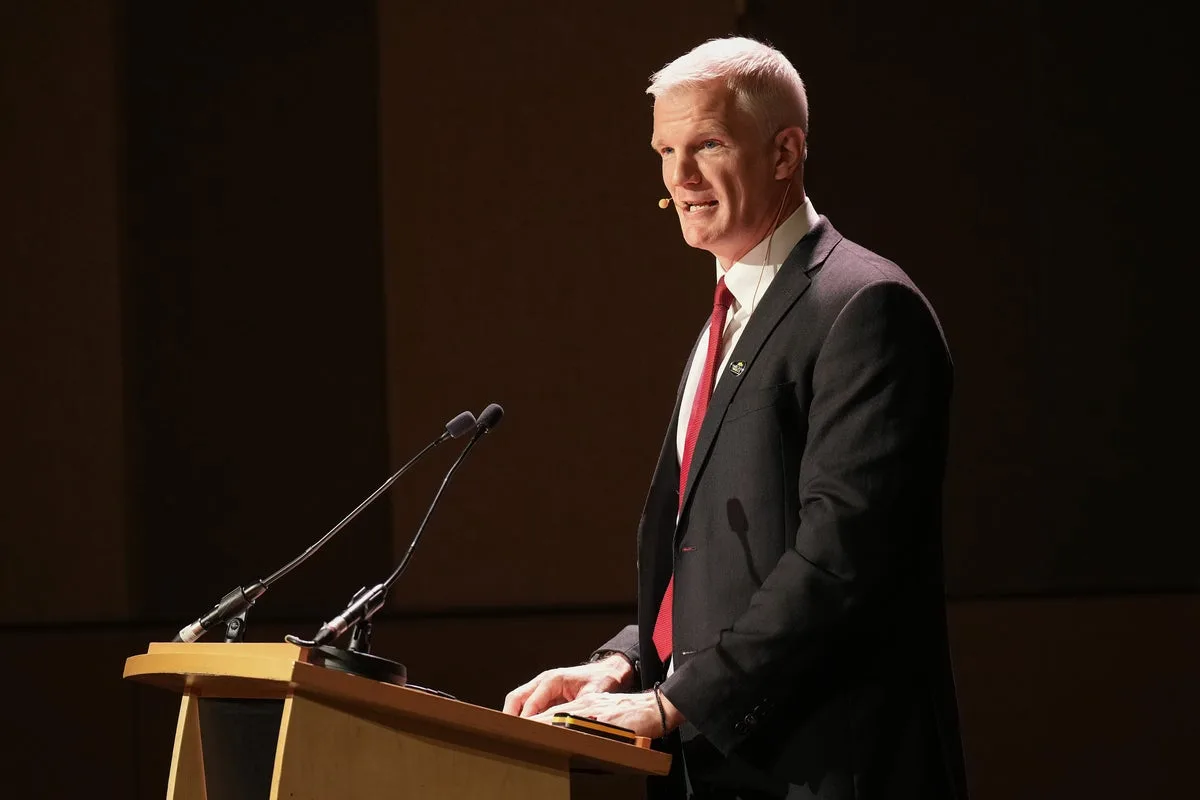
Armed forces minister Al Carns has warned that Europe must be ready to deter Russia as the “shadow of war” looms, echoing Nato secretary general Mark Rutte’s call for countries to prepare for a conflict on a scale not seen since the Second World War. Speaking to The Telegraph, Mr Carns said nations need to “increase our lethality” and stop outsourcing it to others.
Mr Carns noted that for the past 50 to 60 years, Europe has relied on US security guarantees, but with the US facing multipolar threats, those guarantees may not be as forthright. While President Donald Trump has agreed he is “fully in” Nato and its Article 5 collective defence clause, Mr Carns said there is a resource issue where the US needs to look both east and west.
“In the past, in wars of choice, we’ve outsourced our lethality to others. We’ve got to make sure that we increase our lethality … across all of our single services,” Mr Carns said, adding that Europe and the UK have pledged to “up our game on defence spending”. He stressed that collectively, Nato outmatches Russia significantly in numerical terms.
Meanwhile, precarious peace efforts surrounding a US-led plan to end Russia’s war in Ukraine are ongoing. Prime Minister Sir Keir Starmer has insisted that President Trump and his European counterparts are aligned on what they want for Kyiv, despite strained relations after the Trump administration accused European officials of holding “unrealistic expectations” for the invasion.
Ukraine has pushed back against a US-drafted plan and submitted its own 20-point document to Washington. President Volodymyr Zelensky said the US proposed a possible “free economic zone” in the Donbas region, which would require a referendum for approval. He also sought a framework document on security guarantees from the US that would be approved by Congress.
President Trump has criticised Ukraine’s European allies as “weak” leaders of “decaying” nations, but spoke to Sir Keir, French president Emmanuel Macron and German chancellor Friedrich Merz on Wednesday. The White House said Trump is “sick of meetings just for the sake of meeting” and wants action, while not committing to sending a representative to talks expected on Saturday.




