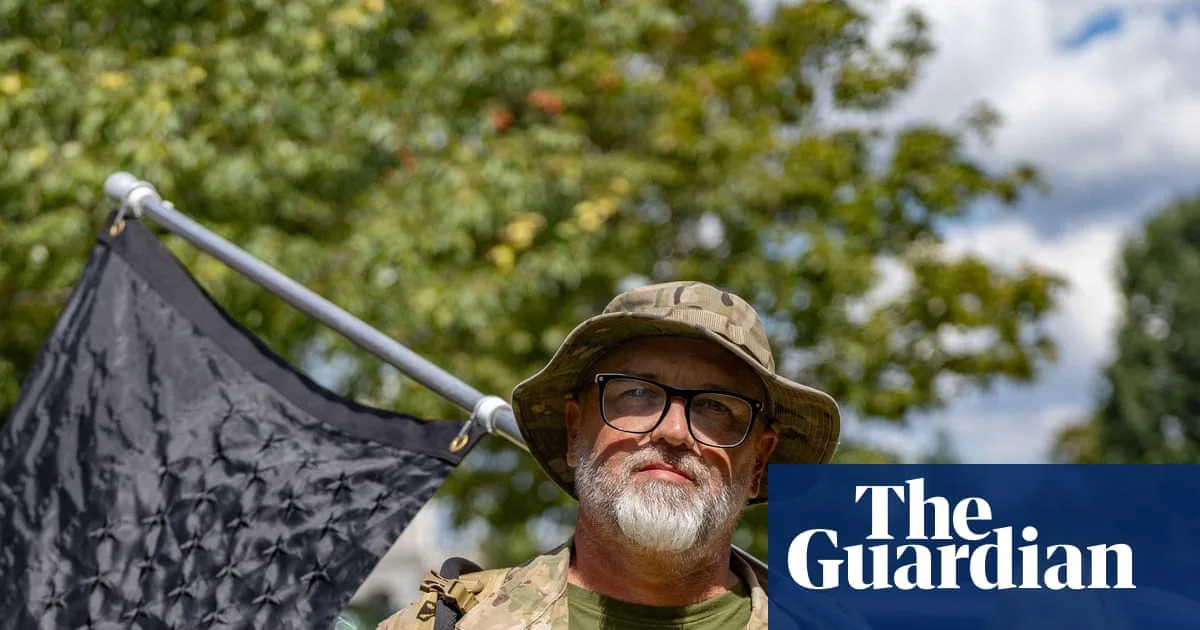
In a significant development concerning free speech protections, the United States Justice Department has formally moved to dismiss all charges against an Army veteran who set fire to an American flag near the White House last year. The act was a direct protest against former President Donald Trump's executive order targeting flag burning.
Background of the Controversial Case
Jay Carey, a 55-year-old resident of Arden, North Carolina, served in the U.S. Army from 1989 to 2012, including deployments to Iraq and Afghanistan. On August 25, 2025, Carey ignited a flag in Lafayette Park, a National Park Service-managed area adjacent to the White House. This protest occurred on the same day that President Trump signed an executive order directing the Justice Department to investigate and prosecute individuals for burning the American flag.
Legal Charges and Constitutional Context
Carey was subsequently arrested and charged with two misdemeanors: igniting a fire in an undesignated area and lighting a fire causing damage to property or park resources. Notably, these charges did not directly address the act of flag burning itself. Carey pleaded not guilty in September 2025.
The Supreme Court has consistently ruled that flag burning constitutes a legitimate form of political expression protected under the First Amendment of the Constitution. Trump's executive order, however, argued that such acts could be prosecuted if they were "likely to incite imminent lawless action" or amounted to "fighting words."
Government's Sudden Reversal
In a filing on Friday, March 13, 2026, federal prosecutors moved to dismiss the charges against Carey. The U.S. Attorney's office for the District of Columbia did not immediately provide an explanation for this decision or respond to requests for comment over the weekend.
Carey, in a statement released through the Partnership for Civil Justice Fund, expressed his motivation: "I set out to demonstrate that the First Amendment is sacred and that no administration has the right to supersede our constitutional rights. I was targeted for federal prosecution because of that. I am glad to stand with all those who are fighting for our fundamental rights and hope that this victory can help the next person who takes a stand."
Legal and Political Implications
When contacted by telephone on Saturday, Carey emphasized that this outcome shows people that "the Constitution still matters." His legal representation, including lawyer Mara Verheyden-Hilliard, co-founder of the Partnership for Civil Justice Fund, strongly criticized the initial prosecution.
Verheyden-Hilliard stated: "The government's attempt to criminally punish a protestor based on expressive conduct targeted for prosecution by presidential order posed a grave threat to First Amendment freedoms. The government's about-face is a critical vindication of those rights. This case also lays the groundwork for defending those across the country who are targeted for vindictive prosecution by the Trump Administration in an effort to silence and punish viewpoints it doesn't like."
This case highlights ongoing tensions between executive actions and constitutional protections, particularly regarding symbolic political protests. The dismissal marks a notable victory for free speech advocates and sets a potential precedent for similar cases involving expressive conduct under contentious political circumstances.




