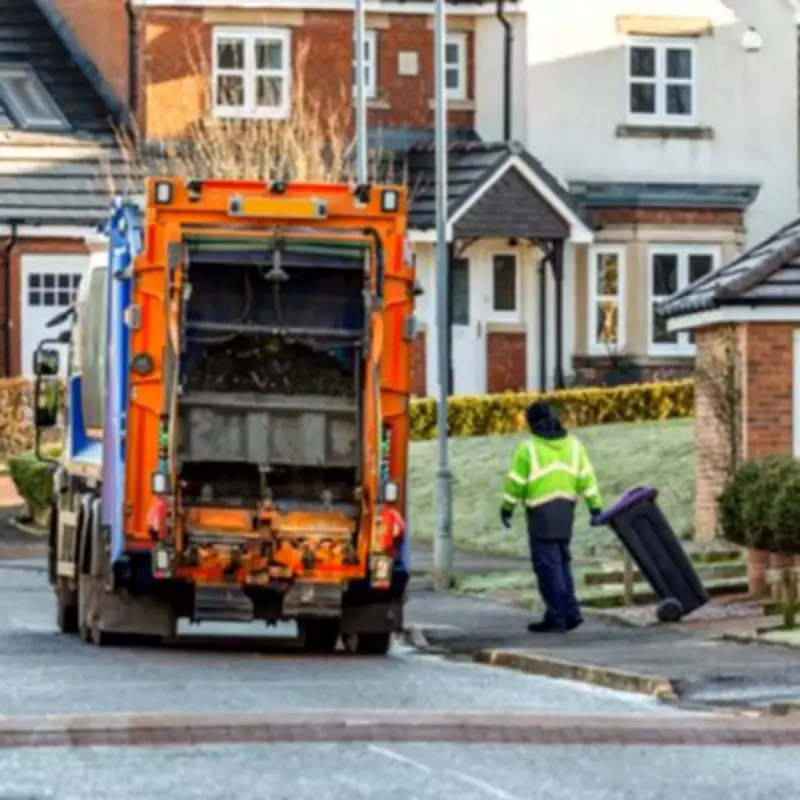
A former refuse worker has disclosed the irritating household habit that consistently results in bins being left behind on collection day, a practice countless residents are guilty of according to his firsthand experience. Working as a bin collector involves physically demanding labour with early morning starts and hard graft in all weather conditions, making certain behaviours particularly frustrating for crews.
The Critical Issue That Halts Collection
The ex-binman, who wishes to remain anonymous, revealed that contrary to common assumptions about unclosed lids or awkward placement, the primary reason he consistently overlooked bins was excessive weight. He explained that when bins became too heavy to pull easily, workers would simply leave them uncollected rather than struggle with them.
"If the bin was too heavy, we'd always leave it behind," the former refuse collector stated. "You'd go to get it and if it was too hard to pull, it wouldn't get emptied. That always felt like a legitimate reason not to collect them."

When Reasonable Becomes Unreasonable
The 35-year-old former worker contrasted this with other common issues, noting that "if the lid was just slightly open, that felt mean to not empty it. A bit petty, at times." However, he drew a clear line when residents overloaded bins with heavy materials like soil, making them nearly impossible to move.
"But when people packed them with soil and I could barely move it, I'd think, 'no you're taking the p***,'" he admitted, highlighting how excessive weight created genuine operational difficulties for collection teams.
The Reality of Refuse Collection Work
Refuse collectors perform indispensable community work, ensuring neighbourhoods remain hygienic and orderly by gathering and processing household rubbish. Their typical routine involves hauling wheelie bins to collection lorries where they're hoisted and emptied, with waste then compressed to create space for additional loads.
The former binman described how "like most people, binmen want to get home as quick as possible" and when residents overfilled bins with weighty materials, making the job more difficult, workers wouldn't waste time solving the problem and would simply leave bins uncollected.
From Gardening to Garbage Collection
He previously worked for the council on outdoor teams, gardening and tidying public spaces before budget cuts forced him to choose between unemployment or accepting any available council position. "I needed to keep a steady wage so ended up moving onto the bins," he explained.
While he valued the camaraderie among colleagues, he doesn't miss the crack-of-dawn starts or hauling bins in miserable weather conditions. "The weather could make or break your day," he added, emphasising the physical challenges of the role.
Public Perspectives on Refuse Workers
Attitudes toward refuse collection work vary widely, with discussions frequently appearing across social media platforms. One Reddit user expressed particular appreciation for bin collectors, writing: "Ever since I was young, whenever I messed up I was told that I would 'end up like a bin man' when I'm an adult. But I never understood it."
The user continued: "I respect bin men, they wake up and handle garbage which many of us wouldn't have the guts to do. And someone needs to do it. So whenever I walk past a garbage truck with someone operating it, I just give them a polite good morning. They deserve it!"
Common Collection Problems Beyond Weight
While excessive weight represents a primary collection obstacle, other issues can also prevent bins from being emptied. These include lids that cannot close properly, bins placed out too late for collection, or awkward positioning along roadsides that makes access difficult for collection crews.
Numerous items shouldn't be disposed of with general household rubbish, and residents occasionally return home on collection day to discover their bin remains full and uncollected for various reasons beyond just overloading with heavy materials.